
Charges dropped? That doesn’t always mean every dollar comes back. What happens to bail money if charges are dropped in Miami, Florida depends on how bail was paid: cash bail paid directly to the court is generally returned after the case concludes, minus legally authorized deductions. A bail-bond premium, however, is not refunded simply because the charges were dismissed.
It’s understandable to expect a full refund when a case ends without a conviction. The key distinction is whether you deposited cash with the court or paid a premium to a bail bond agent. Court costs and other qualifying deductions can affect a cash refund.
This article explains how each payment works, what Florida procedures can mean for collateral and refunds, and what to expect from the Miami-Dade process. You’ll see which money may be returned, which payment usually isn’t, and why the case outcome is only part of the answer.
Key Takeaways
- Whether money may be returned depends on whether bail was paid directly to the court or through a bail bond agent.
- A cash-bail refund may be reduced by qualifying unpaid costs, fees, or penalties, so a dismissed case doesn’t necessarily mean a full refund.
- According to The Florida Legislature, if a bond is discharged, collateral must be returned to the indemnitor within 21 days after the discharge is provided to the surety or its agent.
- Learn what the Miami-Dade refund process means for the bond receipt, refund mailing, and address used for delivery.
- Find out which Miami-Dade office handles refunds and what information can help you understand the status of a returned payment.
Administrative fees deducted from returned bail
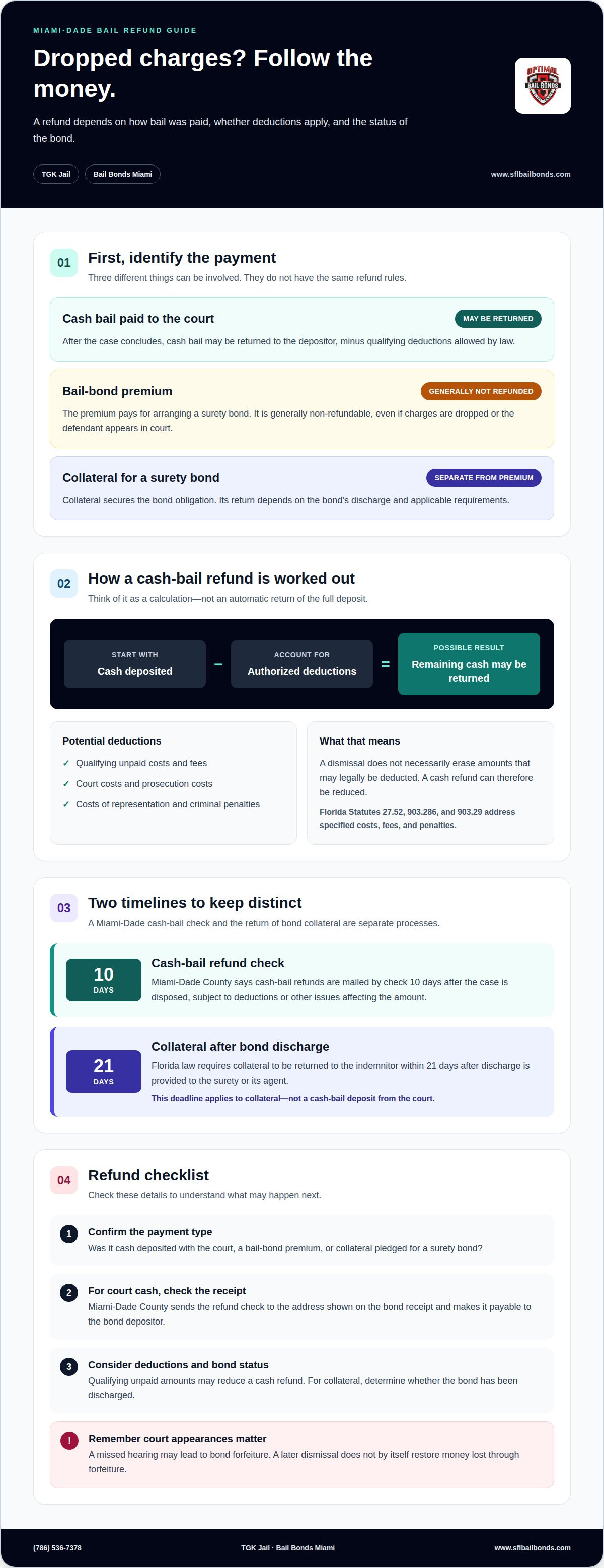
Dropped charges can end a case, but they don’t automatically guarantee a full cash-bail refund. In Miami-Dade, cash bail paid directly to the court may be returned after the case concludes, minus deductions allowed by law. Unpaid obligations connected to the case can also affect the refund amount.
Florida Statute 903.286 requires the clerk to withhold qualifying unpaid costs, fees, court costs, and criminal penalties from a cash bond. Florida Statutes 27.52, 903.286, and 903.29 also cover specified unpaid costs, prosecution costs, costs of representation, court fees, court costs, and criminal penalties. A dismissal therefore doesn’t necessarily erase amounts that may legally be deducted.
Think of the refund as a calculation, not an automatic return of the full bail amount. The court starts with the cash deposited as bail, then accounts for qualifying unpaid amounts. For example, eligible court costs that remain unpaid may reduce the refund. Any remaining cash may be returned to the depositor.
That differs from paying a bail-bond premium. A premium paid to a bail bond agent for a surety bond is generally non-refundable, even if charges are dropped or the defendant appears in court. Collateral is separate: it secures the bond obligation, and its return depends on the bond’s discharge and applicable requirements.
If the bond is discharged, collateral must be returned to the indemnitor within 21 days after the discharge is provided to the surety or its agent, according to The Florida Legislature. The indemnitor is the person who pledged collateral for the bond. This deadline concerns collateral, not the return of a cash-bail deposit from the court.
Missed hearings can change the outcome. A defendant who fails to appear may face bond forfeiture, so a later dismissal doesn’t by itself restore money lost through forfeiture. When the defendant complies and the case concludes, the court can process cash bail while accounting for authorized deductions. The bond status and payment type matter.
To understand a refund, separate three items: cash deposited with the court, a premium paid for a surety bond, and collateral pledged to secure that bond. Then determine whether the bond was discharged and whether qualifying case costs remain unpaid. These distinctions explain why one person may receive a reduced cash refund while another may get collateral back but not the premium.
Bailing someone out in Florida
After someone is arrested, the court determines whether release is allowed and sets the bail amount. Florida’s pretrial release rule, 3.131, generally presumes reasonable pretrial release, with narrow exceptions. The judge considers factors such as the alleged crime and the defendant’s history when setting bail. The amount and release conditions shape how a family can help.
One option is paying cash bail directly to the court. The person posting it deposits money against the defendant’s obligation to appear at hearings. If the defendant follows the court’s release conditions, the case can proceed without the depositor paying a bail-bond premium to a surety. Cash deposited with the court and a payment to a bond agent are different transactions.
Another route is a surety bond arranged through a bail bond agent. The agent posts a bond with the court and takes responsibility for the bond obligation. The person arranging the bond may pay a premium and pledge collateral under the agreement. These serve different purposes: collateral secures the obligation, while the premium pays for arranging the bond.
A property bond uses real estate instead of a cash deposit. The court receives a legal claim over the property while the case is pending. Because property is at stake, this differs from depositing cash or arranging a surety bond. Anyone offering property should understand that the claim remains tied to the case and bond conditions.
Before choosing a route, identify what the court requires and what the payer can provide. For example, if bail is set as cash, a family may consider whether to deposit cash or seek a surety bond. With a property bond, the property’s legal connection to the bond becomes central. The defendant’s release does not end the obligation to appear.
Hearings remain important after release. A defendant who misses court may face a warrant, and the bond may be forfeited. Florida Statutes §903.047 governs conditions of release and violations that can lead to revocation and re-arrest. A later dismissal does not erase a forfeiture that followed a missed appearance. The case outcome and compliance with release conditions are separate issues.
For someone arranging release in Miami, the practical first step is understanding the court’s bail amount, the payment method, and any obligations attached to it. Bail Bonds Miami can be a relevant option when a surety bond is the route being considered. Compare the payment and collateral obligations with the cash-bail process before deciding how to proceed.
Do you need paperwork for a Miami-Dade bail refund?
For cash bail paid directly to the court, Miami-Dade County says refunds are mailed by check 10 days after the case is disposed. That process means the payer generally doesn’t submit a separate refund application to start the mailing. The case disposition triggers the refund process, subject to any deductions or other issues affecting the amount.
The bond receipt is central to the refund process. Miami-Dade County sends the check to the address shown on the receipt and makes it payable to the bond depositor. The person who handed over the cash may not be the person named as depositor, so the receipt identifies whom the county recognizes for payment.
Keep the original receipt with the case paperwork. If the check doesn’t arrive, its details can help identify the bond deposit and the mailing address used. For example, a family member who paid cash should compare the receipt’s depositor name and address with those of the person expecting the refund.
A different payee requires an assignment. Miami-Dade County may issue the refund to someone other than the depositor if it receives a notarized assignment. The assignment must be received or mailed with valid photo identification. Without these documents, the refund check is payable to the depositor listed on the receipt.
That distinction matters when one relative posted bail for another. A family agreement or verbal request does not replace the county’s assignment process. If the original depositor wants someone else to receive the check, the notarized assignment and valid photo identification give the county the documented direction it requires.
The 10-day mailing period begins after the case is disposed, not merely when charges are expected to be dropped. A pending case status and a completed disposition are different points in the process. The refund mailing follows the recorded disposition, so a delay before the case is formally closed can affect when the check is sent.
Paperwork for bond collateral can differ too. Cash deposited with the court is not the same as collateral pledged through a bail bond agent. The receipt and assignment details above apply to a Miami-Dade cash-bond refund. For collateral, the bond’s discharge and the person entitled under the collateral documents matter.
If you expect a refund, organize the case disposition information, bond receipt, and any assignment documents together. Check that the receipt shows the correct depositor and mailing address. If the check is being redirected, include the notarized assignment and valid photo identification in the county’s required submission.
For Miami-Dade cash bail, a separate refund request is generally not the first step. The county mails the check after disposition, using the depositor and address on the receipt unless it receives a valid assignment. Keep the receipt and note which payment or collateral arrangement the paperwork concerns.
How can you check the status of a Miami-Dade County bail refund?
Start with the case disposition and the bond receipt. Miami-Dade County’s cash-bond refund process begins after the case is disposed, and refunds are mailed by check 10 days later. A charge dismissal alone may not show whether the court has recorded the case as disposed. Confirm the case status before counting the mailing period.
Use the receipt to identify the deposit. It names the bond depositor and gives the address used for the refund check. Keep the case number, receipt, defendant’s name, and depositor’s name together. These details help distinguish one bond from another, especially when a family has paid bail in several cases.
Compare the receipt address with the depositor’s current mailing address. If the address changed after bail was posted, a check sent to the old address may not reach the depositor. The county uses the address on the bond receipt, so an address mismatch is a practical reason to ask about the refund’s mailing status.
If the check hasn’t arrived after the 10-day mailing period, contact the Miami-Dade Clerk of the Courts office that handles cash bond refunds. Have the receipt and case details ready. Ask whether the case disposition is recorded, whether a refund check was issued, and which address was used. These questions separate a case-processing delay from a mail-delivery problem.
- Case status: Confirm the case is recorded as disposed, not merely that dismissal was announced.
- Bond receipt: Match its depositor name and address to the person expecting the check.
- Mailing status: Ask whether the refund check was issued and sent.
- Refund amount: Ask whether qualifying unpaid costs or penalties affected the cash refund.
A reduced refund may reflect legally authorized deductions, not a missing check. Florida law allows qualifying unpaid case costs, fees, court costs, and criminal penalties to be withheld from cash bail. If the amount differs from the deposit, ask which deductions were applied. That can clarify whether the check is complete or another issue needs attention.
If someone else should receive the check, the depositor’s name still matters. Miami-Dade County requires a notarized assignment and valid photo identification to direct a refund to another person. For example, a relative who supplied the cash may not automatically receive a check payable to the depositor. Ask whether the assignment was received and applied.
Keep a brief record of each follow-up: the date, office contacted, case number discussed, and answer received. That record helps if you need to ask about the same refund again. For collateral held under a bail bond, follow up with the surety or agent instead. That is separate from a court-issued cash-bail refund.
Which Miami-Dade court or jail office handles bail refunds after a case is dismissed?
For cash bail deposited with the court, the Miami-Dade Clerk of the Courts is the relevant office for the refund. The jail handles custody and release, while the refund concerns money held through the court process. A dismissal may end the criminal case, but the jail does not issue the cash-bond refund.
Start with the bond receipt and case number to identify the right office. The receipt connects the deposit to the named depositor, while the case number helps locate the court record. If a family member handled payment, use the depositor’s name shown on the receipt, not only the defendant’s name.
Miami-Dade cash-bond refunds are issued by check to the depositor named on the receipt and mailed to the address listed there. The Clerk’s office is the appropriate contact for questions about a court-held cash deposit, refund status, or the mailing address used. Keep the receipt handy when discussing the transaction.
A bail bond agent handles a different arrangement. If bail was secured through a surety bond, the court’s cash-refund process does not return the premium paid to the agent. Questions about collateral pledged for that bond belong with the surety or agent. The court clerk handles cash deposited directly with the court, so identify the payment type first.
For example, if a relative paid cash at court and the case was dismissed, ask the Miami-Dade Clerk of the Courts about the cash-bond refund. If that relative instead pledged collateral for a surety bond, contact the agent or surety about the collateral. This distinction helps direct questions to the party handling the funds.
If the refund check should go to someone other than the depositor, the county requires a notarized assignment and valid photo identification. The assignment must reach the county for the payee change to apply. The check cannot be redirected based on a verbal request from another family member.
When contacting the Clerk’s office, have the case number, receipt, depositor’s name, and defendant’s name ready. Say whether the payment was cash bail or collateral, and ask which office handles that payment. If an expected check hasn’t arrived, ask about its issue and mailing status using the address shown on the receipt.
If you’re arranging a surety bond rather than seeking a court cash refund, get help understanding Miami bail bond options.
Bail bond services: Bail Bonds Miami
Optimal Bail Bonds offers Bail Bonds Miami for people considering a surety bond to help secure someone’s release. The right next step depends on how bail was posted: a cash deposit held by the court follows the county’s refund process, while a bond involves a premium and possibly collateral under its agreement.
If someone has been arrested and you’re weighing a bond, Optimal Bail Bonds can help with the Bail Bonds Miami process. For a court-issued cash-bail refund, the Miami-Dade Clerk of the Courts handles the process instead. Keeping these situations separate helps direct your question to the right office or bond arrangement.
For guidance about arranging a bond, contact Optimal Bail Bonds.
Choose the Next Step With Confidence
If you’re still sorting out what happens to bail money if charges are dropped in Miami, Florida, first identify who holds the money and what kind of payment was made. That distinction can help you direct a refund question to the appropriate office or decide whether a bond is the route you need to help someone secure release.
For families considering a bond, the business at sflbailbonds.com offers Bail Bonds Miami. If your interest is professional development rather than a current case, its Pre-Licensing Bail Bonds Class, 120 Hours Bail Bonds Course, and How to be a Bail Bondsman offerings provide a separate path into the industry. Choose the next step that matches your situation.
A clear next step can make a complicated process feel more manageable.
Frequently Asked Questions
Do You Get Bail Money Back in Florida?
Cash bail paid directly to a Florida court is generally returned after the case concludes, subject to legally authorized deductions. A surety bond works differently: its premium pays for the bond and is generally not refunded just because the defendant appears in court or the charges are dismissed. For example, someone who deposited cash and someone who paid a bond premium may have different outcomes, even in the same case.
When Do You Get a Cash Bond Back?
A cash bond is processed after the case concludes and the bond conditions are satisfied. In Miami-Dade County, cash-bond refund checks are mailed 10 days after the case is disposed. That is the county’s mailing timeline, not a promise that the check will arrive at your home on that day. A case that has not yet been recorded as disposed has not reached that refund-processing point.
Who Gets the Cash Bail Refund?
The cash-bail refund is generally issued to the depositor named on the bond receipt, even if someone else supplied the money. For instance, if one relative paid but another is listed as depositor, the receipt identifies the named payee. Miami-Dade County may send payment to someone else if it receives a notarized assignment and valid photo identification. An informal family agreement alone does not redirect the check.
Is the 10% premium ever refunded on a dismissal?
No. Dismissal alone does not make a bail-bond premium refundable. The premium is generally non-refundable once the bond is posted and the defendant is released. There is a different circumstance: in Florida, if the defendant is not released from custody, the agent must return the full premium to the person who paid it. That release-related exception is not the same as a refund after charges are dismissed.
Is bail money refunded when criminal charges are dropped in Miami-Dade County, Florida?
For what happens to bail money if charges are dropped in Miami, Florida, the payment type is central. Cash deposited with the court is generally returned after the case concludes, regardless of whether charges were dropped, subject to permitted deductions. A bond premium is different and is generally not refunded after release. A dismissal can end the case without making every payment associated with release refundable.
How do you get cash bail refunded in Miami-Dade County after charges are dropped?
Miami-Dade County generally processes cash-bond refunds by check after the case is disposed. The receipt helps identify the depositor and mailing address associated with the payment. If someone else should receive the check, the county requires a notarized assignment and valid photo identification. Keep those documents with the case details, especially if the check’s payee or delivery address differs from what the depositor expected.
How long does it take Miami-Dade County to refund cash bail?
Miami-Dade County says cash-bond refund checks are mailed 10 days after the case is disposed. The period begins from the recorded disposition, not simply the date someone hears that charges will be dropped. Mailing and delivery are separate events, so the check may arrive later. If it hasn’t arrived, the receipt and case number can help distinguish a processing question from an address or delivery issue.
Are court fees, fines, or other costs deducted from returned bail money in Florida?
Yes. Florida Statute 903.286 requires the clerk to withhold qualifying unpaid costs, fees, court costs, and criminal penalties from a cash bond. A dismissal does not automatically remove eligible amounts attached to the case. For example, the court may return less than the original deposit when qualifying obligations remain unpaid. A reduced refund and a missing refund are different issues, so the deduction details matter.


