

Paying an immigration bond is a step toward release, not the end of an immigration case. Understanding what happens after an immigration bond is paid can help you prepare: the payment goes to the U.S. Department of Homeland Security to ensure the person attends future hearings and required ICE check-ins, while the case continues.
It’s understandable to expect the person to walk out as soon as the payment goes through. In practice, release processing follows bond approval, and signing Form I-352 documents the bond agreement, according to U.S. Immigration and Customs Enforcement. Knowing what that agreement means, and what responsibilities continue after release, can make the next steps easier to follow.
This guide explains the bond’s purpose, how payment through ICE or a bond company works, and what signing Form I-352 means. It also outlines what to expect after payment so you can better understand the process and the obligations that remain.
Key Takeaways
- Understand how an immigration bond supports release while the immigration case continues.
- Know why attending required hearings and following ICE instructions matters after release.
- Learn what factors shape the bond amount; U.S. Immigration and Customs Enforcement sets the minimum at $1,500.
- Compare the basic payment paths through ICE or a bond company and understand what signing Form I-352 documents.
What is the purpose of an immigration bond?
- Start by understanding what happens after an immigration bond is paid: the payment gives the government a financial guarantee that the released person will attend future immigration hearings and required ICE check-ins. The bond is held while the deportation case continues. Paying it does not decide that case or erase any court responsibilities. It allows the person to leave detention and continue the immigration process outside the detention center.
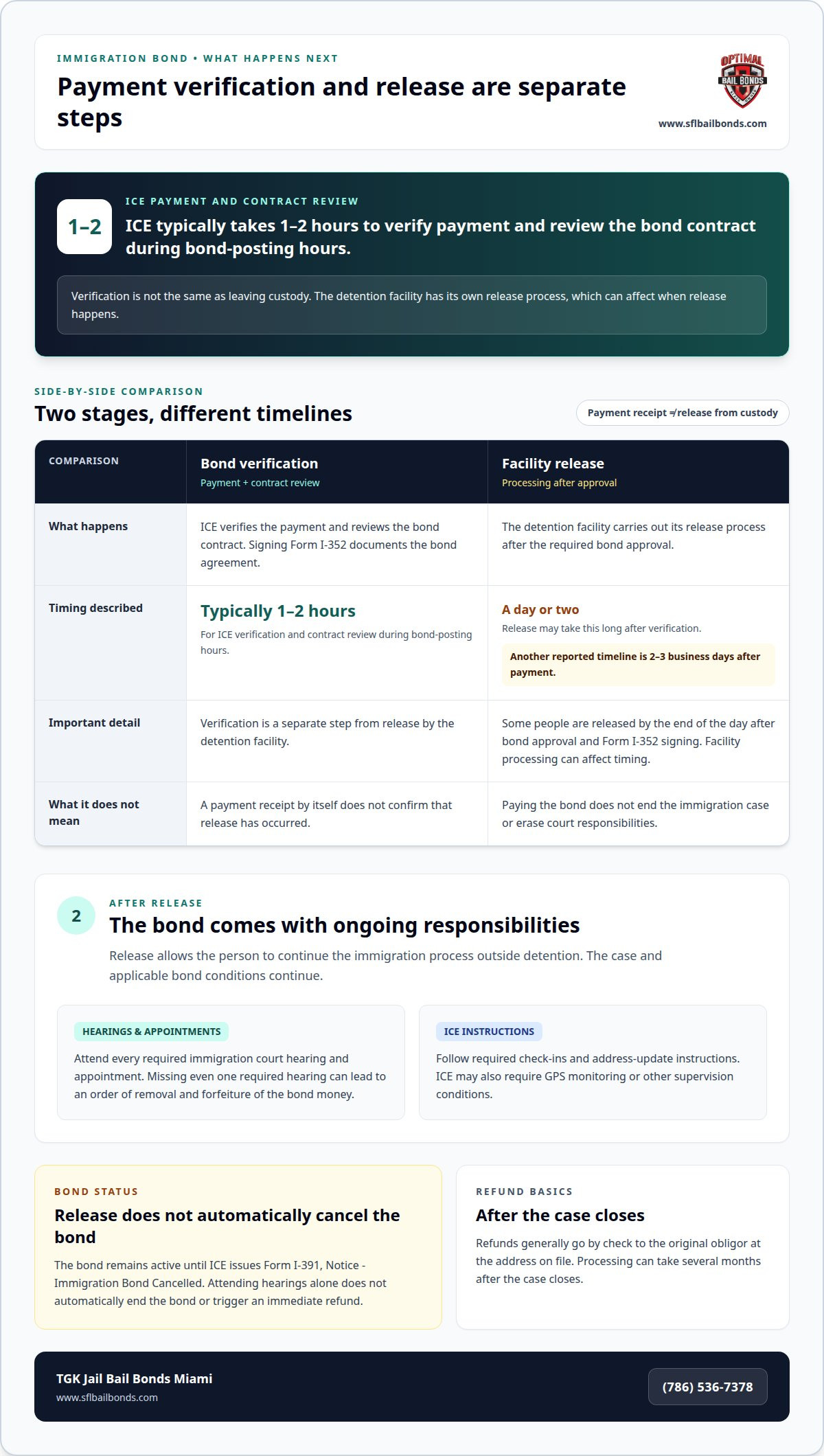
- Confirm that the bond payment and contract have been processed before expecting release. ICE typically takes 1-2 hours to verify payment and review the bond contract during bond-posting hours. Verification is separate from the detention facility’s release process. Some people are released by the end of the day after bond approval and Form I-352 signing. Facility processing can affect how soon the person is released.
- Plan for release processing to take additional time after verification. Release may take a day or two, and another reported timeline is 2-3 business days after payment. These timelines describe different stages and may vary with facility processing. A payment receipt alone does not mean the person has left custody. The release follows government receipt of payment and the required bond approval.
- After release, keep track of every immigration hearing, appointment, and ICE instruction. The person must attend required hearings and appointments. ICE may also require regular check-ins, GPS monitoring, or notice of address changes. These conditions are separate from the initial payment. The bond guarantee depends on meeting the applicable requirements while the immigration case continues.
- If ICE does not release someone or set a bond, understand the available court process. A person may ask an immigration judge for a bond hearing if ICE has not set a bond or has set an unaffordable amount. A federal judge receiving a habeas petition can order an immigration judge to hold a bond hearing, grant a bond, or order ICE to release the detained person. Filing a petition does not itself mean release has occurred.
- Keep the bond separate from other legal matters. An immigration bond payment does not count toward criminal-court bail, and release does not end the deportation case. A voluntary departure bond serves a different purpose: it applies when someone is allowed to leave the United States under supervision. After a standard release, the practical next step is to attend hearings and follow any ICE reporting requirements.
Immigration bond as a guarantee of court attendance
Yes. A person released on an immigration bond must attend all required immigration court hearings and appointments. The bond remains active while the immigration case and its requirements continue.
-
Review Bond Conditions
Read the bond conditions and any instructions ICE gives the released person. Identify required check-ins, reporting instructions, and any address-update requirements. A person may need to report regularly or follow supervision conditions, so don’t treat release as the end of enforcement obligations. Keep notices together and note each required action. If ICE issues Form I-340, the obligor must have the person present at the ICE location at the stated date and time.
-
Attend Immigration Court Hearings
Put every hearing and appointment on a calendar, then make attendance a priority. Missing even one required immigration court hearing can lead to an order of removal and forfeiture of the bond money. The person must also follow court orders, including an order to leave the United States. Attending hearings matters whether the person is a long-term resident or was recently released. The immigration case continues outside detention.
- Follow all reporting instructions as well as court dates. ICE may require regular check-ins, address updates, or other supervision conditions. Treat each notice as an individual instruction, and keep records of required appearances and completed check-ins. A bond is a guarantee tied to compliance, not permission to ignore later notices. If voluntary departure applies, the obligor must give ICE proof that the person departed by the required date.
- Keep the bond active until ICE formally cancels it. Attending hearings alone does not automatically end the bond or trigger an immediate refund. The bond remains in effect until ICE issues Form I-391, Notice - Immigration Bond Cancelled. Continue following applicable court orders and ICE instructions while the case proceeds. The bond refund process begins after the case closes, not simply because the person has been released from detention.
-
Return Bond Money After Compliance
Keep the original payment receipt and the obligor’s current mailing information for the refund process. Immigration bond refunds go to the original obligor, generally by check mailed to the address on file. Processing can take several months after the case closes. The person who posted the bond should keep contact details current with ICE until receiving the cancellation notice and refund. The released person and the payer may be different people.
For a separate look at the broader bail bond process, explore Miami bail bond information.
Meaning and amount of an immigration bond
- Separate bond eligibility from the amount before planning payment. An immigration bond is a financial guarantee connected to release from detention, not a decision on the immigration case. The minimum amount for an immigration bond in the United States is $1,500, according to U.S. Immigration and Customs Enforcement. That minimum does not mean every person qualifies for bond or receives that amount.
- Check whether the person’s detention circumstances affect eligibility. Some people may be ineligible because of certain criminal convictions, including drug crimes or aggravated felonies. Detention while entering the United States, a prior deportation, or a final deportation order can also affect eligibility. These circumstances matter before anyone arranges payment, since paying an amount alone cannot resolve a decision to detain without bond.
- Understand who sets or changes the amount. ICE may set a bond, and an immigration judge can review an ICE-set amount. The judge may lower it, leave it unchanged, increase it, or order detention without bond. The decision depends on the case before the court. A person may request a bond hearing if ICE has not set a bond or has set an unaffordable amount.
- Use the amount in the person’s actual bond decision, not a general range, to plan next steps. Bond amounts can vary by case, and the research describes amounts from $1,500 to $25,000 or more. That range is not a quote or a promise of what a judge will set. The written decision or ICE bond information provides the relevant amount for that situation.
- Bond eligibility rules can differ across states and federal court jurisdictions. The Fifth Circuit’s bond-eligibility ruling applies to people detained in Texas, Louisiana, Mississippi, and Arkansas. The Eighth Circuit’s ruling applies to people detained in Iowa, Minnesota, Missouri, Nebraska, North Dakota, and South Dakota. The detention location therefore matters when assessing which ruling may apply.
- Ask an immigration attorney to explain how the bond decision relates to the person’s case and possible departure obligations. A bond hearing addresses release, while the immigration case continues separately. A voluntary departure bond applies when a person is allowed to leave the United States under supervision. Bond money is not automatically returned upon release; refund eligibility depends on the bond’s terms and later compliance.
Paying a bond through ICE or a bond company
For an ICE office payment, bring valid identification and complete the required paperwork. Use a cashier’s check or money order payable to the U.S. Department of Homeland Security. Cash and personal checks are not accepted.
- Choose between paying ICE directly and using a bond company. A cash bond requires the obligor to deposit the full bond amount with ICE. A surety bond company may pay the bond under an arrangement with the person responsible for it. These options involve different payment obligations, so understand which applies before submitting payment.
- Confirm that the payer meets the status requirement. The payer must be a U.S. citizen or lawful permanent resident, and a person with lawful status may pay someone else’s immigration bond. The person who pays becomes the obligor. This matters because ICE sends bond notices and refunds to the obligor, not automatically to the person released.
- Prepare the payment method for an in-person ICE transaction. Bring a cashier’s check or money order payable to the U.S. Department of Homeland Security, along with valid identification and completed paperwork. ICE offices do not accept cash or personal checks for these payments. Keep the receipt and a copy of the signed paperwork for your records.
- Use ICE’s CeBONDS platform when paying online is available for the case. ICE began using CeBONDS to process immigration bond payments and execute Form I-352 on April 20, 2023. The online process still requires the bond paperwork to be completed. Payment processing can take several hours at an ICE office, so allow time for processing before expecting release.
- Plan around ICE’s bond-posting schedule for in-person payments. Posting hours are Monday through Friday from 9 a.m. to 3 p.m., excluding government holidays, in the time zone where the person is detained. Arriving outside those hours can delay the payment process. The schedule is tied to the detention location, not the payer’s local time zone.
- Review the surety company’s premium and payment terms before choosing that route. Licensed surety bond companies typically charge a non-refundable premium of around 15% of the bond total. Some immigration bond companies may also charge recurring fees, usually monthly. A premium is different from a refundable cash deposit, so understand which payments are non-refundable.
- Keep payment records and the bond agreement together after submitting funds. Form I-352 documents an immigration bond paid to ICE, while a bond company’s agreement describes its arrangement with the obligor. These records help clarify who paid, which payment route was used, and what obligations continue while immigration court hearings and ICE requirements remain active.
Signing the Form I-352 bond contract
- Read the bond contract before signing or completing the payment process. An immigration bond paid to ICE is documented using Form I-352, according to U.S. Immigration and Customs Enforcement. The form records the bond agreement, so the person responsible for payment should understand the commitment being made. Signing the document does not decide the pending immigration case or replace future court hearings.
- Identify who is acting as the obligor. The obligor is the person who assumes responsibility for the bond, which may differ from the person detained or later released. For example, a relative may post the bond while the detained person remains responsible for attending immigration court hearings. Keep the roles clear when reviewing Form I-352 and related payment documents.
- Bring valid identification and complete the ICE paperwork. The bond payer must provide valid identification and complete paperwork at the ICE office. Make sure the information matches the person posting the bond and the detained person. If a detail is unclear, pause before signing and ask ICE staff to explain the document.
- Understand the guarantee described by the agreement. An immigration bond assures the government that the released person will attend required hearings and ICE check-ins. The immigration case remains pending after release, and the bond does not end that process. The obligor should keep a copy of Form I-352 with payment records and other bond documents.
- Keep the original payment receipt with the signed contract. Form I-305 is the original receipt required to obtain a bond refund, and a copy may not be sufficient. Store it safely with Form I-352 so the obligor can locate both documents when the bond process concludes. Avoid discarding paperwork after the detained person is released.
- Track obligations separately from the signature process. Signing Form I-352 does not remove the released person’s duty to attend immigration court hearings or follow ICE instructions. The obligor should retain notices and payment records, while the released person follows applicable reporting requirements. If the contract’s terms or consequences are unclear, an immigration attorney can explain the legal questions.
- Keep the contract available throughout the case. ICE may later issue notices about bond status, and the obligor’s records can help identify the agreement involved. Form I-352 is not a final decision on immigration status, permission to remain, or the outcome of court proceedings. Treat it as a bond document, not as a substitute for case-specific legal guidance.
TGK Jail Bail Bonds Miami: How to be a Bail Bondsman
TGK Jail Bail Bonds Miami offers How to be a Bail Bondsman for readers whose interest extends beyond understanding an immigration bond and toward learning about the bail bond profession. This educational option is a natural next step if you’re exploring that career path. It’s separate from the immigration process explained above, and it doesn’t replace guidance about an individual immigration case. If your immediate concern is a detained person’s release or court obligations, focus on the case-specific steps and requirements first. If you’re ready to learn about becoming a bail bondsman, contact TGK Jail Bail Bonds Miami to discuss your interest.
Turn What You’ve Learned Into Your Next Step
Understanding what happens after an immigration bond is paid may prompt a broader question: would you like to learn about the bail bond profession? That is separate from managing an individual immigration case, but it may be a useful direction if you are exploring work in the industry.
TGK Jail Bail Bonds Miami offers a Pre-Licensing Bail Bonds Class, a 120 Hours Bail Bonds Course, and How to be a Bail Bondsman. These educational options can help you identify a practical next step toward learning about the field. Choose the direction that fits your goals, and take time to understand what you want to pursue before moving forward.
Whatever your next step, move forward with clarity and confidence.
Frequently Asked Questions
How long does a bond remain in effect?
An immigration bond remains in effect until ICE issues Form I-391, Notice - Immigration Bond Cancelled. Release from detention alone does not close the bond. Keep the obligor’s mailing address current while the case continues, and retain bond documents until the cancellation notice arrives. After the case closes, the refund process can still take several months, so the cancellation notice and the refund are separate milestones.
If approved, when will a release take place?
After bond approval and signing Form I-352, release may occur by the end of the day, though detention facility processing affects timing. ICE’s verification of the payment and contract is a separate step from the facility’s release procedure. Keep the payment receipt and contract available, and understand that approval does not mean the person has already left the facility.
What happens after an immigration bond is paid?
ICE verifies the bond payment and contract, then the detention facility processes the person’s release. The immigration case continues, so release does not remove future court or reporting obligations. For example, a person may leave detention but still need to attend a scheduled hearing or follow ICE check-in instructions. Keep notices and bond paperwork accessible as the case moves forward.
How long does it take for an ICE detainee to be released after bond payment?
Reported release timelines range from a day or two to 2-3 business days after payment. ICE verification may take 1-2 hours during bond-posting hours, but facility release processing follows separately and can affect the timing. A receipt confirms a payment was submitted, not that release is complete. Keep in contact with the obligor and facility for updates about the release process.
How can you confirm ICE received and processed an immigration bond payment?
Keep the payment receipt and any confirmation from CeBONDS or the ICE office where payment was made. For a status question, the ICE Bonding Office can be reached at 1-855-438-9677. Have the obligor’s information and payment details ready when calling. A submitted payment record is useful, but confirm processing status separately before assuming the detention facility has begun release procedures.
What conditions must someone follow after release on an immigration bond?
The person must attend required immigration hearings and appointments and follow ICE instructions. Depending on the case, conditions may include regular ICE check-ins, GPS monitoring, or reporting an address change. Keep appointment notices together and record each required appearance. For example, a new address does not excuse missing an existing hearing or check-in.
What happens if someone violates immigration bond conditions or misses a court hearing?
Missing a required hearing can lead to an order of removal and forfeiture of the bond money. ICE may notify the obligor of a breach using Form I-323, Notice - Immigration Bond Breached. If a notice arrives, keep it with the bond paperwork and note its details. A breach can affect the obligor financially, so the released person should follow court and ICE instructions carefully.
How do you get an immigration bond refunded, and how long does the refund take?
After ICE cancels the bond, the original obligor should submit refund documents to the Debt Management Center. The claim requires the original Form I-305 payment receipt, a valid government-issued photo ID, and the relevant bond documents. A copy of the receipt may be insufficient. Refund processing can take several months after the case closes, and the refund is issued to the original obligor.


