

A private surety bond isn’t automatically the more practical choice for a low-risk defendant. In Miami, Florida, pretrial release supervision may allow someone to remain out of custody under court-ordered conditions, while a private surety bond relies on a bail bond agent’s financial guarantee. The right choice between pre-trial release supervision and a private surety bond in Miami, Florida depends on the judge’s decision, the conditions imposed, and the financial responsibilities involved.
It’s understandable to focus on how quickly someone can get home, but release also brings obligations that can affect daily life and court appearances. This article explains how supervision and monitoring differ, who carries financial responsibility if a defendant misses court, and what judges may consider when setting release conditions. You’ll also learn how the two options work in practice, including why supervised release may be a reasonable path for some defendants and when a surety bond may be relevant. Knowing the distinction can make a stressful decision easier to understand.
Key Takeaways
- Compare court-ordered supervision with a surety bond by looking at monitoring conditions and who carries the financial obligation.
- Learn how release conditions can shape daily routines, including check-ins, testing, or other court-ordered monitoring.
- Understand how a surety bond works as a financial guarantee and what may follow if a defendant misses court.
- See which factors can influence a judge’s release decision, including charge severity, criminal history, and perceived flight risk.
- Find out how supervision costs may arise in Miami-Dade County and where Florida law addresses payment for supervision and rehabilitation.
How Logical is Relying on Supervised Release for Low-Risk Pretrial Defendants?
For a low-risk defendant, supervised pretrial release can be a practical alternative to paying for a private surety bond. In Miami-Dade, the judge’s conditions determine whether release requires check-ins, restrictions, or other obligations.
Conditional Release and Pretrial Supervision
Conditional release allows a person to remain out of custody while following court-ordered requirements. Pretrial supervision adds oversight, such as contact with a pretrial services officer or participation in a required program. Release is not simply freedom from jail: the person must meet each condition while the case proceeds.
For a low-risk defendant, supervision may support court appearances without requiring an upfront financial guarantee. It can also impose meaningful limits, so the person should understand each condition before making plans for work, family, or travel. The court weighs the practical effects of supervision alongside the goals of ensuring court appearances and public safety.
Release Conditions and Personal Recognizance
Release conditions are requirements a judge attaches to a person’s release. Personal recognizance allows release on a promise to appear without posting bail. The distinction matters: a person released without paying money may still have obligations beyond attending court. A judge may instead order supervised release, adding monitoring to the promise to return.
Personal recognizance is typically associated with strong community ties and a low flight risk. This kind of release can avoid an immediate payment, but it does not remove the responsibility to appear or follow court orders. For example, someone released on recognizance may still need to comply with a no-contact order or travel restriction if the judge imposes one.
Bond Conditions and Court-Ordered Restrictions
Pretrial supervision can be a condition of posting bond, so a financial guarantee and court monitoring may apply together. Paying for release does not necessarily remove supervision requirements. Courts can also impose conditions they consider necessary to support court appearances or public safety.
Restrictions may limit travel or access to specified places, and South Florida pretrial services may require counseling or treatment. In Florida, a court can revoke release and hold a person if probable cause indicates a new crime or a material violation of another condition. A bail bondsman’s role in a surety bond does not replace the defendant’s duty to obey the court’s order.
Supervision Check-Ins and Requirements
For Miami-Dade pretrial supervision, the court order specifies the required conditions and check-ins. South Florida pretrial services may require weekly check-ins, travel restrictions, or counseling or treatment, but the order determines what applies to each person’s release.
That distinction answers a practical question: weekly reporting is possible, but it is not a universal requirement for every defendant. Read the order for specific steps, including when to report and which restrictions apply. Missing a check-in or violating a condition can put release at risk, so pay as much attention to the terms as to the court date.
Supervised pretrial release and community monitoring
In Miami-Dade, supervised release can involve court-ordered monitoring from a person’s release until the criminal case is resolved. Florida’s constitutional and statutory framework explains how this decision fits into pretrial procedure.
Community Monitoring During Pretrial Release
Supervised pretrial release allows someone to remain in the community while following conditions and any monitoring ordered by the court. Release can involve more than staying out of custody: a person may need to report to pretrial services, follow travel restrictions, or participate in a required program.
Think of monitoring as a separate layer of oversight, not a financial guarantee. For example, an order might require regular contact with an officer and restrict travel. Consider how each condition affects work, caregiving, and appointments. Whether a payment is refundable is a separate financial question; supervision alone doesn’t establish whether money must be posted or returned.
Pretrial Services Interviews and Recommendations
A Pretrial Services interview gives staff an opportunity to gather information relevant to a release recommendation. Details such as a person’s residence, community ties, work, and ability to attend court can help the court understand the circumstances. The recommendation informs the release decision, but it is not the same as a judge’s order.
For instance, a stable local address may help show how someone can remain reachable, while a work schedule may be relevant to reporting requirements. Provide clear, accurate information during the process. If the court orders monitoring, the written conditions control; an interview or recommendation does not replace them.
Florida Pretrial Release Procedures
Florida’s constitutional provision on pretrial release is Article I, Section 14 of the Florida Constitution, according to the Florida Legislature. Florida pretrial detention and release are generally governed by Section 907.041 of the Florida Statutes, according to the Florida Legislature. These authorities provide the framework for release decisions, rather than a guarantee that every person will receive the same option.
The process turns on the charge, the circumstances presented, and the court’s release decision. A judge may order supervision or other conditions instead of release without monitoring. Read the order carefully: it identifies the conditions that apply to that case and clarifies what the person must do while released.
Release Factors and Officer Contact
Release decisions may consider the severity of the charge, criminal history, and perceived flight risk. Community ties can also help show whether a person has reasons to remain available for court. These factors help explain why a judge may order supervision, impose restrictions, or require a financial condition.
To reach a pretrial supervision officer, use the contact method and details provided in the release paperwork. Keep the case information available and ask focused questions about a listed check-in, reporting time, or restriction. If the order names a specific officer, direct the question there; don’t assume a bond agent can change a court-ordered condition. For a separate overview of Miami bail bond options, consider how financial release differs from community monitoring.
Bail as a financial guarantee of court appearance
Bail links release to a financial obligation intended to encourage a defendant to appear in court. In South Florida, a defendant who misses a required appearance can forfeit bail to the court. This differs from a supervision requirement: bail concerns money or pledged value, while supervision concerns compliance with ordered conditions. Both can shape the terms of release.
A private surety bond involves a bail bondsman posting the full bail amount in exchange for a nonrefundable fee. The defendant or family pays that fee to obtain the bond, and it isn’t returned simply because the defendant attends court. If the defendant fails to appear, the bondsman is responsible for the full bail amount. The surety provides the financial guarantee, while the defendant remains responsible for attending hearings and following court orders.
Cash bail works differently. The defendant or someone helping them pays the full amount to the court, and the money is generally returned after the case concludes if the defendant appeared as required. In Florida, the return may be reduced by unpaid fines, court costs, fees, and certain other costs. The trial’s outcome does not determine whether the person appeared, but outstanding deductions can affect the amount returned.
For example, a person who attends every scheduled hearing may still owe court costs when the case ends. The court can deduct applicable amounts before returning the remaining cash. A surety bond instead involves a nonrefundable payment to the bail bond agent, separate from cash deposited with the court. Distinguishing these two financial arrangements helps families understand what may be returned and what is not refundable.
Other bond structures also affect financial exposure. An unsecured appearance bond requires no upfront monetary security, but the defendant remains financially liable for the full amount if they fail to appear. A secured appearance bond requires upfront financial security. A property bond can involve valuable assets as security, so it may expose the defendant to financial consequences if they fail to appear. The type of security matters because the consequences of failing to appear differ.
In the criminal justice process, bail is intended to support court appearances, not decide guilt. It can protect the court’s ability to continue proceedings, but it does not remove the defendant’s obligation to attend. Before choosing between cash, an unsecured obligation, property, or a surety bond, identify who provides the guarantee, which payment is refundable, and what may be forfeited after a missed appearance. These distinctions clarify the financial stakes without confusing them with supervision requirements.
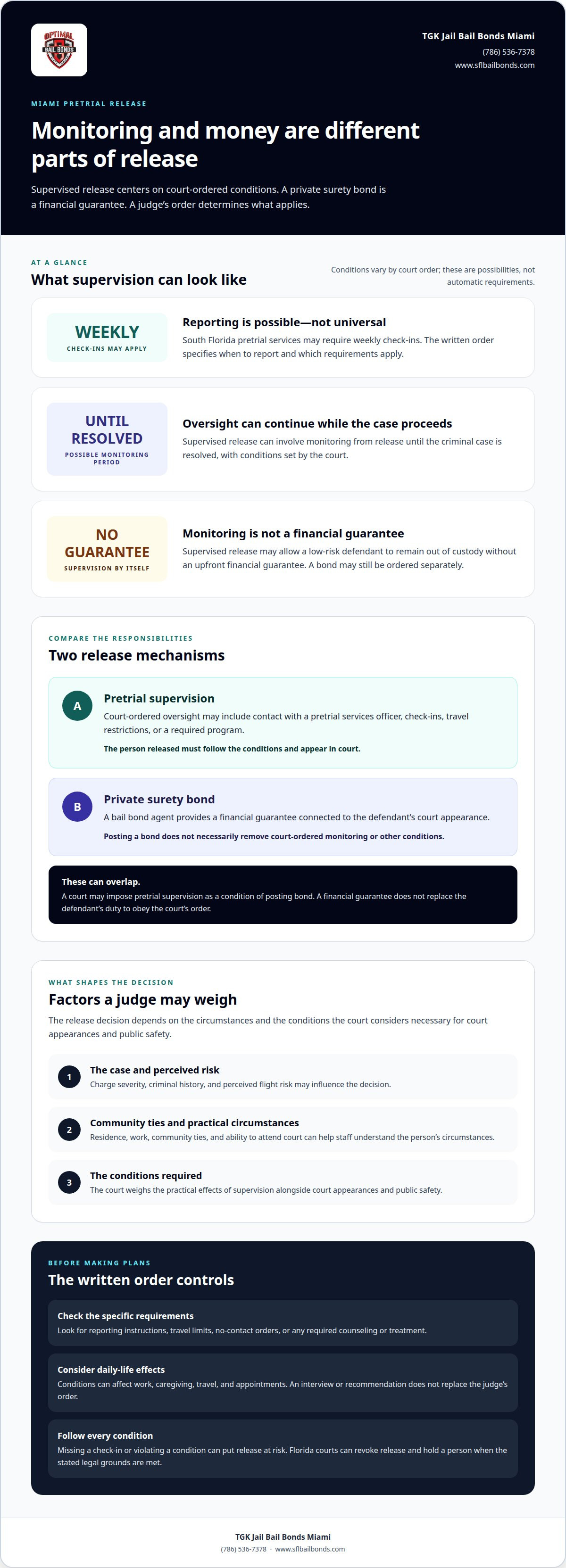
Factors judges consider when setting bond
After an arrest, the judge weighs information about the defendant and the charges before setting release terms. U.S. courts consider the severity of the charge, criminal history, and perceived flight risk. These factors help explain why two people facing different allegations may receive different bond decisions. They aren’t a simple score: the court considers how the details fit together when assessing the likelihood of appearance and public safety.
Charge severity is one part of that assessment. Florida law treats certain allegations differently: a person charged with a capital offense or an offense punishable by life imprisonment may be held without bond if the proof of guilt is evident or the presumption is great. At an Arthur hearing on that question, the State carries the burden. The charge alone does not determine the outcome; the court considers the required legal standard and the evidence presented.
Criminal history can also inform how a judge views a proposed release. For example, a prior record may be relevant alongside the current charges, while a history of attending court as required may provide different context. No single detail automatically determines the result. A judge considers the defendant’s circumstances along with perceived flight risk and the nature of the case.
Flight risk concerns whether the defendant is likely to appear in court. A local residence or established community ties can be relevant, as can circumstances suggesting a person may not return. The court may respond with conditions designed to support appearances, including supervision or restrictions. In practice, this means release may carry duties beyond attending the next hearing.
Financial terms create another distinction. A surety bond uses a bail bond agent’s guarantee, while a secured bond requires financial security. Collateral may be at stake under some bond arrangements, but it does not remove the defendant’s obligation to appear. The judge’s assessment of release factors is separate from a family’s decision about how to meet a financial condition. Access to collateral does not mean release is assured.
For a Florida case, an attorney can explain how the charges, record, and evidence relate to the release decision. Once terms are set, the court’s order is the practical guide: it identifies the required conditions and restrictions. If a hearing addresses whether certain serious charges permit release without bond, the Arthur hearing focuses on the evidence and the State’s burden. Understanding this distinction can help families follow what the court is deciding.
How much does pretrial release supervision cost in Miami-Dade County?
In Miami-Dade County, supervision costs depend on the services required by the release order. Florida Statutes section 948.09 addresses payment for the cost of supervision and rehabilitation, according to the Florida Legislature. That statute provides relevant context, but it does not mean every person released before trial has the same supervision arrangement. The conditions ordered in a specific case affect what supervision involves.
Electronic monitoring is a key cost factor. Florida pretrial release programs most commonly charged fees for electronic monitoring, so a person ordered to wear a monitoring device may face a different cost obligation from someone assigned another form of supervision. Monitoring is not automatic in every release. The court’s order determines whether it applies, while the required supervision services shape the practical cost.
Separate the supervision obligation from the financial terms of a bail bond. They serve different purposes. A surety bond involves a payment to a bail bond agent for a financial guarantee, while supervision costs relate to services or monitoring imposed as release conditions. A defendant could face court-ordered supervision alongside a bond, so considering only one cost can leave families without a full picture of release obligations.
For example, compare two hypothetical release orders. One requires routine reporting but no electronic monitoring; another requires electronic monitoring as well. The second order includes an additional service that may affect costs. These examples show why the release conditions matter more than a general label such as “supervised release.” The written order identifies the conditions the person must follow.
To understand the financial obligations, first identify the ordered supervision requirements. Look for references to electronic monitoring, reporting, or rehabilitation services in the release paperwork. Then distinguish any supervision-related payment from a bond premium or cash held by the court. These costs relate to different arrangements, and one does not automatically replace the other.
Florida Statutes section 948.09 is relevant to payment for supervision and rehabilitation, while the court’s release order shows which conditions apply. A person facing electronic monitoring should account for that requirement when considering the practical cost of release. A person without that condition should not assume the same monitoring expense applies. The key is matching costs to the actual services and conditions ordered.
Pretrial release supervision and a private surety bond have different financial structures. Court-ordered monitoring can create a supervision-related cost, while a surety bond involves its own financial agreement. For a Miami-Dade case, understanding both obligations helps clarify what release entails and which expenses arise from monitoring rather than the bond.
Bail Bonds Miami and the Bail Bondsman Profession
Readers exploring the surety bond profession may also be seeking bail bond assistance in Miami. TGK Jail Bail Bonds Miami provides bail bond services for people dealing with a current release situation. Learning about the work behind private surety bonds is distinct from seeking help with a Miami bail bond.
These are different needs: learning about the bail bondsman profession is distinct from seeking help with a Miami bail bond. Identifying which need applies can help you choose a relevant next step without confusing industry education with assistance for a current case.
Contact Bail Bonds Miami to discuss your next step.
Choose a Next Step That Fits Your Goals
Understanding the choice between pretrial release supervision and a private surety bond in Miami, Florida can clarify what questions to raise about a current case or a future career. Keep those goals distinct: release decisions concern a defendant’s circumstances and court orders, while professional education is for people exploring bail bond work. If you’re dealing with a pending case, focus on understanding the applicable release terms and financial responsibilities.
For career-focused readers, Optimal Bail Bonds offers a Pre-Licensing Bail Bonds Class, a 120 Hours Bail Bonds Course, and How to be a Bail Bondsman. These offerings provide a next step for learning about the profession. Choose the path that fits what you’re trying to do now, whether that means understanding a bond-related option or pursuing structured learning about the field.
A clear next step can make a complicated process feel more manageable. Move forward with information and support that match your goals.
Frequently Asked Questions
What Is Pretrial Supervision or Pretrial Services, and How Does It Work?
Pretrial services support the court by monitoring people released before trial and reporting on compliance with ordered conditions. For example, a release order may require check-ins, testing, or program participation. The person receives the requirements through the court order or supervision process and follows them while the case continues. Keep the order available: it identifies the actual obligations and helps distinguish supervision tasks from ordinary court dates.
Who Is Eligible for Pretrial Release?
Eligibility depends on the court’s assessment of the charges, criminal history, and risk of failing to appear. Community ties and the person’s circumstances can also inform the release decision. For example, a judge may consider whether a defendant has a stable local residence when assessing release conditions. Florida law also treats certain serious charges differently, so pretrial release is not automatic for every person arrested.
What Happens If a Condition Is Violated?
A violation can prompt the court to review whether release should continue. In Florida, a court can revoke pretrial release and hold a person if it finds probable cause that the person committed a new crime while released or materially violated another release condition. For example, missing a required check-in may draw scrutiny under the order’s terms. Keep records of reporting and communications to clarify what occurred.
What Is Pretrial Release Supervision in Miami-Dade County, Florida?
In Miami-Dade County, pretrial release supervision means the court permits release subject to monitoring or other conditions. The person may need to report to pretrial services, comply with travel limits, or attend required counseling or treatment. The written order identifies which conditions apply. For instance, someone ordered to attend counseling must account for that appointment alongside court appearances and any reporting schedule.
How Does a Private Surety Bond Work in Miami, Florida?
A private surety bond uses a bail bond agent’s financial guarantee to support a defendant’s release under the bond set by the court. The defendant or family arranges the bond with the agent, while the defendant remains responsible for attending court and obeying release conditions. A bond does not excuse someone from a separate supervision requirement. The bond paperwork and court order address different parts of the release arrangement.
What Are the Eligibility Rules for Pretrial Release in Miami-Dade?
Miami-Dade release decisions depend on the court’s review of the case, including charge severity, criminal history, and perceived flight risk. A judge may order release with conditions, supervision, or a financial bond. Florida’s rules exclude certain capital offenses and offenses punishable by life imprisonment from the general release guarantee. For a serious charge, the court’s decision may involve a hearing focused on the evidence and applicable legal standard.
What Is the Typical Cost and Premium for a Surety Bond in Florida?
A surety bond premium depends on the court-set bond amount and the bond arrangement. The premium paid to an agent is distinct from court supervision expenses or cash deposited with the court. The agent can explain the premium for a specific case. When reviewing the financial commitment, distinguish the agent’s premium from any collateral and costs tied to court-ordered monitoring.
How Do Pretrial Release Supervision and a Private Surety Bond Compare?
Pretrial supervision centers on monitoring and compliance, while a private surety bond centers on a financial guarantee arranged through a bail bond agent. A court may order supervision alongside a bond, so the options are not always mutually exclusive. For example, a defendant might have both bond paperwork and separate check-in requirements. Compare the written release conditions with the bond agreement to understand each responsibility and who administers it.


