
A missed court date can trigger a bench warrant and put a Florida surety bond at risk, but prompt action may help address the situation. If you’re deciding what to do when a defendant skips a court appearance on a surety bond in Florida, contact the bondsman as soon as possible, explain why the defendant missed court, and ask about next steps. FTA means “failure to appear.” A judge may recall an FTA warrant and reinstate the bond when the absence wasn’t intentional and the defendant acts quickly.
It’s understandable to worry about what this means for the defendant and anyone who signed the bond. A missed hearing can have serious consequences, but the reason for the absence and how quickly the defendant responds matter.
This article explains what may happen after an FTA, whether a surety bond can be reinstated, how to approach rescheduling the court date, and what to know about a bench warrant. You’ll also learn what information may help explain the missed appearance and why it’s important to address the situation promptly.
Key Takeaways
- Act promptly after a missed hearing and tell the bondsman what happened; the reason for the absence can matter when seeking a resolution.
- Learn how court notice and bond forfeiture work, including the deadlines that may affect the surety.
- Understand that reinstatement may be possible, but it depends on the circumstances and the steps taken after the FTA.
- Know how a cosigner’s agreement can create financial responsibility if the bond is not exonerated.
- See how a bench warrant can affect the defendant and why arranging a new court date requires addressing the missed appearance.
What Happens If You Fail To Appear?
Missing a required hearing can put a Florida surety bond at risk and lead to a bench warrant. The notice process, reason for the absence, and prompt response all matter.
Court Notices After a Missed Appearance
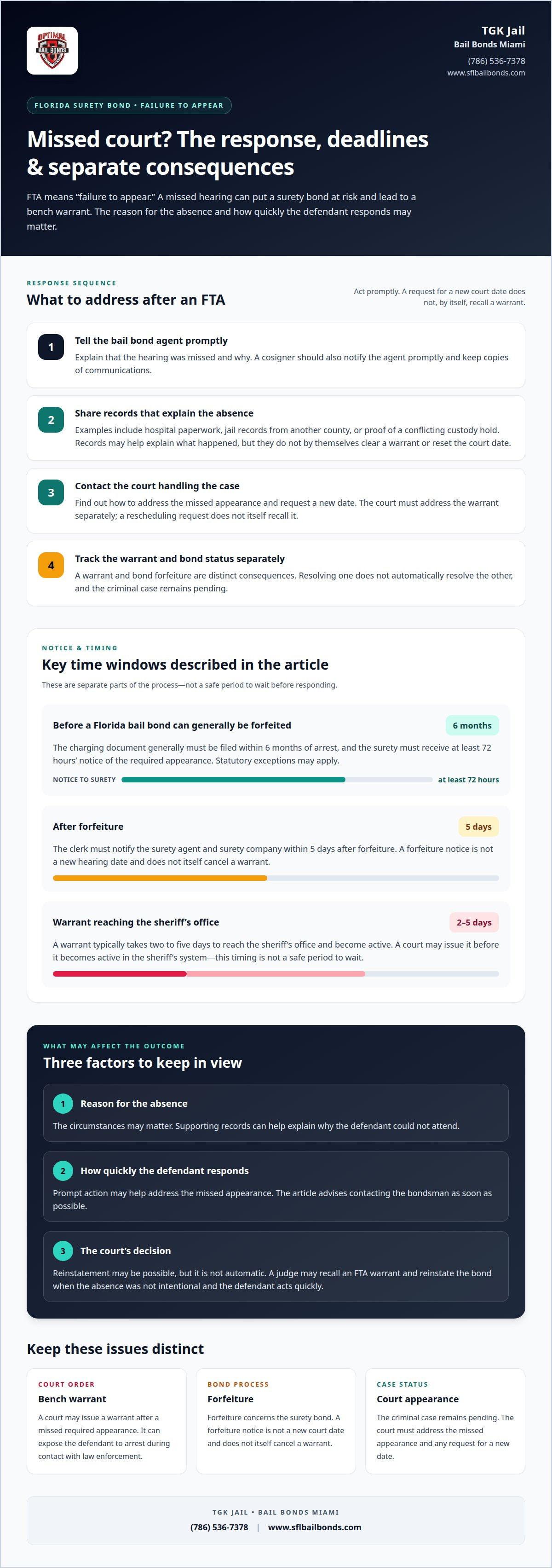
Court notices document the missed appearance and inform the surety about a bond forfeiture. According to the Florida Legislature, a Florida bail bond generally cannot be forfeited unless the charging document was filed within 6 months of arrest and the surety received at least 72 hours’ notice of the required appearance, subject to statutory exceptions.
After forfeiture, the clerk must notify the surety agent and surety company within 5 days. If you’re considering what to do if a defendant skips a court appearance on a Florida surety bond, contact the bail bond agent promptly and explain the circumstances. A forfeiture notice is not a new hearing date, and it does not itself cancel a warrant.
Failure-to-Appear Warrant Process
A failure-to-appear warrant is a court order authorizing an arrest after a defendant misses a required appearance. A Florida court may issue a bench warrant after the missed date, and it typically takes two to five days to reach the sheriff’s office and become active.
That timing is not a safe period to wait. The court may issue the warrant before it becomes active in the sheriff’s system. For example, a defendant who has not heard from law enforcement should not assume there is no warrant. The warrant and bond forfeiture are separate consequences, so resolving one does not automatically resolve the other.
Effects on the Case and Future Release
An FTA does not end the criminal case or remove the requirement to appear. The case remains pending, and a warrant can expose the defendant to arrest during contact with law enforcement. Existing bond conditions may also remain relevant while the court addresses the missed appearance.
The warrant can affect whether release is available and what conditions may apply. For example, a person hospitalized on the hearing date can keep hospital records to explain the absence. Those records may help show what happened, but they do not by themselves clear the warrant or reset the court date.
Steps to Address a Missed Court Date
Tell the bail bond agent the hearing was missed, explain why, and share supporting records. Hospital paperwork, jail records from another county, or proof of a conflicting custody hold may document why the defendant could not attend. A cosigner should also notify the agent promptly and keep copies of all communications.
Next, contact the court handling the criminal case to learn how to address the missed appearance and request a new date. A request to reschedule does not itself recall a warrant; the court must address that separately. If you’re still weighing what to do if a defendant skips a court appearance on a Florida surety bond, treat the warrant, court date, and bond status as distinct issues. Act promptly on each.
What does FTA mean in bail bonds?
FTA means “failure to appear.” In a bail bond case, it describes a defendant missing a required court appearance while released on bond. The signed contract matters because it records the defendant’s promise to appear and the signer’s agreement to guarantee that appearance. An FTA can therefore affect the defendant, the person who signed, and the bail bond agent.
For a Florida state bail bond, the premium is 10% of the bail amount set by the court. A federal bail bond premium is 15% of the court-set amount. The premium is earned and nonrefundable once the bondsman takes the defendant out of jail, except when the bondsman returns the defendant to jail without proper cause. That premium is separate from collateral pledged under the bond contract.
A bail bond contract creates responsibilities beyond paying the premium. The person who signs guarantees the defendant’s court appearances, and the bail bond agent may bring a breach-of-contract lawsuit against that guarantor. If the defendant misses court, the contract and any indemnity agreement determine possible financial exposure. Review the signed terms and communicate promptly with the bondsman rather than assuming the premium is the only obligation.
Before posting bail, consider whether the defendant is likely to attend hearings and follow bond conditions. If there is reason to believe the person will intentionally miss court or leave the area, posting a bond can expose the signer to serious financial consequences. Discuss the court schedule, the defendant’s reliability, and the contract obligations before agreeing to guarantee an appearance. A bail bond is not simply a payment that ends when the defendant leaves jail.
Florida Administrative Code 69B-221.001 allows a bail bond agent or a duly licensed person from another state to apprehend, detain, or arrest a principal on a bond in Florida. A bail bond agent may also issue the agent’s own warrant for someone released on bond and decide to return that person to jail. This is distinct from a court-issued bench warrant following an FTA. The agent’s authority concerns the bond relationship; it does not resolve the court case.
If you need help arranging a bond in Miami, explore Miami bail bond assistance. Bring the defendant’s booking and court information when discussing the situation. Clear details help the bondsman explain the bond process and the obligations that accompany the contract.
Can a bail bond be reinstated after an FTA?
A Florida surety bond may be reinstated after a missed appearance, but reinstatement is not automatic. The reason for the absence, the defendant’s response, and the court’s action all matter.
Cosigner and Indemnitor Financial Responsibility
A cosigner or indemnitor agrees to protect the surety against losses tied to the bond. That commitment matters because an FTA can create financial exposure beyond the premium already paid.
The defendant is the principal who promises to appear; the bail bond agent arranges the bond, and the surety company backs it. The indemnitor signs an agreement supporting that bond. If a forfeiture is not discharged, the indemnity agreement can make the signer responsible for the bond’s full penal amount and documented recovery costs. Pledged collateral may also be liquidated if the bond is not exonerated.
Responsibility depends on the signed contract and the bond’s status, not simply on who paid to get the defendant released. For example, a family member who signs as indemnitor may face a claim even if another relative paid the premium. If a defendant misses court, the signer should promptly tell the bail bond agent why, share relevant records, and discuss what the agreement requires. A hospital record or proof of custody elsewhere may help document the circumstances, but it does not itself cancel the bond or erase the signer’s obligations.
Florida rules also limit how collateral can be applied. An agent or insurer must give the indemnitor and principal 10 days’ written notice before converting collateral to cash to satisfy a forfeiture. That notice gives the signer an opportunity to understand the proposed action and address the bond’s status. Keep the contract, collateral receipt, court notices, and communications together; these records clarify what was pledged and what the surety is seeking.
County and Circuit Court Procedures
Florida bond deadlines come from state law, while court handling and scheduling can depend on the case’s jurisdiction. This distinction matters because a local scheduling process does not replace a statewide statutory deadline.
A defendant’s case remains with the court that has jurisdiction, and the clerk processes notices and filings for that case. The surety’s response obligations can continue while a request to reinstate a bond or address a warrant is pending. A defendant in Miami-Dade should identify the court handling the case, the current warrant status, and any forfeiture notice, rather than assuming another county’s process controls.
Across counties, the key practical step is to follow the notice for the specific case and promptly communicate with the bail bond agent. A judge may recall an FTA warrant and reinstate a bond when the absence was not intentional and the defendant acts quickly. An attorney can address court filings and legal arguments; the indemnitor should separately track notices and contractual obligations. Keep dates and documents organized, since the court’s decision, the bond’s status, and the signer’s agreement affect different responsibilities.
Reinstating a bond and rescheduling a court date
A missed hearing can put the bond at risk, but addressing the absence quickly can help clarify next steps. Reinstatement, exoneration, and rescheduling are separate actions, each with different effects.
Bond Reinstatement After an FTA
Reinstatement restores a bond after an FTA, while the court separately handles the missed hearing and any warrant. A Florida judge may recall an FTA warrant and reinstate the bond when the missed appearance was not intentional and the defendant acts quickly.
Contact the bail bond agent promptly, explain the reason for the absence, and share records supporting it. Hospital paperwork, for example, can document an illness that prevented attendance. The defendant should also address the missed appearance with the court handling the criminal case. A request for a new hearing date does not itself reinstate the bond or recall a warrant; those matters require action by the appropriate authority.
Bond Reinstatement and Exoneration
Reinstatement allows release to continue under a bond, while exoneration ends the surety’s obligation on that bond. The distinction matters because a new court date alone does not necessarily resolve bond forfeiture or release pledged collateral.
Florida law provides routes for discharging a forfeiture in specific circumstances. For example, a forfeiture must be discharged if the defendant is surrendered or arrested and held for return to the court’s jurisdiction at the required appearance or within 60 days afterward, subject to payment of return costs and expenses. The surety’s status and the defendant’s return are central; simply contacting the court is not the same as completing surrender or securing discharge.
Keep court notices, surrender records, and communications with the agent together. These documents help distinguish an active bond from a discharged forfeiture. If the defendant is released again, the court’s order and any new bond determine the applicable conditions.
Forfeiture and Applicable Deadlines
Yes. A Florida court can forfeit a surety bond after a required appearance is missed. According to the Florida Legislature, a Florida bail bond generally cannot be forfeited unless the charging document was filed within 6 months of arrest and the surety received at least 72 hours’ notice of the required appearance, subject to statutory exceptions.
After forfeiture, the clerk must send notice to the surety agent and surety company within 5 days. The surety then has 60 days after notice is transmitted to pay the forfeiture or obtain a court discharge. If neither occurs within that period, the clerk must enter judgment against the surety. These deadlines concern the surety’s financial obligation, not the deadline for requesting a new hearing.
A court may consider whether the circumstances warrant setting aside a forfeiture if the defendant appears. If the defendant appears later, the forfeiture process may continue. Act promptly: the defendant should address the missed hearing and warrant, while the surety tracks its notice and response deadlines.
Bench warrants issued after failure to appear
A bench warrant is a court order authorizing an arrest after a defendant misses a required appearance. It is separate from bond forfeiture: the warrant concerns the defendant’s return to court, while forfeiture concerns the surety bond. That distinction matters because addressing one does not automatically resolve the other. Paying a forfeiture, for example, does not itself recall a court-issued warrant.
After a missed hearing, a Florida court may issue a warrant even if the defendant was only briefly late. A defendant arriving five minutes after the scheduled time can still face arrest if the judge has issued a bench warrant. The practical takeaway is simple: don’t assume a short delay, a message to the court, or a new hearing request removes the arrest risk.
Most felony failure-to-appear warrants in Florida are issued with a $0 bond, meaning no bond is available. A defendant taken into custody on such a warrant may need to remain in custody until the court addresses release. A previous surety bond does not automatically provide release on the new warrant. The court’s action on the warrant and any new release terms control what happens next.
A warrant can also change the order of events. The defendant may need to be arrested or surrender before the court considers the missed appearance and future release. A bondsman’s involvement with the original bond does not replace the court’s authority over its warrant. Likewise, paying a premium for the original bond does not pay a forfeiture or resolve a separate warrant.
After learning about a warrant, focus on clear information and prompt communication:
- Give the bail bond agent the case number, missed hearing date, and reason for absence.
- Ask whether the agent has received a forfeiture notice or other bond-related court communication.
- Have the defendant’s attorney address the warrant and request appropriate court action.
- Keep records supporting the reason, such as hospital paperwork or proof of another custody hold.
These steps help distinguish the court’s process from the bond agent’s separate obligations. A defendant should not treat a planned surrender as equivalent to a recalled warrant; the court must address the warrant. Nor should a cosigner assume the bond is cleared once the defendant is back in custody. The agent and court may still need to resolve forfeiture, bond status, and any release conditions.
For a Miami case, identify the court handling the criminal matter and communicate the warrant information accurately. A licensed bond agent can explain the bond’s status, while the defendant’s attorney can address court proceedings and release requests. Keep the warrant, court notices, and custody records together so each party can act on the same case details.
Optimal Bail Bonds: How to be a Bail Bondsman
Optimal Bail Bonds offers a practical next step for readers seeking bail bond assistance in Miami and Fort Lauderdale, or exploring a career in the bail bond field. A missed appearance requires attention to the court case and bond obligations; for someone interested in the profession, learning how the industry works is a different path forward.
Those considering that career can explore How to be a Bail Bondsman, a Pre-Licensing Bail Bonds Class, and the 120 Hours Bail Bonds Course. These educational offerings connect aspiring bail bondsmen with training focused on entering the field. People seeking help with a bond can turn to Bail Bonds Miami for assistance with that need.
Contact Optimal Bail Bonds to discuss the next step that fits your situation.
Make the Next Step a Clear One
A missed appearance can leave families unsure how to move forward. Focus on a clear plan for the defendant’s court matter and bond, and keep communication direct among the people involved. If you’re deciding what to do when a defendant skips a court appearance on a Florida surety bond, support with the bond process can help you understand your next steps.
SFL Bail Bonds can help with Miami bail bond needs. For aspiring professionals, its educational offerings include a Pre-Licensing Bail Bonds Class, a 120 Hours Bail Bonds Course, and How to be a Bail Bondsman. Choose the support that fits your situation, whether you need help with a bond or want to learn about the bail bond field.
Taking one informed step at a time can make a difficult situation feel more manageable.
Frequently Asked Questions
Does the cosigner lose the premium if the defendant skips?
Usually, the premium isn’t refunded just because the defendant misses court. A Florida state bond premium is earned once the defendant is released, except when the bondsman returns the defendant to jail without proper cause. The premium and collateral are different: collateral may remain at risk if the bond isn’t exonerated. Review the bond agreement to understand the signer’s obligations and keep any forfeiture notices.
How long does it take for a warrant to become active after an FTA?
A Florida bench warrant typically takes two to five days to reach the sheriff’s office and become active. The court may issue the warrant before that administrative step is complete, so the defendant shouldn’t treat those days as a safe window. The timing does not change the need to address the missed hearing. Keep the case information available when communicating with the court or bond agent.
What Happens if I Bail Someone Out of Jail and They Skip Court?
If someone you helped release misses court, the bond may face forfeiture, and the defendant may face a bench warrant. A signer may also have contractual financial exposure under the bond or indemnity agreement. The signer isn’t criminally liable for the defendant’s actions simply because they posted bail, but civil obligations may apply. Tell the bond agent what happened and preserve the contract, notices, and relevant records.
What Is the Bail Amount on an FTA?
There isn’t one standard bail amount for every Florida FTA. Most felony FTA warrants are issued with a $0 bond, meaning no bond is available. Florida courts typically double the original bond amount for misdemeanor FTA cases. The warrant and case determine what applies, so don’t assume the original bond amount still allows release. The defendant’s attorney can address the court’s release decision.
Will the court accept a good reason for missing court?
A judge may consider the reason, but an explanation alone doesn’t automatically cancel a warrant or bond forfeiture. A judge may recall an FTA warrant and reinstate the bond when the absence wasn’t intentional and the defendant acts quickly. Documents can help show what prevented attendance, such as hospital paperwork or records of custody in another county. Provide relevant records promptly through the appropriate court process.
What should a Florida surety bond cosigner do immediately if the defendant misses court?
Contact the bail bond agent the same day, explain the absence, and share the defendant’s case details. Gather documents that may explain why attendance was impossible, such as hospital records or proof of another custody hold. Keep copies of communications and court notices. The cosigner should also review the signed agreement, since it governs potential financial responsibility. Prompt communication helps the agent understand the situation and the bond’s status.
How soon must a Florida surety bail bond agent notify the court or surrender the defendant after a missed appearance?
After forfeiture, the clerk must send notice to the surety agent and surety company within 5 days. The surety then has 60 days after notice is transmitted to pay the forfeiture or obtain a court discharge. A roughly 90-day period is described as usual for a bondsman to return a defendant, but that is distinct from the clerk’s notice deadline and the surety’s statutory response period.
How can a Florida surety bond forfeiture be set aside or discharged, and what are the filing deadlines?
According to the Florida Legislature, a bond generally cannot be forfeited unless the charging document was filed within 6 months of arrest and the surety received at least 72 hours’ notice, subject to statutory exceptions. A surety generally has 60 days after notice to pay or obtain discharge. Florida law allows discharge in specified circumstances, including qualifying surrender or arrest; a motion to set aside or stay a judgment may be filed within 35 days of notice of judgment, with the required deposit.


