
South Florida coverage is not one blanket promise: the bail bond service area described here focuses on North Miami-Dade. For people exploring networking for bail bondsmen in South Florida, knowing that local focus is a useful starting point for understanding where support is centered.
For aspiring agents, professional connections can help you learn about the industry and build relationships across Miami-Dade. Optimal Bail Bonds also offers a Pre-Licensing Bail Bonds Class and Bail Bond Industry Continuing Education, covering bail-bond laws, regulations, and procedures.
If you are exploring networking and training in Miami, consider both the people you want to meet and the knowledge you need to develop. Optimal Bail Bonds provides bail-bond industry education as well as bail bond services for individuals and families.
Key Takeaways
- Understand the service-area focus in North Miami-Dade and how to think about coverage across nearby Miami-area communities.
- Learn how to identify relevant professional groups and associations for building connections in South Florida.
- See practical ways to start respectful, professional relationships with attorneys and law firms.
- Explore how pre-licensing education, including a 120 Hours Bail Bonds Course, can support preparation for the field.
- Use the article’s guidance to choose networking steps that fit your location and career stage.
South Florida and Miami-Dade service area
In Miami and North Miami, useful connections may include licensed agents, attorneys, and other professionals whose work overlaps with yours. Online networking can help you identify local conversations and broader South Florida connections.
Local Associations and Networking Events
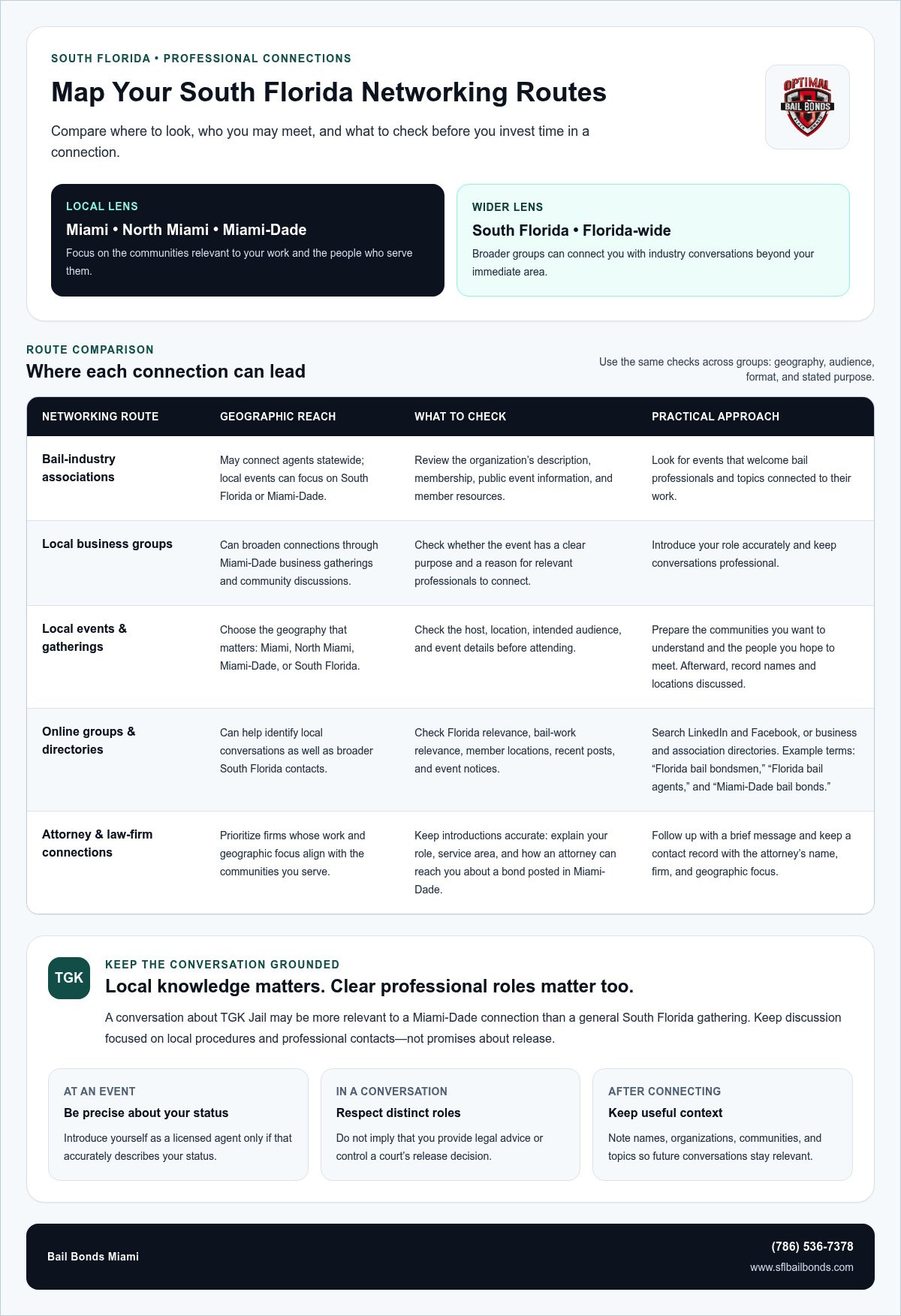
For local events, focus on the geography that matters to your work: Miami, North Miami, Miami-Dade, or South Florida more broadly. Look for Florida bail-industry association calendars and event listings that identify the host, location, and intended audience. Those details help you decide whether an event supports local introductions or wider professional connections.
At an event, introduce yourself as a licensed agent only if that accurately describes your status. Share the communities where you work and ask which areas other attendees serve. For example, a conversation about TGK Jail may be more relevant to a Miami-Dade connection than a general South Florida gathering. Keep the discussion practical: focus on local procedures and professional contacts, not promises about release.
Before attending, write down the communities you want to understand and the people you hope to meet. Afterward, record the names and locations discussed. This simple step turns an event into a useful map of professional connections across Miami-Dade.
Attorney Referral Relationships
Aspiring bail bondsmen can build attorney relationships through clear introductions and consistent professional communication. Start by identifying law firms whose work and geographic focus align with the communities you serve. A concise introduction can explain your role, service area, and how an attorney can reach you about a bond posted in Miami-Dade.
Keep each conversation focused on accurate information. Explain what details you need to discuss a bond, and avoid implying that you provide legal advice or control a court’s release decision. For example, if a family asks about an arrest connected to TGK Jail, an attorney and a bail agent have distinct roles. Respecting that distinction supports a more trustworthy referral relationship.
Follow up with a short message that recalls the meeting and the specific community discussed. Maintain a contact record with the attorney’s name, firm, and geographic focus. These steps make future conversations more relevant, whether the connection concerns Miami, North Miami, or another part of the county.
Online Groups and Directories
LinkedIn and Facebook can help South Florida agents find professional conversations, while business and association directories can help identify local organizations. Search those platforms for terms such as “Florida bail bondsmen,” “Florida bail agents,” and “Miami-Dade bail bonds.” Review group descriptions and directory entries for geographic relevance before joining or reaching out.
Use a simple screening process: check whether a group discusses Florida, whether its posts relate to bail work, and whether members identify a relevant local area. A statewide discussion may offer broad contacts, while a Miami-Dade directory entry can help narrow your local outreach. Don’t assume a group is active based on its title alone; review recent posts and event notices.
Keep your profile and directory details consistent. State your professional role and the communities you serve, then connect with people whose work overlaps those areas. For networking for bail bondsmen in South Florida, a useful online contact is someone who can explain a local connection, not simply add another name to a list.
What networking groups and associations serve bail bondsmen in South Florida?
For a bail bondsman in South Florida, useful connections can come through bail-industry associations, local business groups, and professional gatherings. Their focus differs: some connect agents statewide, while others create opportunities to meet people working in Miami-Dade communities. Before joining, identify whether the group serves bail professionals, offers relevant introductions, or primarily supports general business networking.
Start with Florida bail-industry associations. Look for an organization whose membership and communications address bail agents, then review its public event information and member resources. A statewide focus can help an agent understand industry discussions beyond Miami, while a South Florida meeting may make it easier to build relationships close to daily work. Use the group’s own description to understand its purpose.
Local business associations can broaden a bail agent’s circle, even when bail bonds aren’t their central subject. Miami-Dade business gatherings, for example, may bring professionals from different fields into the same room. They’re most useful when the event provides a clear reason to connect, such as a community business discussion, rather than simply promising a large crowd. Introduce your role accurately and keep conversations professional.
How to assess a group
Compare each organization using the same practical criteria: its geographic focus, audience, event format, and stated purpose. A Miami-Dade gathering may be more relevant for local connections than a statewide event, while a Florida-wide association may suit an agent seeking broader industry relationships. Read event descriptions carefully and note whether they welcome bail professionals or address topics connected to their work.
Before attending, set one goal. You might aim to learn how agents in Miami-Dade maintain professional contacts, or meet people familiar with another part of South Florida. Prepare a short introduction that states your role and service area. Ask open questions about the attendee’s work, then listen for shared professional interests rather than pushing for immediate referrals.
After an event, record each useful connection with context. Note the person’s name, organization, and the community or topic discussed. A short follow-up message can refer to that specific conversation, such as a discussion about Miami-Dade professional networks. Keep outreach courteous and relevant; a well-remembered exchange can be more useful than collecting contacts without a clear purpose.
Match the network to your goal
Choose a bail-industry association when you want conversations centered on the profession. Choose a local business group when your goal is to meet professionals across Miami-Dade or nearby South Florida communities. For example, an agent building a Miami-focused contact base may prioritize local gatherings, then add statewide connections as broader professional needs emerge.
Keep expectations grounded. Membership alone doesn’t create a working relationship; participation, clear communication, and thoughtful follow-up build familiarity over time. Review each group’s stated focus before committing, and track which events lead to relevant conversations. That approach helps bail agents spend their networking effort on connections aligned with their location and professional goals.
Which Florida bail bond trade associations offer local networking events?
For South Florida agents, begin with Florida-based bail-bond trade associations and their official event announcements. Association newsletters, membership pages, and event calendars are practical places to look for gatherings centered on bail professionals. Check each announcement for its location, intended audience, and stated purpose. A Florida-wide meeting can build statewide contacts, while a Miami-area event is more useful for nearby professional connections.
Use the association’s own information to distinguish a trade event from a general business gathering. Look for a clear bail-industry focus, named hosts, and details about the people expected to attend. For example, an event that identifies bail agents as its audience directly fits an agent seeking industry peers. A broad networking notice without that focus may still be useful, but serves a different purpose.
Florida’s licensing framework also gives agents a practical subject for professional conversations. In Florida, a person must be qualified, licensed, and appointed to act as a bail bond agent or temporary bail bond agent. That makes professional development and industry discussions relevant topics at trade gatherings. Keep conversations factual, and avoid presenting an informal exchange as legal or licensing guidance.
Before choosing an event, use a short review process:
- Confirm the location. Check whether the gathering is in Miami-Dade, elsewhere in South Florida, or outside the region.
- Review the audience. Look for references to bail agents, agencies, or related industry professionals.
- Read the purpose. Decide whether the event supports education, association business, or professional introductions.
- Save the organizer’s details. Keep the association name and event information together for follow-up.
These steps help compare opportunities without assuming that every Florida association holds local events. Use published announcements to identify what is actually scheduled and where it takes place. If an association describes statewide activities but provides no South Florida event details, treat it as a broader professional contact rather than a local meeting opportunity.
At a Miami-Dade gathering, prepare a concise introduction that states your role and the communities where you work. Ask attendees which Florida association discussions or events they find relevant, then note the names they mention. This is a useful way to learn about professional networks without treating a single conversation as an official endorsement.
After attending, follow up with contacts whose interests match yours. Mention the Florida event and the topic you discussed, such as agent education or local industry connections. Keep your outreach professional and specific. An association can open a door, but reliable relationships grow through respectful conversations and consistent follow-through.
Those conversations can also help agents distinguish association networking from adjacent forms of support. In Florida, 648.30 identifies the requirement that a person be qualified, licensed, and appointed to act as a bail bond agent or temporary bail bond agent; Florida bail bondsman license applicants must complete a state-approved correspondence course for bail bond agents. These are useful subjects for professional-development questions, while an informal exchange should not be treated as an authoritative answer. Bail bond rules can differ by state and facility, and an assigned agent confirms the requirements for the specific arrest. Keeping general discussion separate from case-specific guidance can make professional introductions more useful.
Not every bail-related organization is a trade association or a source of networking events. The National Bail Fund Network includes over ninety community bail and bond funds across the United States. Community bail and bond funds in the National Bail Fund Network may end or suspend activity when local dynamics and capacity change; that context does not establish that a Florida trade association has scheduled a gathering. Release timing is also distinct from an event listing: release from the listed Miami-Dade detention facilities usually takes two to eight hours after a bond is posted. Keeping event notices, training questions, and case-related requirements separate helps agents compare local opportunities without assuming that a networking conversation settles licensing or release questions.
How can a new bail bondsman build referral relationships with attorneys and law firms in Florida?
Build attorney relationships through clear introductions, relevant local knowledge, and dependable follow-up. In Florida, a person must be qualified, licensed, and appointed to act as a bail bond agent or temporary bail bond agent. Be accurate about your professional status when approaching a law firm. A direct introduction should explain your role, the communities you serve, and how to reach you.
Begin by identifying attorneys and firms whose work connects with the places you serve. For example, an agent focused on Miami-Dade can learn which firms regularly handle matters in that area. Use firm websites, professional directories, and public networking events to understand each practice’s location and focus. Avoid sending the same generic message to every contact. A note referencing a shared event or local connection feels more relevant.
Make the first conversation useful, not transactional. Briefly explain how you communicate about bond-related questions, then ask what information helps the attorney understand your role. If a family asks about an arrest connected to TGK Jail, for instance, explain the distinction between an agent’s bond-related role and an attorney’s legal work. Don’t imply that you provide legal advice or can determine a court’s release decision.
Use a consistent follow-up routine after meeting an attorney. Send a concise message recalling where you met and the topic you discussed. Record the attorney’s name, firm, location, and any agreed next step in a professional contact list. If the discussion concerned Miami-Dade, mention that shared geographic context. A focused follow-up helps the attorney remember who you are without creating pressure for a referral.
Over time, build trust by keeping communication accurate and respectful. Respond to professional messages clearly, explain what information you can provide, and avoid overstating your services. If a question falls within an attorney’s legal role, make that distinction plainly. This protects the relationship and keeps conversations centered on what each professional actually does.
Use these practical steps to organize outreach:
- Prepare a short introduction with your role and service area.
- Choose firms based on location and publicly described practice focus.
- Ask permission before adding someone to ongoing updates.
- Follow up with a brief note tied to your actual conversation.
- Review your contact list and keep details current.
Referrals grow from credible working relationships, not a single introduction. Keep attending relevant Florida events, contribute thoughtfully to conversations, and follow through on commitments. In Miami-Dade, local knowledge can make an introduction more specific, while professional boundaries make it more trustworthy. Consistent, respectful contact gives attorneys a clear understanding of your role when a bond-related question arises.
Building strong connections involves far more than securing a single transaction. Treat each professional contact as a relationship to maintain, not a source of guaranteed business. Keep your messages brief and useful, and let attorneys decide whether and when to contact you. If an attorney asks about your availability or the information you can share, answer directly and follow through on any commitment. When you do not know an answer, say so rather than guessing. This steady approach can help make your communications dependable without putting pressure on the other person. Keep your public descriptions of your services consistent with what you explain in private conversations, so an attorney can understand your role clearly.
Professional readiness also supports credible outreach when networking for bail bondsmen in South Florida. Florida bail bondsmen must complete required continuing education within 24 months, with hours due on the last day of their birth month. Keep track of your education obligations and make time to maintain your knowledge as part of your professional routine. That preparation can help you speak clearly about your own responsibilities and recognize when a question belongs with an attorney. Relationships may develop gradually, so stay courteous even when a contact does not lead to an immediate conversation or referral. A respectful exchange, accurate information, and reliable follow-through give attorneys a clear basis for deciding whether to stay in touch.
Optimal Bail Bonds: Pre-Licensing Bail Bonds Class
Optimal Bail Bonds offers a Pre-Licensing Bail Bonds Class for people preparing to enter the bail bond profession. If you’re building connections with Florida agents and attorneys, structured learning can help you understand the field before professional conversations begin. The 120 Hours Bail Bonds Course and How to be a Bail Bondsman provide additional education options for aspiring bondsmen. Choose the learning path that fits your career goals, then use your growing knowledge to introduce yourself clearly and build professional relationships with care. For Miami-area bond service, Bail Bonds Miami is another offering. Contact Optimal Bail Bonds to discuss the education option that suits your next step.
Turn Professional Connections Into Your Next Step
Choose one practical action to carry forward: refine your professional introduction, reconnect with someone you met, or identify a local event that aligns with your goals. Consistent, respectful follow-through helps turn a brief conversation into a meaningful professional connection. Keep your outreach accurate, thoughtful, and grounded in the communities where you work.
A deliberate approach to networking for bail bondsmen in South Florida can also clarify where you want to grow. Consider which relationships would help you understand the profession, communicate effectively, and serve your community with care. Then build those connections steadily, one useful conversation at a time.
For aspiring bondsmen, learning can be part of that next step. Optimal Bail Bonds offers a Pre-Licensing Bail Bonds Class, a 120 Hours Bail Bonds Course, and How to be a Bail Bondsman. Choose an educational path that fits your goals and continue developing the knowledge you bring to professional conversations.
Every strong professional relationship starts with a clear introduction. Take that first step with confidence.
Frequently Asked Questions
Where can bail bondsmen network in North Miami-Dade?
Look for local business chambers, community professional gatherings, and Florida bail-industry association events throughout the area. For example, compare North Miami-Dade opportunities with neighborhood business mixers, then prioritize events whose audience and purpose fit your work. If your contacts span different local districts, keep separate notes on where each person operates and which community issues they understand. That makes future introductions more relevant for Optimal Bail Bonds across the local market.


