

A tense conversation doesn’t have to become a damaging one. Dealing with difficult clients in the bail industry is easier when you recognize the stress behind their reactions, explain what to expect, provide timely updates, and maintain professional boundaries. Empathy helps you listen without agreeing to every demand or promising an outcome you can’t control.
When someone is worried about a loved one, repeated calls or frustration may be a request for reassurance as much as information. A steady, respectful response can ease tension while keeping the conversation focused on what you can address. You can be compassionate and direct at the same time.
This article explains how to understand the concerns behind difficult behavior, set communication expectations, respond thoughtfully when emotions rise, and maintain boundaries without ending the conversation. These practices can make client interactions clearer and more manageable, even when the situation itself is stressful.
Key Takeaways
- Acknowledge the emotion behind a client’s behavior while keeping conversations focused on what you can address.
- Set clear expectations for communication, response times, and outcomes to reduce confusion and avoid promises you can’t control.
- Look for the concern driving repeated calls or frustration, then respond to that concern with calm, plain language.
- Pause before replying to a tense message and maintain consistent boundaries around your availability.
- Share timely updates, even when there’s no new development, so clients aren’t left wondering what happens next.
Maintaining empathy and professional boundaries
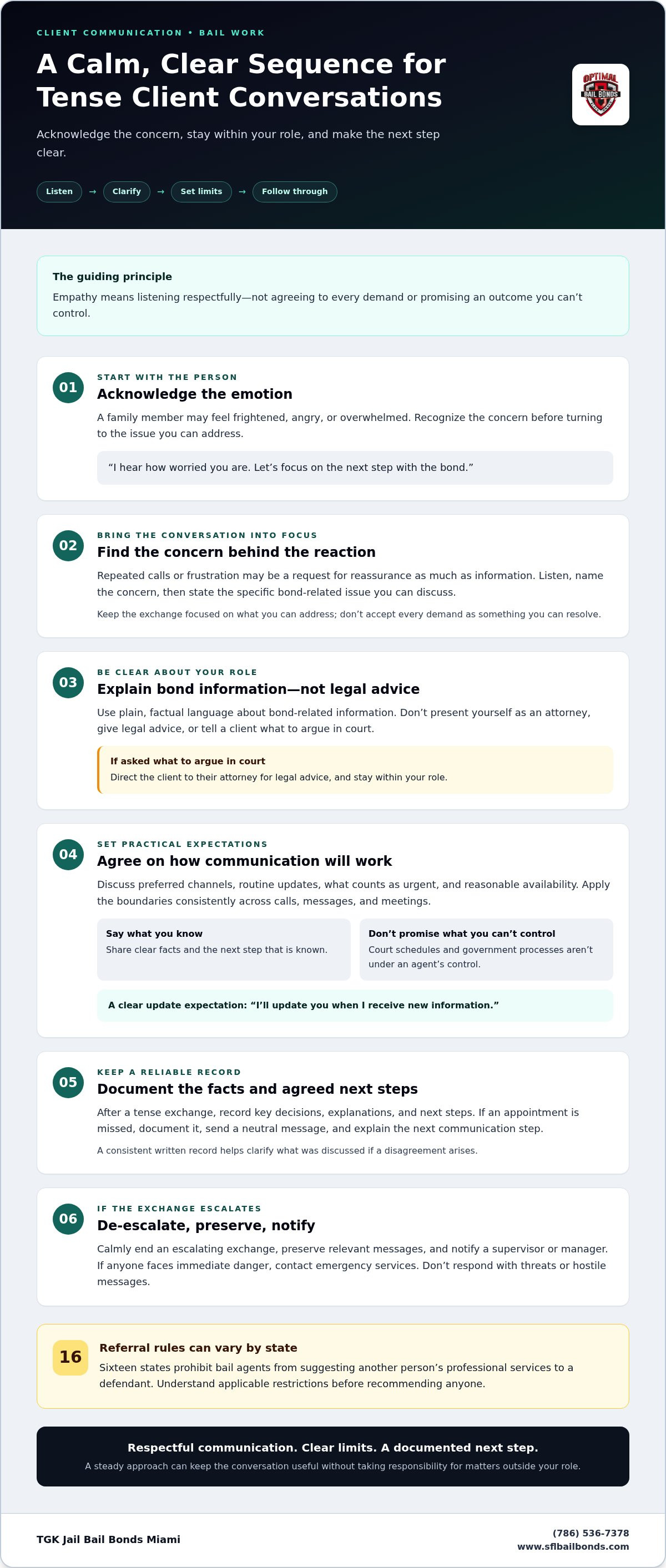
In bail work, a family member may feel frightened, angry, or overwhelmed after an arrest. Acknowledge the emotion before turning to the issue you can address. For example, say, “I hear how worried you are. Let’s focus on the next step with the bond.” This recognizes the person’s concern without accepting blame or promising an outcome. For professionals dealing with difficult clients in the bail industry, empathy means listening respectfully, not agreeing to every demand.
Boundaries protect both the conversation and an agent’s ability to work carefully. Keep your role clear: explain bond-related information in plain language, but don’t present yourself as an attorney or offer legal advice. If a caller asks what to argue in court, direct them to their attorney for legal advice and stay within your role. If a client repeatedly challenges a decision, explain your reasoning, document the discussion, and return to the relevant facts.
What are the risks of refusing service or terminating a bail bond relationship? An abrupt cutoff or unanswered messages can damage an agent’s professional reputation and leave the relationship unresolved. Before ending contact, consider whether the problem can be repaired and whether you can afford to lose the client; then communicate your decision clearly and professionally.
A difficult exchange can shape how a client describes an agent to family or others. Avoid angry voicemails, personal remarks, or threats, even after a missed appointment. Instead, record the missed appointment, send a neutral message, and explain the next communication step. A consistent written record clarifies what was discussed if a disagreement arises. It also helps agents distinguish a recurring communication problem from a single heated moment.
Referrals need particular care. When both sides recognize that the relationship is unproductive, another agent may be an option, but referral rules vary. Sixteen states prohibit bail agents from suggesting another person’s professional services to a defendant. Don’t assume a referral is permitted in every location; understand the applicable restrictions before recommending anyone. If a referral is appropriate, explain the decision respectfully and avoid implying that another professional can guarantee a result.
- Listen first: name the concern, then state the specific bond-related issue you can discuss.
- Keep a record: document key decisions, explanations, and agreed next steps after a tense conversation.
- Enforce boundaries consistently: use the same respectful limits across calls, messages, and meetings.
A steady approach to dealing with difficult clients in the bail industry doesn’t mean dismissing someone in crisis. It helps agents remain useful without taking responsibility for matters outside their role. A calm explanation, a clear record, and a respectful close can preserve trust, even when the conversation doesn’t end in agreement.
Setting communication and outcome expectations
Clear communication gives clients a practical picture of what agents can address, how updates will be shared, and which decisions remain outside an agent’s control. For people under pressure, plain language and consistent boundaries can help protect the working relationship.
Communication Expectations and Boundaries
Communication expectations define how clients and agents share information, including preferred channels, update frequency, and reasonable availability. Discuss these terms early and apply them consistently. Ask whether a client prefers calls or messages, explain how routine updates will work, and clarify what counts as urgent. Consistency matters: changing a boundary whenever someone pushes back can create confusion.
Be specific without promising an outcome. Explain what information you can provide and which steps depend on a court or another party. Court schedules and government processes aren’t under an agent’s control. For example, say, “I’ll update you when I receive new information,” rather than suggesting a release time.
How do bail bond client-handling rules vary by state? State rules can differ on agent conduct, solicitation, and communications, so agents should follow the requirements that apply where they work. Some states restrict bail agents from suggesting professional services to defendants, which can affect referrals.
Compliant Client Communications
Compliant communication means keeping client conversations within an agent’s role and following the rules that apply. Keep phone communications compliant, and don’t present bond information as legal advice. Use clear, factual language, avoid speculation about court decisions, and don’t tell clients what to say in court. A brief written record of key exchanges can help keep later discussions accurate.
How should agents handle clients who miss court dates or violate bond conditions? Communicate promptly, document the reported facts, and follow the bond terms and applicable procedures. Keep messages factual, and don’t promise what will happen next.
What should bail agents do when clients threaten or harass staff? Calmly end an escalating exchange, preserve relevant messages, and notify a supervisor or manager. If anyone faces immediate danger, contact emergency services. Don’t respond with threats or hostile messages.
Set expectations about outcomes with care. Explain what an agent can communicate about the bond, distinguish that from court decisions, and correct misunderstandings early. When a client asks for certainty, acknowledge the concern and restate the known next step. For example, if the court hasn’t provided an update, say so plainly and explain that you’ll share new information when it’s available. Clear limits help clients understand what is known without implying that release or another result is guaranteed.
Understanding the concerns behind difficult behavior
Repeated questions or sharp words can signal fear, confusion, or financial worry. In a bail conversation, listening for the concern beneath the reaction helps agents address the actual issue.
Listening to Client Concerns
Active listening means giving a client time to explain, then reflecting their main concern before answering. This helps distinguish a request for information from a request for reassurance. If someone calls repeatedly in one day for a case update, ask what feels most urgent, then clarify what information they need. The repeated calls may reflect fear, not an attempt to disrupt the agent’s work.
Use a simple sequence: let the person finish, summarize their concern, and ask whether you understood correctly. For example, “You’re worried your brother won’t appear in court. Is that what you’re asking about?” This acknowledges the fear without predicting what will happen. If the question concerns legal strategy, explain that an attorney handles that advice, then return to the bond information within your role.
Give fee concerns the same careful attention. Ask which part of the payment arrangement is unclear, then explain the applicable terms in plain language. If a family member misunderstood what was discussed, review the relevant documents together and identify the point of confusion. Bail work involves insurance and regulatory requirements, so keep explanations factual and don’t improvise terms. Addressing the exact concern can prevent frustration from growing out of an assumption.
De-escalation in Client Crises
De-escalation is a calm, deliberate response that lowers tension while keeping the exchange focused on one manageable issue. It matters because someone facing uncertainty about freedom, finances, or family may struggle to absorb a long explanation. What de-escalation techniques work with bail bond clients in crisis? Lower your voice, acknowledge the concern, pause before answering, and offer one clear next step. Don’t argue about blame or promise a result.
For example, if a caller says, “You aren’t telling me anything,” don’t defend every past action. Try, “I can hear that this is frightening. Let’s review what we know right now.” Then share the known information and separate it from what remains uncertain. This recognizes the person’s distress without accepting blame for matters beyond the agent’s control.
Training can prepare agents to recognize escalating language, practice calm responses, and know when to pause or involve a supervisor. What training and safety policies help bail bond agents manage difficult interactions? Use scenario-based practice for tense calls, clear escalation steps, and a shared process for recording threats or harassment. If someone presents immediate danger, move to safety and contact emergency services.
After a difficult exchange, review the interaction with a supervisor and identify the specific trigger, such as a misunderstood payment term or fear about court. This turns a tense call into a useful training example. A short factual note can also help the next agent respond consistently, without making the client repeat the same concern.
Managing emotional responses and personal time
A client call at 9 PM can catch an agent tired, distracted, or already frustrated. Before answering a difficult question, pause and identify the immediate issue. A short breath and a neutral opening can help you respond deliberately instead of matching the caller’s tone. The aim is a clear conversation, not winning an argument or resolving every fear at once.
Separate the caller’s words from the facts you need to address. If a family member says, “You’re doing nothing,” don’t respond with a defensive list of past actions. Try, “I can hear you’re upset. What information do you need right now?” This specific prompt can turn a broad accusation into a focused request and prevent an unnecessary argument.
Personal time also needs clear boundaries. Set reasonable availability limits for non-emergency matters, then explain them during a calm conversation, not during a late-night dispute. Tell clients which channel to use for routine questions and when you’ll review those messages. Apply the schedule consistently so the boundary doesn’t disappear after repeated calls.
When a message arrives outside your stated hours, decide whether it needs an immediate response or can wait until the next work period. A routine request for an update can be answered later; an urgent concern should follow your office’s established process. Distinguishing urgency from anxiety helps agents direct attention where it’s needed without treating every message as a crisis.
After an upsetting exchange, take a brief pause before helping the next client. Write down the practical issue, the information already shared, and the next action. This simple record helps prevent emotion from carrying into another conversation. It also gives you a concrete starting point if a supervisor needs to review the interaction.
Missed appointments can test patience, especially when an agent has arranged other work around a meeting. Don’t leave an angry voicemail or send a sharply worded email. Instead, note the missed appointment, send a neutral follow-up, and explain how the person can reconnect. A factual message protects professionalism and keeps the criminal justice process from becoming a personal conflict.
For bail agents, emotional discipline supports careful decisions in a high-pressure part of the justice system. If frustration builds, step away briefly when practical, consult a supervisor, and return with a specific question or next step. That pause isn’t avoidance. It helps protect your judgment, personal time, and the quality of each client conversation.
Proactive updates and prompt responses
Silence can leave a bail bond client guessing, especially when a family is waiting for news about someone’s release. A short update, even when nothing has changed, gives the client a clear status instead of leaving room for alarming assumptions. Sometimes the most useful message is that there’s no new information and you’ll share an update when one becomes available.
Acknowledge messages promptly, even if you can’t yet answer the client’s question. A brief reply such as, “I received your message and will follow up when I have an update,” confirms it reached you without suggesting a result. This distinction matters in criminal cases, where court decisions and other developments can affect what information is available.
Set a consistent update rhythm for each case. For example, tell clients what kind of development will prompt contact, and follow up at the agreed point even if the status hasn’t changed. Don’t wait for a client to call repeatedly before sharing information you already have. A consistent pattern makes communication easier to manage and helps clients know what to expect.
After an important phone conversation, send a concise written recap. Include the topic discussed, the information provided, and any agreed next step. Keep the wording factual and avoid speculation about court timing or likely outcomes. If the client later remembers the conversation differently, the summary gives both sides a clear reference.
Appointments benefit from a practical reminder. Agents can contact clients the day before or the morning of a scheduled meeting, confirm the time and place, and mention any information the client should bring. If someone misses the appointment, follow up neutrally and explain how to reconnect. A reminder can prevent avoidable confusion without treating the missed meeting as a personal slight.
When clients send frequent messages, calmly remind them which channels you monitor and how you’ll share updates. Reassurance that voicemail and email are checked can help reduce repeated contact, while an acknowledgment shows the client hasn’t been ignored. Keep phone communications compliant, and don’t let pressure turn a routine update into an unsupported promise.
These habits also support clear communication about public safety concerns. Share relevant information through appropriate channels, keep records factual, and distinguish verified developments from assumptions. Timely communication can’t control a court’s decision, but it can help prevent misunderstandings about what has happened and what remains unknown.
Optimal Bail Bonds: How to be a Bail Bondsman
Optimal Bail Bonds offers How to be a Bail Bondsman for readers considering a professional path in the bail industry. The conversations discussed here show why the work calls for clear communication, sound judgment, and respect for professional boundaries. Learning about the role can be a useful next step if you’re exploring this field or want to understand what bail agents do.
Use these client-interaction principles as a foundation for thoughtful, responsible work. They can help you approach difficult conversations with empathy while keeping expectations realistic and your role clear. For more information about How to be a Bail Bondsman, contact Optimal Bail Bonds or visit sflbailbonds.com.
Build Your Next Conversation with Confidence
Every challenging client interaction can strengthen your professional judgment. As you gain experience, notice which responses move a conversation forward and which create more confusion. This reflection can help you develop a steady approach to dealing with difficult clients in the bail industry while staying attentive to the human concerns behind each case.
If you’re considering work in this field, Optimal Bail Bonds offers a Pre-Licensing Bail Bonds Class, a 120 Hours Bail Bonds Course, and How to be a Bail Bondsman. These educational options can help you explore the profession and build a clearer understanding of its demands. Choose a next step that fits your goals, and keep learning how to serve people with professionalism and care.
Thoughtful conversations start with preparation. Keep building the skills that help you meet each person with clarity, respect, and confidence.
Frequently Asked Questions
How should bail bond agents handle angry or difficult clients?
Respond to the specific problem, not the insult. If a client disputes what they were told, ask which detail they believe is wrong and review the relevant record before answering. For example, distinguish information received from the court from information you’re still waiting for. Avoid arguing about motives or making a promise just to end the call. If threats arise, prioritize staff safety and follow the agency’s escalation process.
What communication practices help prevent misunderstandings with bail clients?
Separate confirmed information, pending actions, and the client’s responsibilities in each case discussion. For example, after explaining a court notice, ask the recipient to describe the next required action in their own words. This can reveal confusion before it leads to a missed step. Keep names, dates, and case details accurate in records, and correct errors as soon as you identify them.
What are bail bond agents legally allowed to say or do when dealing with clients?
Agents should explain bond-related information without acting as the client’s attorney or interpreting legal strategy. State rules differ, so permitted conduct depends on the jurisdiction. In Florida, it is unlawful to execute a bail bond without charging a premium. For questions about criminal charges, court arguments, or legal rights, direct clients to their attorney rather than offering legal advice.
How can bail bond agencies set clear fees, expectations, and payment terms?
Explain the premium and payment terms before the client agrees, then make sure the written agreement matches that explanation. Clarify what the premium covers, whether it is refundable, when payments are due, and what other obligations the agreement describes. In Florida, the premium must be charged to execute a bail bond. Avoid vague phrases such as “we’ll sort it out later,” which can leave families unsure about their commitments.


