
Going independent isn’t automatically the best way to build a client base. An agency can offer a setting to gain experience, while independence gives you more control and makes outreach your responsibility. Building a client base as a new bondsman starts with choosing the path that fits your experience, resources, and comfort with developing professional relationships.
It’s natural to focus on finding clients quickly, especially when established businesses already have local recognition and connections. Sustainable growth also depends on earning trust, explaining the bail process clearly, and building professional relationships. Connections with other bondsmen can offer useful insight and appropriate referral opportunities, rather than making every established business a rival.
This guide compares agency work with independence and explains how each path shapes early business decisions. You’ll learn how to build a reputation, reach potential clients through practical marketing, and develop referral relationships professionally. The goal is a clear starting point for choosing a path and growing your network with care.
Key Takeaways
- Compare agency work with independence by weighing the support and structure you want against the control and business responsibilities you’re ready to take on.
- Build professional connections with attorneys, court clerks, jail staff, and other bondsmen through respectful, consistent communication.
- Create a clear online presence with a professional website and a local business listing that make your services and contact information easy to find.
- Use helpful educational content and appropriate social channels to build trust, then adapt your marketing as your business develops.
- Treat other bondsmen as potential sources of industry insight and appropriate referrals, not only as competitors.
How will you win new customers from established bail bonding companies?
Established bail bond businesses may already have local recognition and referral networks. Build your reputation through accurate information, professional relationships, and marketing that follows applicable rules.
Industry Connections and Referral Programs
Industry connections include professional relationships with people who encounter bail questions, such as attorneys, court clerks, jail staff, and other bondsmen. They can help new agents learn local processes and develop appropriate referrals. Introduce yourself respectfully, keep conversations focused on general professional topics, and follow through on commitments. Trust grows through consistent conduct, not pressure for business.
Referral programs require care. Bail bond marketing restrictions vary by state, so don’t assume incentives for attorneys, other agents, or repeat clients are permitted. Understand the rules that apply to your business and the specific arrangement before proposing rewards. A prudent alternative is to share useful, factual information about bail processes and maintain professional communication without making referrals conditional on a benefit.
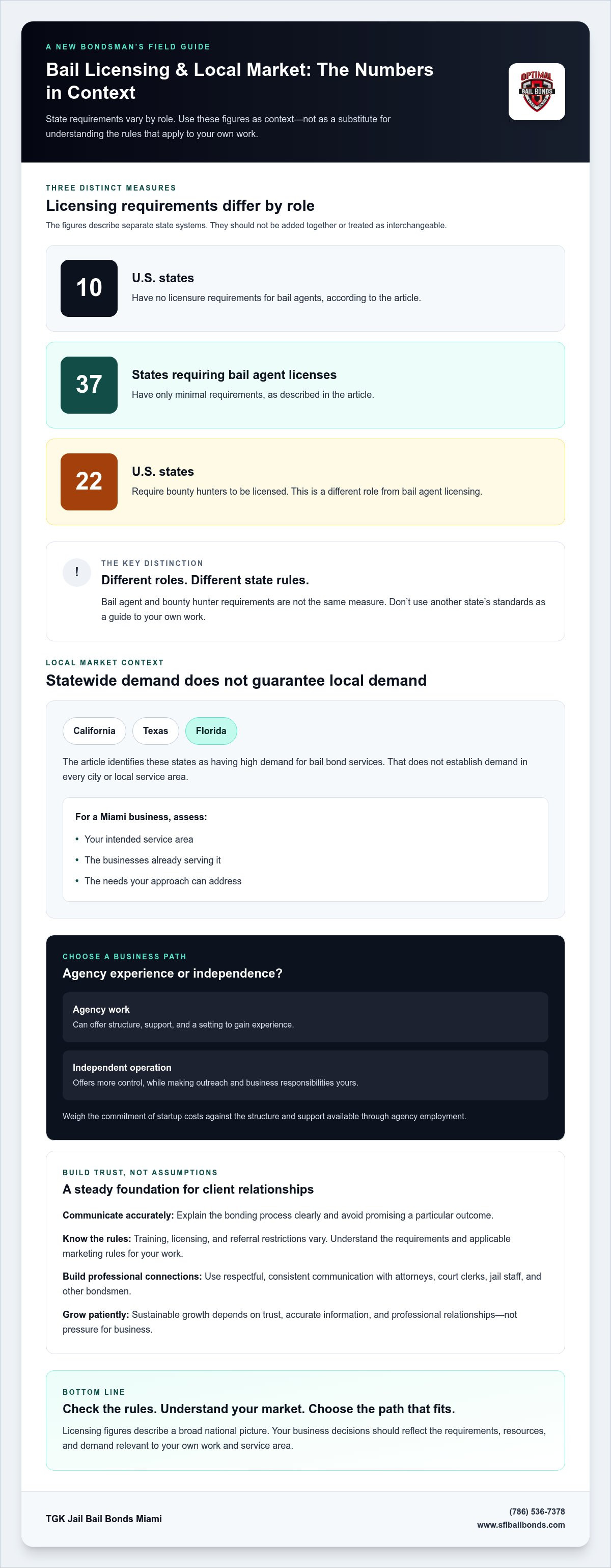
Training requirements also differ across the country. Ten U.S. states have no licensure requirements for bail agents, while 37 states that require bail agent licenses have only minimal requirements. Twenty-two U.S. states require bounty hunters to be licensed. These figures describe different roles and state systems. For a Miami business, understand the requirements applicable to your own work rather than treating another state’s standards as a guide.
What are the risks and common mistakes for new bail bondsmen? Common risks include assuming state rules, using referral incentives without understanding restrictions, and promising outcomes beyond your control. Build trust through accurate communication, compliant marketing, and realistic expectations.
How can a new bail bondsman handle missed court dates and bond forfeitures? Keep organized case records, track court dates, and respond promptly when a defendant fails to appear. Follow the relevant court procedures, since forfeiture processes and deadlines depend on the jurisdiction.
Startup Costs and Local Bail Demand
Startup costs are the expenses of preparing an independent bail bond business to operate, while local demand reflects opportunities in its service area. Weigh that commitment against the structure and support available through agency employment before choosing your path.
Demand varies by city, county, and state. California, Texas, and Florida are identified as states with high demand for bail bond services, but statewide demand doesn’t establish demand in every local market. In Miami, assess your intended service area, the businesses already serving it, and the needs your approach can address. Don’t assume a large market guarantees a steady flow of clients.
Competing with established businesses means showing people why your service deserves their trust, not criticizing other agents. Explain the bonding process clearly, communicate with care, and make information accessible to families facing an urgent situation. Consider whether agency experience or independent operations better suit your resources. Building a client base as a new bondsman calls for a defined market, professional conduct, and patient relationship-building.
Consider joining professional associations, including the Professional Bail Agents of the United States; a Santa Ana bondsman was arrested in 2010 for arranging attorney referrals and mass-mailing flyers to inmates, activities described as illegal in California.
Creating a professional website and local business listing
A professional website and Google Business Profile give potential clients a clear way to find and understand your business. For a new bondsman in Miami, make the service area, contact method, and next step easy to identify, especially for families seeking to understand a defendant’s release options.
Build your website around the questions people need answered. Use plain language to explain what a bail bond is, what information a family may need to discuss, and how to reach your office. A page about the process can clarify that a surety bond involves a surety backing the bond, without implying every case follows the same steps. Keep the information accurate and avoid promising a particular release result.
Give each page a clear purpose. A homepage can introduce the business, while separate pages explain the service area, contact options, and common bail terms. Use descriptive page titles and headings that reflect actual services and locations. Someone looking for help near TGK Jail should quickly be able to tell whether your business serves that area, rather than having to infer it from a broad claim about Miami.
Keep your Google Business Profile consistent with your website. Match the business name, phone number, address, hours, and service-area details wherever they appear. Clearly describe your services and provide current contact information. If an office moves or a phone number changes, update both places promptly. Conflicting details can leave a family unsure which contact information is reliable.
Business cards and provider listings extend that same identity offline. Include the business name, phone number, website, and a short description, then share cards through appropriate professional interactions. Before adding your business to a directory, make sure its listing format suits bail services and that you can keep the information current. A card with an outdated number undermines the trust it is meant to build.
Records support trust behind the scenes. Maintain an organized record for each inquiry and transaction, using consistent fields such as the date, contact details, case reference, communications, and follow-up. Limit access to sensitive information and avoid collecting details that aren’t needed for the business purpose. These are practical recordkeeping habits, not a substitute for understanding the rules that apply to your operation.
As your business grows, keep these tools up to date. When calls and transactions increase, assign responsibility for checking listings, reviewing website content, and recording follow-ups. Look for patterns in inquiries: repeated questions may call for a clearer website explanation, while missed callbacks may signal a need for more reliable tracking.
Keep the online experience useful, not crowded. A concise explanation and visible contact information can help someone act without confusion. For readers seeking information about Miami bail bond services, a well-organized local page can connect the service-area details with a clear next step.
Marketing plans and customer service
A useful marketing plan pairs clear information with dependable service at every client contact. For a new bail bond business in Miami, choose channels families can find, explain the process without pressure, and provide accurate information when someone asks about a defendant’s release.
Start with a defined audience and message. Families may be unfamiliar with bail, so explain what a bail bond does, what information helps begin a conversation, and how court appearances fit into the process. Avoid language that shames people facing a criminal charge or promises a particular outcome. A calm, direct explanation can distinguish your service without making claims about competitors.
Use a mix of outreach methods rather than depending on one channel. Facebook and LinkedIn can support separate community and professional messages. Educational blog posts, YouTube videos, and informational brochures can explain bail terms in plain English. For example, a short post could clarify what it means when a defendant must appear in court, while a brochure can outline questions families may want answered during an initial call.
Local advertising can broaden visibility beyond social media. Billboards near jails and courthouses, Yellow Pages listings, and local radio spots are options for bail bond services. Choose placements that reach people likely to need relevant information, and keep your business name and contact details consistent across each advertisement. State marketing restrictions vary, so build compliance into campaign planning from the start.
Plan for ongoing costs, not just the first campaign. Set priorities before spending: identify the channel, intended audience, message, and way to track inquiries. Compare which sources bring relevant questions, then adjust the budget as the business grows. Don’t judge a campaign only by clicks or calls; assess whether it connects with people seeking bail information.
Follow-up is part of marketing. Automated email campaigns can nurture leads and keep in touch with past clients, provided messages are relevant and respectful. Share practical reminders or educational information, not messages that exploit a stressful situation. A clear opt-out and careful handling of contact details help preserve trust. For instance, an email explaining common bail terminology is more useful than repeated promotions with no new information.
Customer service begins with the first conversation. Listen before explaining, use plain language, and confirm the caller’s immediate question. If a family asks whether a defendant can appear in court after release, explain the process accurately without offering legal advice or promising a result. A maintained 24/7 phone system is one approach bail offices can use to receive calls at any hour; it is a business-planning consideration, not a guarantee of availability for every agent.
Give each inquiry a consistent follow-up path. Record the contact source, question, and next action, then review those records to spot missed responses or recurring confusion. A caller who finds you through a radio advertisement but can’t reach anyone may have a different experience from someone who receives a prompt, clear explanation. Strong bail agents treat outreach and service as parts of the same relationship.
Building relationships with competitors for referrals and industry insights
Other bail bondsmen can be competitors and valuable professional contacts at the same time. In Miami, a respectful relationship may help you learn local practices, exchange general industry insights, and identify situations where a referral makes sense. Treat that connection as a professional resource, not a promise of shared business. Each agent remains responsible for their own clients, decisions, and service standards.
Start with low-pressure contact at criminal justice events, conferences, and professional gatherings. Introduce yourself clearly, ask what issues are affecting the local bail industry, and listen before describing your business. The Professional Bail Agents of the United States is one association named as a networking option for bail professionals. Membership or attendance can create opportunities for conversation, but trust develops through follow-through after the event.
Make referrals useful to the person receiving them. If a caller needs help outside your service area or asks about a matter you can’t handle, explain your limits plainly and connect them with an appropriate bondsman when you have a reliable professional contact. Don’t share sensitive client details casually. A referral should help someone reach relevant assistance, not trade private information or pressure another agent.
Referral incentives call for particular caution. Before proposing rewards to attorneys, agents, or repeat clients, understand the marketing restrictions in the relevant jurisdiction. A safer approach to building relationships is to provide useful information, communicate professionally, and avoid suggesting that someone must refer business in return. For example, offer an educational discussion about common bail-process questions rather than promising a benefit for sending clients.
Industry contacts can also help you understand recurring operational challenges. Ask another bondsman how they organize court-date reminders, communicate with families, or handle questions about recovery procedures. Keep these conversations general and focused on professional learning. Don’t ask for confidential case information or assume another agent’s approach applies to every defendant, court, or bond.
Build value in both directions. When another agent shares a practical insight, acknowledge it and follow up with a useful resource or thoughtful question. If you host an educational seminar, invite professionals to discuss the bail process and client communication. Keep the subject factual, avoid presenting legal advice, and leave room for different perspectives. These exchanges support better-informed professionals and a more constructive connection to the justice system.
Use a simple relationship routine to stay consistent:
- Record professional contacts and the context of each conversation.
- Follow up with a brief note that refers to a specific topic discussed.
- Share relevant industry updates without flooding contacts with promotions.
- Review referral conversations for clarity, professionalism, and compliance.
Don’t measure success only by immediate leads. A professional relationship often grows through repeated, reliable interactions, and a referral may come only when another agent understands your strengths and boundaries. In building a client base as a new bondsman, aim for mutual confidence: communicate clearly, respect each contact’s role, and refer people based on fit rather than rivalry.
Optimal Bail Bonds: Pre-Licensing Bail Bonds Class
Optimal Bail Bonds offers a Pre-Licensing Bail Bonds Class for people preparing to enter the profession. If you’re comparing agency work with an independent path, structured education can help you build foundational knowledge before deciding how to develop your business and professional relationships. The 120 Hours Bail Bonds Course and How to be a Bail Bondsman are also learning options for people exploring this career. Training is a starting point; building a reputation still depends on clear communication, ethical marketing, and consistent service. Contact Optimal Bail Bonds to learn about its Pre-Licensing Bail Bonds Class and related educational offerings.
Make Your Next Move With Purpose
Your next step is to turn your chosen career path into a deliberate plan. Decide what you need to learn, which relationships you want to strengthen, and how you’ll assess whether your outreach brings the right conversations. Building a client base as a new bondsman takes more than visibility; it grows through consistent, professional interactions that help people understand what to expect.
Give yourself room to refine your approach. Notice which questions families ask, where communication breaks down, and which professional connections offer useful insight. Use those observations to guide your next decisions, keeping trust and ethical conduct at the center of your work.
A thoughtful start can make the path ahead clearer. Keep learning, stay steady, and let each professional interaction strengthen the foundation you’re building.
Frequently Asked Questions
Choosing Your Path: Join an Agency or Go Independent?
Joining an agency can provide an established business setting, while independence gives you more control over operations and client relationships. Consider how you prefer to learn, make decisions, and manage business responsibilities. For example, someone who wants guidance with day-to-day processes may value an agency environment; someone prepared to build systems and make business decisions may prefer independence. Compare each path’s responsibilities with your experience and readiness.
How do new bail bondsmen find and attract clients legally?
Attract clients by making accurate information easy to find and avoiding pressure or promises about case outcomes. A Miami bondsman might publish a plain-language explanation of what families should have ready when they call, then use it to answer common questions. Keep promotional claims factual, use respectful language, and follow the rules that apply to your location. Trust grows when prospective clients understand what you can explain and what falls outside your role.
How can a new bail bondsman build relationships with jails, attorneys, and referral sources?
Build professional relationships through appropriate, transparent communication, not by seeking special access or confidential information. For example, introduce yourself at a public industry event, explain your professional focus, and follow up about a general topic discussed. Respect each person’s role and privacy, including jail staff and court personnel. With attorneys or other referral sources, keep conversations professional and don’t imply that referrals require a favor or payment.
What marketing strategies work best for a new bail bond business?
Start with a focused message that helps local families understand your services and how to reach you. Choose a marketing channel you can maintain, such as an educational post or local listing, then track which inquiries lead to relevant conversations. Note whether callers found you through a directory or a specific article, for instance. Use that information to refine your message instead of spreading effort across channels you can’t keep current.
What state laws restrict bail bond advertising and client solicitation?
Advertising and solicitation rules vary by state, so a tactic allowed in one place may be restricted elsewhere. Before launching a campaign in Florida, identify the rules that apply to bail agents and the method you plan to use. Review ad wording, placement, and whether a proposed referral arrangement raises compliance concerns. Avoid intrusive outreach, and keep claims factual as you establish a compliant marketing approach.


