
What if a denied immigration bond doesn’t mean the immigration case is over? For families navigating the immigration bail bond process Miami, that distinction matters. A denial can mean a person remains detained while the case continues. It is separate from a criminal bond decision and does not, by itself, decide whether the person can stay in the United States.
It’s understandable to feel uncertain about why a request was denied or what to do next. The decision may involve concerns about attending future hearings or community safety, but the reasons and next steps depend on the case. This guide explains what a denial means, what records to gather, and how families can distinguish immigration custody from criminal custody, including situations involving TGK Jail.
Optimal Bail Bonds assists families in the Miami area with immigration bond matters. Bond-related support can help families understand the process, but it does not determine eligibility or replace legal representation. A clear record of the decision and custody information can make a stressful situation easier to manage.
Key Takeaways
- Identify who has custody and find the written bond decision, if one is available.
- The decision-maker and reasons for denial can vary by case. Don’t assume one factor explains every outcome.
- Keep notices, case details, and dates together. They can help clarify what was decided and what remains uncertain.
- The immigration bail bond process Miami families face is separate from ordinary criminal bail. Confirm which custody matter each record addresses.
- Optimal Bail Bonds assists Miami-area families with immigration bond matters and bond-related steps. The agency does not decide eligibility or provide legal representation.
What Does an Immigration Bond Denial Mean in Miami?
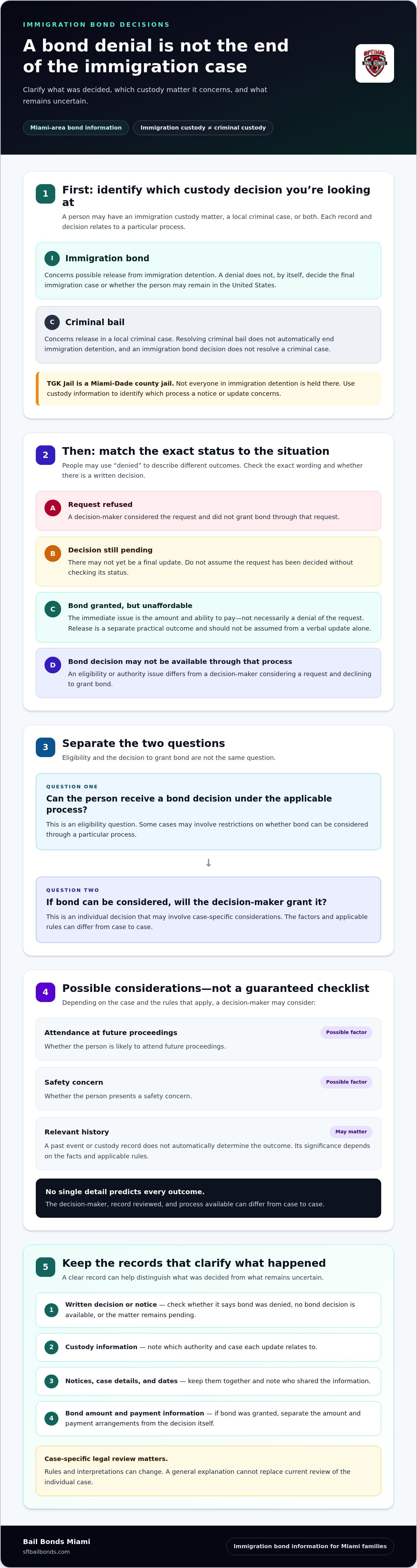
An immigration bond denial means the decision-maker did not approve release on bond through the request being considered. It does not, by itself, decide the final outcome of the immigration case or whether the person will ultimately be allowed to remain in the United States.
That distinction matters for families trying to understand what happens next. The immigration bail bond process Miami families encounter is separate from Miami-Dade’s criminal court process. Immigration and criminal custody can involve different authorities, records, and decisions. An immigration bond decision concerns possible release from immigration detention; a criminal bail decision concerns release in a local criminal case. One does not automatically settle the other.
How an Immigration Bond Differs from Criminal Bail
A person may have an immigration custody matter, a local criminal case, or both. Resolving criminal bail does not automatically end immigration detention, and an immigration bond decision does not resolve a criminal case. TGK Jail is a Miami-Dade county jail, but not everyone in immigration detention is held there. Use the custody information available to identify which process a notice or update concerns.
For broader background on detention, see Immigration detention in the United States. The practical point is not to treat “bond” as one universal decision. If family members hear about criminal and immigration bonds around the same time, note which authority and case each update relates to. This helps avoid confusing what one decision does, and does not, change.
What Families May Mean by a Bond Being Denied
People may use “denied” to describe different situations. A request might have been refused, a decision might still be pending, or bond might have been granted at an amount the family cannot afford. These are different outcomes. If bond was set but is unaffordable, the immediate issue is the amount and ability to pay, not necessarily a denial of the request.
Eligibility, the decision to grant bond, the amount set, payment, and release are separate steps. A person may not be eligible for a bond decision under the applicable process, or bond may be considered and not granted. If bond is granted, the family still needs to understand the amount and payment arrangements. Release is a separate practical outcome and should not be assumed based only on a verbal update.
Start by checking the exact wording and status. Is there a written denial, a bond amount, or no final update yet? Note who shared the information and which custody matter it concerns. These details help distinguish inability to pay from a decision not to grant bond. They also help families identify what information is missing before discussing possible next steps.
Why Can an Immigration Bond Be Denied?
A denial can feel personal, but it is not a simple formula. The decision-maker considers the individual case and the rules that apply to that person’s custody. A factor that matters in one case may not control another, so no single detail should be treated as a guaranteed reason for denial.
Separate two questions: Can the person receive a bond decision under the applicable process? And, if bond can be considered, will the decision-maker grant it? The first is an eligibility question. The second is an individual decision that may involve case-specific considerations. Keeping these questions distinct can help clarify whether a request was considered and denied or whether a bond decision was unavailable through the process being used.
Case-Specific Factors That May Affect a Bond Decision
Depending on the case and the rules that apply, a decision-maker may consider whether the person is likely to attend future proceedings or presents a safety concern. Relevant history may also matter. These are possible considerations, not a definitive checklist. A past event or custody record does not automatically determine the outcome. Its significance depends on the facts and the applicable rules.
For example, a family may know about a prior immigration matter or criminal case and worry that it automatically settles the bond question. That information alone does not tell the whole story. The decision-maker, record reviewed, and process available can differ from case to case. Avoid using a general online list to predict the result in an individual matter.
When Bond May Not Be Available
Some cases may involve restrictions on whether bond can be considered through a particular process. That differs from a decision-maker considering a request and declining to grant bond. An eligibility or authority issue asks whether a bond decision is available; an adverse discretionary decision means the request was considered but not granted. Determining which situation applies requires case-specific legal review.
Rules and interpretations can change, so families should not rely on a general explanation of a legal ground for denial or ineligibility as a substitute for current, case-specific review. The person’s location and custody status may help identify the relevant process, but do not establish the outcome. Keep the exact notice or decision and note whether it says bond was denied, no bond decision is available, or the matter remains pending. If the wording is unclear, resolve that uncertainty before assuming the request has been decided.
For families working through the immigration bail bond process Miami, distinguishing eligibility from the bond decision can make the next conversation more focused. Optimal Bail Bonds assists Miami-area families with immigration bond matters and bond-related steps. Families can connect with Bail Bonds Miami for support understanding the process.
How Does the Immigration Bond Decision Process Work for Miami Families?
Start with confirmed information rather than assumptions. Organize the next steps by establishing where the person is held, determining whether a bond decision has been made, and reviewing what the decision says. The appropriate authority or decision-maker depends on the person’s custody and case, so one sequence will not fit everyone.
- Confirm custody. Identify the current facility and, if possible, which authority has custody.
- Establish decision status. Find out whether a bond decision is written, communicated verbally, or still pending.
- Review what happens next. Use the exact notice and case details to clarify which steps may apply.
Confirming Where the Person Is Detained
Facility information helps families direct questions to the right custody system. TGK Jail is a Miami-Dade county jail, but its name alone does not establish that a person is in immigration custody or identify the authority responsible. Use official lookup channels for the relevant system where available. Treat local jail searches and immigration custody checks as separate inquiries.
Record the person’s full name and any case or identification number available to the family. Write down the facility name, where the information came from, and when it was checked. A person’s location can change, so an earlier result may not show where they are held now. A search in one system may not cover every custody situation.
Understanding the Decision and Its Source
Note whether the information came from a written notice, a verbal update, or an unresolved inquiry. If there is a notice, keep the complete document and identify who issued it. The issuing authority and exact wording can help distinguish a final decision from a pending status or an update about another case. Use the original notice rather than relying on a paraphrase when it is available.
Keep a simple record of names, dates, case identifiers, and the words used to describe the decision. Write down whether the family was told bond was denied, no decision had been issued, or another step was pending. These phrases can sound similar during a stressful call but describe different situations. If the information is verbal, note who provided it and when, then compare it with any later written notice.
Immigration custody and a Miami-Dade criminal case are separate matters. A local criminal bail update does not confirm an immigration bond decision. Families looking for general context on the local criminal process can review a Miami bail bonds guide, while keeping the immigration decision and its issuing authority distinct.
Once the family has the location, decision status, and wording in one place, it becomes easier to identify what remains unknown. The immigration bail bond process Miami can vary by case, so don’t assume a hearing, deadline, review option, or release outcome without case-specific confirmation. Clear records help families ask focused questions and understand which information is still needed.
What Can Families Do After an Immigration Bond Is Denied?
A denial can leave families worried and unsure where to start. First, confirm whether there is a final decision, collect related records, and write down what has been communicated. Further action depends on the law and the specific case, so don’t assume a procedure, deadline, or outcome based on general information alone.
Information to Gather Before Taking Further Steps
Put the available information in one place before trying to interpret the decision. Keep copies of notices and record details as they appear, rather than relying on memory or secondhand summaries. A dated note or simple folder can help the family share consistent information when discussing bond-related steps.
- The complete decision notice, including any pages explaining the outcome.
- The person’s current custody location, along with the source and date of that information.
- Case or identification numbers shown on notices or other records.
- Relevant dates, such as when a decision was communicated or a document was received.
- The decision-maker or office named in the paperwork, if available.
Separate confirmed details from assumptions. Label a written notice as a document and an unverified phone update as verbal information. If the family has heard different descriptions of the outcome, note who said what and when rather than combining the reports into one conclusion. This record can help clarify whether the matter is decided, pending, or still uncertain.
Avoiding Common Misunderstandings After Denial
Keep the processes distinct. A criminal bond outcome does not establish the result of an immigration bond matter. A bond agency cannot change an eligibility determination or reverse an immigration decision. It can assist with bond-related steps, but it does not decide eligibility or provide legal representation.
Timelines and available procedures require case-specific legal review. Don’t assume that a review, another request, or release is available or guaranteed based on a general description. The exact notice, decision-maker, custody status, and circumstances matter. If the paperwork is confusing, first identify what it says and what remains unanswered.
For families in Miami, organizing these details can make the immigration bail bond process Miami easier to discuss and help prevent a criminal custody update from being mistaken for an immigration decision. Optimal Bail Bonds assists families with immigration bond matters and bond-related steps. Keep expectations grounded in the documented status and case-specific information.
How Optimal Bail Bonds Supports Immigration Bond Matters in Miami
Families facing detention often need calm, practical support as they sort through unfamiliar bond-related steps. Optimal Bail Bonds assists families with immigration bond matters in Miami, helping them understand process information and organize what they know. The agency’s role is supportive: it does not decide whether someone qualifies for bond, issue an immigration decision, or control the outcome.
This distinction can help families focus on what they need to understand. They may be managing custody updates, paperwork, and questions about what a decision means. A non-judgmental conversation can help separate confirmed details from assumptions and clarify which bond-related steps are being discussed. The immigration bail bond process Miami families encounter depends on the individual case, so guidance should stay grounded in available information rather than promises about what will happen.
What Bond Assistance Can and Cannot Do
Bond assistance focuses on bond-related steps, with support shaped by the circumstances. It can help families make sense of the information they have and understand how bond-related steps fit into the situation. A bond agency cannot reverse an immigration decision, determine legal eligibility, or guarantee approval or release.
Optimal Bail Bonds provides immigration bond assistance, not legal representation. After a denial, help understanding bond-related steps is different from legal advice or a challenge to a decision. Keeping those roles clear helps families understand the support they are receiving and avoid mistaking assistance with bond steps for control over an immigration case.
A Calm First Step for Families in Miami
Before reaching out, gather what is readily available. You do not need to have every answer. A few reliable details can make an initial conversation more focused:
- The person’s name and current custody location, if known.
- Any written notice or other document describing the bond decision.
- Case identifiers and the name of an issuing office or decision-maker shown on the paperwork.
- Dates and notes distinguishing written information from verbal updates or assumptions.
Share what you know and note when something is uncertain. If the family has heard that bond was denied but has not seen a written notice, say so. If there are separate criminal and immigration custody matters, identify which process each update concerns. You do not need to know every legal term to explain what information you have.
For Miami-area families seeking support with bond-related steps, Optimal Bail Bonds can help make the process easier to understand. Call (786) 536-7378 or use the contact option below to discuss the information available. Assistance can clarify bond-related steps, but it cannot promise a bond decision or release.
Take the Next Step With Clear Information
A stressful decision can make it hard to know where to focus. Start with one practical task: write down the main question your family needs answered and keep the relevant custody and bond information close at hand. This can bring more clarity to the immigration bail bond process Miami families are facing without requiring you to resolve every part of the situation at once.
Optimal Bail Bonds provides immigration bond assistance in Miami with compassionate, non-judgmental support. The agency can help families understand bond-related steps, while decisions about eligibility and legal options remain outside its role. Clear, respectful communication can help families understand the information they have and what remains uncertain.
Keep moving one question at a time. With the relevant information in hand, the next step can feel more manageable.
Frequently Asked Questions
Can an immigration bond be denied?
Yes. An immigration bond request may be denied depending on the process and individual case. Read the decision and note who issued it, since a verbal summary may not explain the basis. A denial differs from a bond amount the family cannot pay. For the immigration bail bond process Miami families are navigating, keep the written notice and dates together, then seek qualified, case-specific legal guidance about possible options. Release is not guaranteed.
What are common reasons an immigration bond may be denied?
Possible considerations depend on the person’s circumstances and the applicable rules. The issue may be whether bond can be considered at all or case-specific concerns identified by the decision-maker. These are general categories, not automatic rules or a reliable prediction. Don’t assume one past event explains the outcome without reviewing the decision. Refer to the actual notice and its source rather than relying on general examples.
Can someone request another immigration bond hearing after a denial?
Possibly, but whether another hearing or review is available depends on the decision, case facts, and current rules. Don’t assume a new hearing is available or rely on a general timeline. Keep the complete decision notice, delivery details, and a record of when the family received or heard about the decision. Qualified, case-specific legal guidance can help clarify which options apply.
Does an immigration bond denial mean the person will never be released?
No. A denial addresses a particular bond request; it does not necessarily predict every later custody or immigration outcome. What happens next depends on the person’s circumstances and the rules governing the case. Don’t treat the denial as either a final immigration ruling or proof that release will occur later. Keep separate records of subsequent custody updates or notices so the family can track what has changed.
Is an immigration bond the same as criminal bail in Miami?
No. Immigration bond concerns custody in an immigration matter, while criminal bail relates to a criminal case. A person may be affected by both processes, and an outcome in one does not automatically resolve the other. In Miami-Dade, TGK Jail is a local county jail, not a universal location for immigration detention. Check which custody matter a notice addresses before treating a local criminal bail update as an immigration bond decision.
Can a bail bond agency overturn an immigration bond denial?
No. A bail bond agency can assist with bond-related steps, but it cannot decide eligibility, issue an immigration ruling, or overturn a denial. Optimal Bail Bonds provides immigration bond assistance, not legal representation. Keep the decision notice and identify what process information you need help understanding. This helps clarify the agency’s role and avoids assuming that assistance changes the decision or guarantees release.
How can families find out where someone is being held in Miami?
Start by identifying the person’s current custody authority and location, since immigration detention and local jail custody are separate. Use current official custody information for the relevant system and record when and where the result was found. TGK Jail may be relevant to a local county custody search, but it is not a universal immigration facility. If a search gives no clear result, don’t assume the person is not detained. The custody information may need clarification.


