
A loved one has been arrested, but you may not know where they’re being held or whether booking is complete. In that first confusing stretch, knowing what to do when a family member is arrested in Miami can help you focus on the next reliable step instead of trying to solve everything at once.
It’s natural to worry about their safety, bond, and how soon they might come home. An arrest, a booking record, a bond decision, and a release are separate parts of the process. Release isn’t immediate or guaranteed. Start by using Miami-Dade’s official inmate search and gathering accurate booking details. Then you can better understand what may happen next and which questions still need answers.
This guide walks you through locating your family member, checking key information, and preparing for court-related next steps in Florida. It also explains when bail-bond assistance may fit after bond information is available, and why that process is separate from legal advice. Take it one step at a time.
Key Takeaways
- For what to do when a family member is arrested in Miami, record the known arrest location, time, and agency before making decisions.
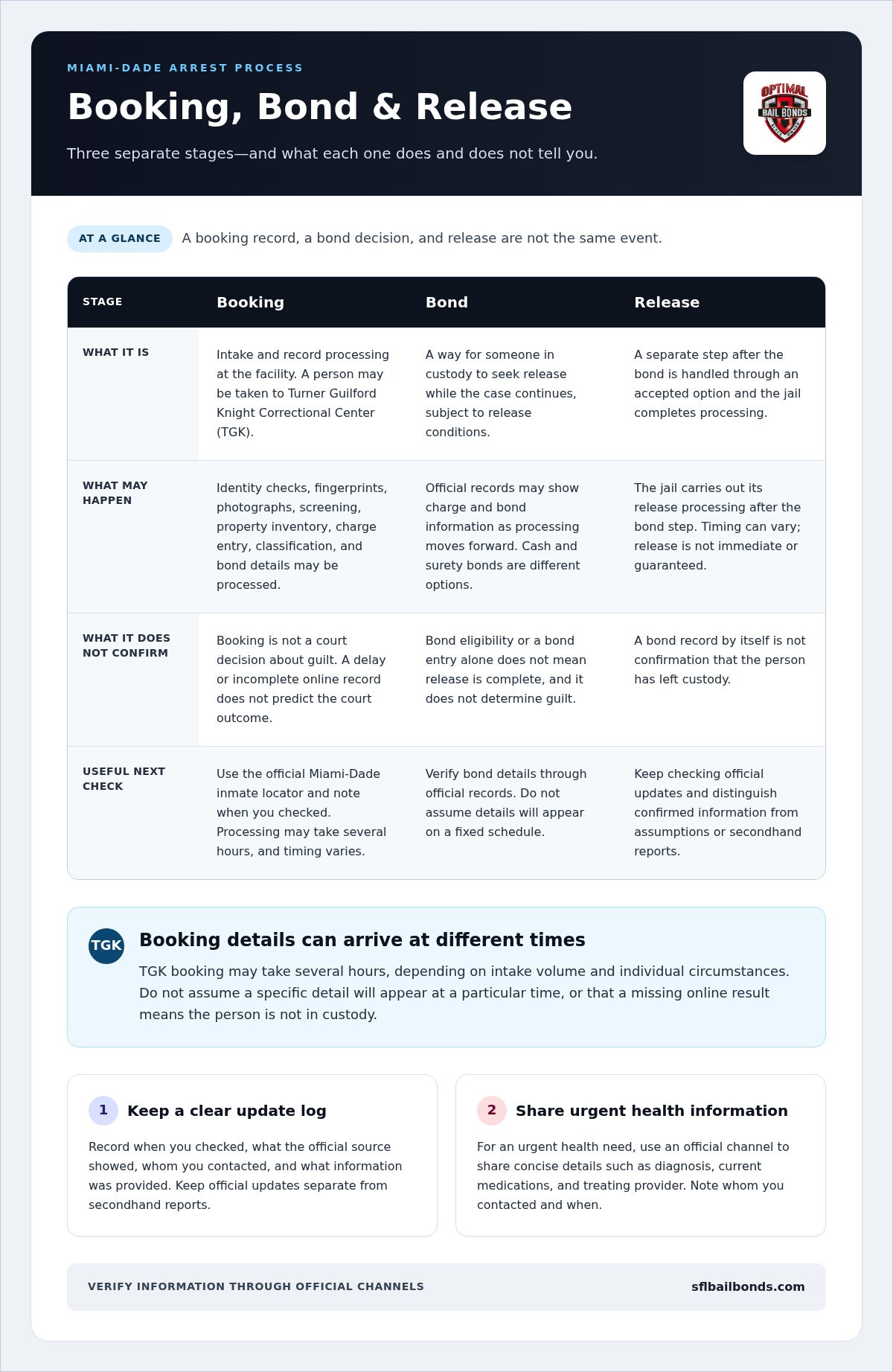
- Booking at TGK is intake and record processing, not a court decision about guilt. The steps may vary by case.
- Check official bond information and understand how cash and surety bonds differ. Bond eligibility does not mean release processing is complete.
- Keep a written timeline of official updates, and separate confirmed details from assumptions or secondhand reports while you wait.
- Once you have the location and bond details, consider whether bail-bond assistance from a supportive North Miami-Dade resource like Optimal Bail Bonds fits the next step.
What to do first when a family member is arrested in Miami
Start by confirming the facts. An arrest can leave your family worried and unsure where to turn, but you don’t have to answer every question at once. Write down what you know, then use official Miami-Dade channels to check the person’s location and booking status. A careful record makes follow-up calls clearer and helps keep assumptions from becoming mistaken facts.
Use this checklist to get organized:
- Record the arrest location and approximate time, if known.
- Write down the agency involved or the officer’s agency, if available.
- Note the person’s full name and any identifying details you can provide.
- Check the Miami-Dade inmate locator, then record whether a result appears and when you checked.
A person may be taken to the Turner Guilford Knight Correctional Center (TGK) for intake and processing, but don’t assume every arrest follows the same path. Confirm the location through official information rather than relying on a guess.
How to locate someone after an arrest in Miami-Dade
Use Miami-Dade’s official inmate locator as your first local lookup. Search using the person’s full name and any identifying details the tool requests. If there’s no result, it doesn’t necessarily mean the person isn’t in custody. Information may not appear while processing is underway. Check the official county or arresting law-enforcement agency’s channels again, without assuming a specific update schedule.
What information to write down before making calls
Before contacting a county information channel or law-enforcement agency, gather the person’s full name, date of birth, arrest location, and any booking number you have. You may not have every detail yet. Keep a simple call log with the agency or facility contacted, the time, the person you spoke with if known, and the information provided. This makes it easier to see what still needs confirmation.
Keep official updates separate from secondhand reports. Social-media posts or messages from acquaintances may be incomplete or mistaken, so avoid sharing unverified case details publicly. If the person appears in the locator, save the available booking information for the next steps. If not, keep checking official channels and update your notes as you learn more.
Once you’ve confirmed where your family member is and gathered reliable booking details, you can begin to understand the release process. For general background on how bail works in the United States, see Bail in the United States. The immediate priority remains the same: verify the person’s location before making decisions about what to do when a family member is arrested in Miami.
What happens during booking at Miami-Dade’s TGK facility
Booking is an intake and record-processing stage, not a court decision about guilt. At Miami-Dade’s Turner Guilford Knight Correctional Center (TGK), staff process information about the person and the arrest. The county describes booking as potentially taking several hours, though the time can vary with intake volume and individual circumstances. A delay or incomplete online record doesn’t, by itself, tell you what the eventual court outcome will be.
Processing may include identity checks, fingerprints, photographs, screening, and an inventory of personal property. Staff may also enter charge information, assign a classification, and record bond details as they become available. These steps don’t necessarily happen on a fixed schedule, so don’t assume a particular detail will appear at a specific time. Verify the county’s TGK information and contact details against current official sources before relying on them.
What families may learn during booking
As processing moves forward, official records may provide charge and bond information. Treat those details as updates to verify, not as a prediction of what a judge will decide. Charge labels can be difficult to interpret without legal guidance, and a bond entry alone doesn’t mean release is complete. Note when you checked and what the official source showed.
How to handle urgent health or medication information
If your family member has an urgent health need, share essential information with appropriate jail staff through an official channel. Be ready to provide the diagnosis, current medications, and treating provider’s details if you have them. Keep the information concise and specific, especially if a medication or condition needs prompt attention.
Medical details are private. Staff may not be able to share updates with family without the detained person’s consent, so focus your communication on passing along information that may help staff respond. Record whom you contacted, when, and what instructions or next steps you received. If you’re unsure where to direct an urgent concern, use the county’s official contact channels rather than relying on posts or unofficial advice.
These steps can help you stay organized while booking continues. Once official records show booking and bond details, you can consider the next steps with clearer information. For families who need help understanding the bond process after those details are available, Optimal Bail Bonds provides compassionate bail-bond assistance in North Miami-Dade.
How to understand bond and possible release in Miami
Bond is a way for someone in custody to seek release while their case continues, subject to the conditions attached to that release. Being eligible for bond doesn’t mean the person has been released. The bond must be handled through an accepted option, and the jail must complete its release processing afterward. Neither step determines guilt or guarantees a particular case outcome.
Before arranging payment or contacting a bail bond agent, confirm the details through official Miami-Dade channels. Check that you have the correct person’s identity, jail number, bond amount, and eligibility. A similar name or incomplete record can lead to confusion, so compare details carefully and rely on current county instructions.
Cash bond and surety bond: what is the difference?
A cash bond involves paying the stated bond amount through the county’s accepted process. A surety bond involves a licensed bail bond agent and a fee. Miami-Dade identifies these as distinct options for people eligible to post bond, but the right path depends on the official information for the specific case.
Confirm current payment instructions and eligibility with official sources before taking action. Don’t assume a payment method, bond amount, or release procedure based on someone else’s case. Keep a record of the details you verify and any instructions you receive.
What a bail bond agent can and cannot do
A bail bond agent can help with the surety-bond process when that option applies. The agent’s role is separate from legal representation. Bond assistance isn’t advice about the charges, court strategy, or what a person should say in a case. For legal questions, speak with an attorney.
Once you’ve confirmed the booking and bond information, deciding what to do when a family member is arrested in Miami may include considering whether a surety bond fits your situation. Optimal Bail Bonds supports individuals and families in North Miami-Dade through the bond process, including immigration bail assistance. Families considering this option can discuss the bond process with an agent.
Even after a bond is posted, release may take additional processing time, and timing can vary. Confirm release status through official channels rather than relying on an estimated time. Bond also doesn’t decide the case or guarantee a specific outcome. It addresses a possible release option while the case proceeds.
What families can do while waiting for booking or release
Waiting is stressful, especially when updates come in pieces. Set up a reliable way to track what’s known and what still needs confirmation. Keep a written timeline of calls, official records checked, and messages received. Label each item as confirmed or unverified so a social-media post or secondhand report doesn’t get mistaken for an official update.
How to prepare for the next official update
Keep key details together in one place, including the person’s full name, date of birth, arrest location, booking number if available, and contact notes. Each time you reach an official county or facility channel, record the time, who or which office you contacted, and the information provided. This helps your family share consistent details and avoid repeating questions without context.
Before calling, write down concise questions. For example: “Can you confirm the current location?” “Is booking information available?” “Has bond information been entered?” and “Which official source should we check for the next update?” Ask what you need to clarify the next step. If county information is available, use it as your reference rather than refreshing unofficial posts or relying on rumors.
For legal questions about charges, court appearances, or decisions that may affect the case, contact a qualified criminal-defense attorney. Bail-bond assistance and legal advice serve different purposes. Understanding that distinction is a practical part of what to do when a family member is arrested in Miami.
When health, language, or immigration concerns are involved
If there’s an urgent health or medication concern, share the essential information with appropriate facility staff through an official channel, and note when and how you passed it along. If language could make communication difficult, state that clearly when contacting staff and ask what communication support may be available.
Immigration detention or immigration-bond questions are distinct from a criminal bond in a Miami-Dade jail. Don’t assume information about one process answers questions about the other. For questions about immigration status, legal options, or the effect of a criminal case on immigration matters, speak with a qualified immigration attorney. A bond agent may help with the bond process when appropriate, but doesn’t provide legal representation or advice about the case.
When you’re ready to discuss a bond option, use the verified booking and bond information you’ve gathered.
Getting compassionate Miami bail-bond support for the next step
Once you’ve confirmed where your family member is being held, obtain official bond details and verify whether bond is available. Then you can consider which option may fit. This order helps prevent confusion between a booking update, bond eligibility, and the separate processing required for release.
For families in North Miami-Dade, Optimal Bail Bonds provides compassionate support through the bail-bond process, including immigration bail assistance. The role is to help you understand bond-related steps, not to represent the detained person in court, advise on the criminal case, or predict its outcome.
What to have ready when discussing bond assistance
Having the key details together can make a conversation about bond more focused. Gather what you have, even if some information is still unavailable:
- The detained person’s full name and available jail or booking identification.
- Official bond information and eligibility details, if they’ve been provided.
- Your contact information and concise questions about the bond process.
If a detail hasn’t been confirmed, say so rather than guessing. Clear information helps keep the discussion grounded in the person’s actual booking record and known bond status.
How to move forward without assuming an outcome
Posting bond doesn’t guarantee a specific release time. Facility procedures and the circumstances of an individual case can affect processing, so don’t treat an estimate or another person’s experience as a promise. Continue to rely on official channels for release status, and keep notes on any updates you receive.
Keep legal questions with a qualified attorney. A bail-bond agent can explain the bond process when that option applies, but legal advice about charges, court obligations, or case strategy is separate. If immigration issues are involved, ask a qualified immigration attorney about legal-status questions. Immigration bond assistance and advice about immigration law are not the same thing.
When you’re deciding what to do when a family member is arrested in Miami, you don’t have to sort through bond steps alone. Confirm the location, use official bond details, then consider an appropriate option with a clear understanding of what it does and doesn’t mean.
Contact Optimal Bail Bonds for compassionate guidance through the bond process.
Take the next step with clear information
In a stressful moment, a steady sequence can help: confirm your family member’s location, track official booking updates, then verify bond details and eligibility before considering a release option. Booking, bond, and release are separate steps, so an online update or bond posting shouldn’t be treated as a promise of immediate release or a particular case outcome.
Knowing what to do when a family member is arrested in Miami also means keeping roles clear. A bail-bond agent can guide you through the bond process, while questions about the criminal case belong with a qualified attorney. Optimal Bail Bonds supports individuals and families in North Miami-Dade with compassionate, non-judgmental bail-bond assistance, including immigration-bail assistance.
When you’re ready to discuss the bond process, share the confirmed information you have and ask focused questions. You can take this one step at a time, with support as you work through the next decision.
Clear facts can make a difficult moment feel more manageable. You don’t have to figure out the bond process alone.
Frequently Asked Questions
What should I do first if a family member is arrested in Miami?
Start by writing down your family member’s full name, arrest location, and any information the arresting agency provided. The first steps in what to do when a family member is arrested in Miami are to check Miami-Dade’s official inmate search or information channels and record what you learn. If no listing appears, booking may still be underway. Treat official updates as reliable, not assumptions or secondhand reports.
How do I find out which Miami-Dade jail is holding my family member?
Begin with Miami-Dade Corrections and Rehabilitation’s official inmate information resources, searching with the person’s full name and available identifying details. The county identifies Turner Guilford Knight Correctional Center (TGK) as an intake and processing location, but don’t assume it’s the person’s current facility without checking. A listing may not appear immediately. Check official county or law-enforcement channels again, and verify current facility details before travelling.
How long does booking take at TGK in Miami?
Miami-Dade says booking may take several hours, depending on intake volume and the circumstances of the individual case. That’s a general description, not a guaranteed timeline for every arrest. Booking duration also doesn’t establish when release might happen. While waiting, keep identifying details together, record official updates, and prepare concise questions about booking status and bond eligibility. Continue using official channels for current information rather than relying on a time estimate.
Can I post bond for a family member in Miami?
You may be able to arrange a cash bond or work with a licensed bail bond agent on a surety bond if the person is eligible. First verify the person’s identity, jail number, bond amount, and eligibility through official Miami-Dade sources. A bond option may not be available in every situation. Even after bond is posted, release processing may take additional time, and posting bond doesn’t determine the outcome of the criminal case.
What is the difference between a cash bond and a surety bond in Miami-Dade?
A cash bond involves paying the stated bond amount through the county’s accepted process. A surety bond involves a licensed bail bond agent and a fee. Which option applies depends on the person’s bond information and eligibility. Before taking action, confirm current bond details and payment instructions with official Miami-Dade channels. Don’t assume the process or available options are identical to those in another person’s case.
Should I tell jail staff about my family member’s medication or health needs?
Yes. If you know about an urgent health condition or current medication, share relevant information with appropriate facility staff through an official channel. Give clear details, such as the diagnosis, medication name, and treating provider’s information if available. Note when and how you shared it. Staff may not be able to provide private medical updates without the detained person’s consent, so focus your communication on passing along essential information.
Does a bail bond agent provide legal advice about the arrest?
No. A bail bond agent can help with the bond process when a surety bond is an option, but that’s separate from legal representation or advice about the criminal case. Direct questions about charges, defenses, court strategy, or legal rights to a qualified criminal-defense attorney. Families in North Miami-Dade can seek local bail-bond assistance from Optimal Bail Bonds while keeping legal questions with an attorney.


