
When the phone rings at midnight with news of a family member's arrest, the world suddenly feels like it's spinning out of control. You're likely feeling a heavy mix of confusion and financial anxiety, wondering how to bridge the gap between a jail cell and a courtroom. In these high-stress moments, the most common question is: what does a bail bondsperson do to help? A licensed agent is much more than a financial guarantor; they're a steady hand in a chaotic system. They act as a professional bridge, ensuring that the legal requirements for release are met so your family can focus on the next steps of a defense.
It's normal to feel overwhelmed by the unknown, but understanding the process is the first step toward peace of mind. This 2026 guide provides a clear roadmap through the Florida justice system, offering the reassurance you need to bring your loved one home. We'll explore the essential roles of a bondsperson, including how they manage state and immigration bonds. You'll also learn about critical updates, such as the 2026 Uniform Statewide Bond Schedule and the impact of "Missy’s Law" on pretrial release. By the end, you'll have the specialized knowledge required to move forward with confidence and clarity.
Key Takeaways
- Understand how a bondsperson acts as a financial guarantor to bridge the gap between a jail cell and a successful release.
- Discover exactly what does a bail bondsperson do to navigate jail facilities like Turner Guilford Knight and ensure all court requirements are met.
- Explore the unique regulations governing Florida bail and the specialized steps required for federal immigration cases.
- Clarify the legal limits of the role to ensure you don't mistake a bonding agent for a lawyer or legal representative.
- Learn the hallmarks of professional guidance, focusing on transparency and compassion to help your family through a stressful time.
Defining the Role: How a Bail Bondsperson Facilitates Release
A bail bondsperson is a licensed professional who posts a legal guarantee for a defendant's release. When families ask what does a bail bondsperson do, they're often looking for a way to restore order to a chaotic situation. These professionals act as a surety, which means they provide a formal guarantee to the court that the defendant will appear for every scheduled hearing. This role creates a necessary financial bridge for families who don't have the immediate cash to pay a full bail amount set by a judge. By assessing risk and securing the bond with a regulated premium, they allow the legal process to continue while the defendant returns home to prepare their defense.
A professional bail bond agent carries the financial weight of the full bond on behalf of the client. If a defendant fails to appear, the agency is held accountable for the total amount. It's a high-stakes responsibility that requires a deep understanding of the Florida legal system and a commitment to diligence. They aren't just processing transactions; they're managing a complex legal obligation that keeps the wheels of justice turning while protecting the rights of the accused.
To better understand how this process functions within the legal system, watch this helpful video:
The Financial Guarantee and Premium System
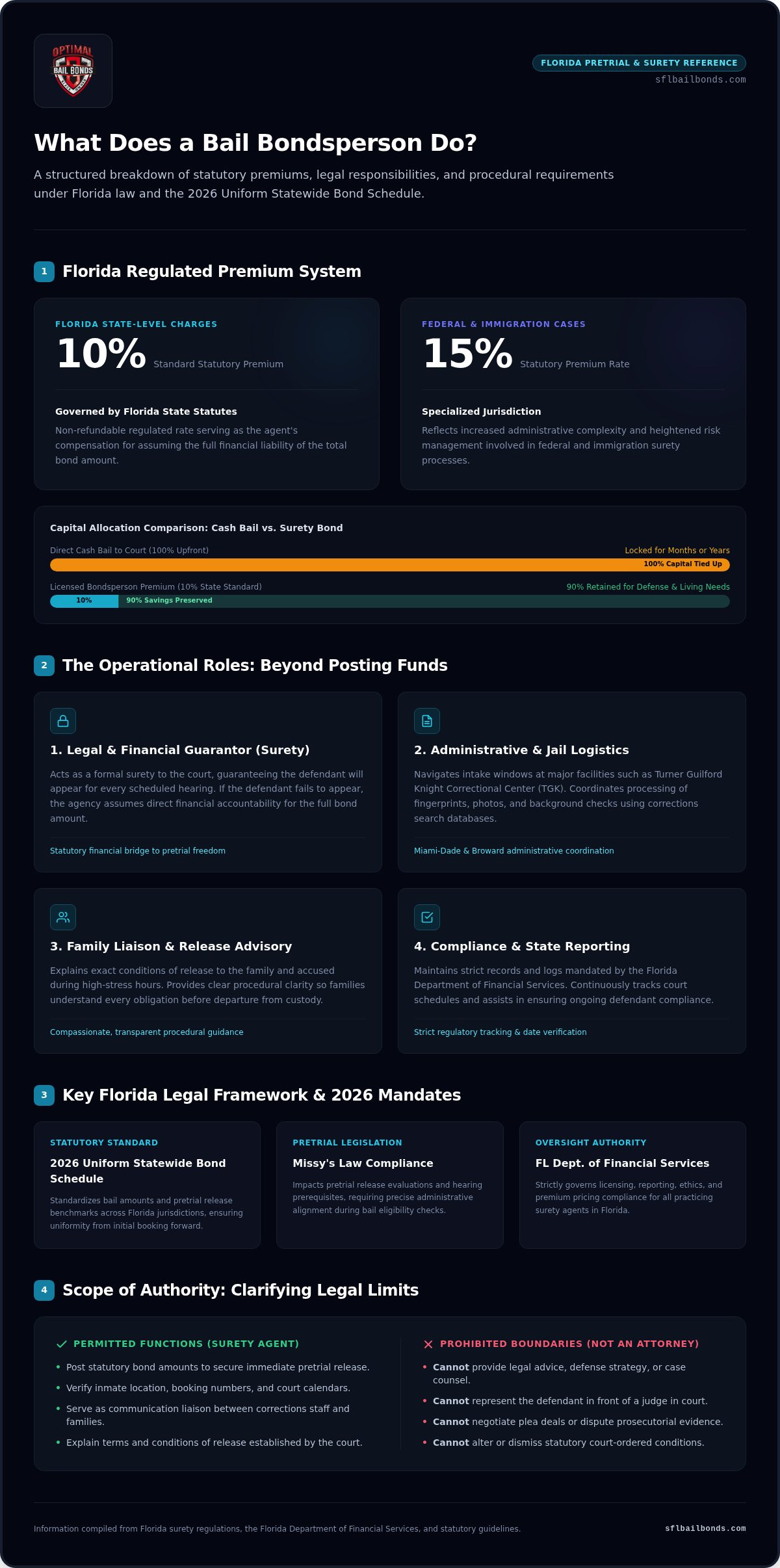
In Florida, the premium system is strictly governed by state statutes to ensure fairness and transparency. For state-level charges, the standard premium is set at 10% of the total bond amount. Federal and immigration bonds typically require a 15% premium due to their increased complexity. This fee is non-refundable because it serves as the agent's compensation for taking on the financial risk of the full bond. Using a bonding agency is often more practical than paying the court in full. While the court eventually returns cash bail after a case closes, those funds stay locked away for months or years. A bond allows you to keep your savings available for daily needs or legal defense costs.
Acting as a Liaison Between Family and Jail
The hours following an arrest are often the most stressful a family will face. A bondsperson acts as an essential liaison, navigating the administrative hurdles of facilities like the Turner Guilford Knight Correctional Center. They handle the complex paperwork required by Miami-Dade or Broward County corrections with speed and accuracy. Beyond the forms, they explain the specific conditions of release to the defendant and their family. This guidance provides a calming presence during a high-stress crisis. By acting as an expert guide, they ensure the family feels supported and informed rather than just processed through a cold, administrative machine.
The Daily Duties: Beyond Posting the Bond
Many people think the job ends once the paperwork is signed, but that's just the beginning. To truly understand what does a bail bondsperson do, you have to look at the hours spent behind the scenes at facilities like the Turner Guilford Knight Correctional Center. Agents spend a significant portion of their day verifying inmate information, tracking court dates, and maintaining meticulous records for the Florida Department of Financial Services. It's a role that demands constant vigilance and a high level of organizational skill to ensure every legal requirement is met without delay.
Administrative Processing and Jail Logistics
The release process is rarely instantaneous. After an arrest, there's a mandatory intake period where the jail processes the defendant's fingerprints, photos, and background. During this "wait and see" window, an agent acts as your eyes and ears. They coordinate directly with jail staff to ensure the bond is accepted and processed correctly the moment the defendant is eligible. They often use tools like the miami dade county jail inmate search to pinpoint a defendant's location and status. This logistical expertise prevents families from waiting hours longer than necessary at a facility. If you're feeling lost in the paperwork, reaching out to Optimal Bail Bonds can provide the clarity you need during these quiet, stressful hours.
Defendant Monitoring and Court Compliance
Once a defendant is home, the bondsperson's responsibility shifts to monitoring. Because the agent acts as a surety, they have a vested interest in making sure the defendant follows every court order. This involves more than just a financial stake; it's about maintaining the integrity of the release. Daily duties in this area include:
- Sending timely reminders for upcoming court dates to prevent accidental bond forfeiture.
- Conducting regular check-ins to verify the defendant’s current address and employment status.
- Managing collateral records and ensuring all administrative filings are up to date.
In rare cases where a defendant becomes a flight risk or violates release conditions, the agent must take action. This might involve the process of "surrendering" a bond, which returns the defendant to custody to protect the agent and the indemnitor from financial loss. It's a difficult but necessary part of what does a bail bondsperson do to keep the system functioning fairly. By staying proactive, a professional agent helps the defendant stay on the right side of the law while their case moves forward. This consistent oversight provides a layer of security for the court and the family members who co-signed the bond.
Navigating Florida’s Unique Bond Requirements and Immigration Cases
Florida’s legal landscape is distinct, placing a high level of responsibility on those who facilitate pretrial release. When people ask what does a bail bondsperson do in the Sunshine State, they're often surprised by the level of state oversight involved. Unlike many other jurisdictions, Florida maintains strict licensing requirements governed by the Department of Financial Services (DFS). This ensures that every agent operates with a high degree of professional integrity and specialized knowledge. Florida immigration bonds require a federal-specific surety license. In South Florida specifically, agents must balance the nuances of the local judicial circuits with the complex requirements of federal authorities.
The Florida Regulatory Environment
Every active agent in our state must adhere to the Florida Chapter 648 regulations, which set the gold standard for the industry. To earn a license, an applicant must complete a mandatory 120-hour pre-licensing certification course and pass a rigorous state exam. If you're interested in the path to entry, you can read our detailed guide on how to become a bail bondsman in Florida. The learning doesn't stop at the license. Agents are required to complete 14 hours of continuing education every two years, including a 4-hour Law and Ethics update. These high standards protect families in Miami-Dade and Broward County by ensuring their representative is fully literate in the latest statutory changes and record-keeping audits.
Immigration Bail Specialists
In the vibrant, international corridors of Miami and Ft. Lauderdale, immigration bail is a critical service. These cases differ significantly from standard criminal bonds because they fall under federal civil surety obligations. While a state bond premium is 10%, immigration bonds carry a non-refundable 15% premium. The financial floors are also different; under federal law, the statutory minimum for an ICE Delivery Bond is $1,500, while a Voluntary Departure Bond has a $500 minimum. Agents specializing in this field provide an expanded understanding of what does a bail bondsperson do in a diverse legal landscape. They assist non-citizens held at facilities like the Krome North Detention Center, acting as a guide through a system that can feel cold and impenetrable.
Navigating these waters requires more than just financial backing. It demands a cultural and linguistic sensitivity that bridges the gap for non-English speakers. Having access to professional bail bond guidance Miami is essential for families dealing with the dual pressure of a criminal charge and an ICE detainer. A specialized agent ensures that the paperwork is filed correctly through federal portals like ICE’s CeBonds, preventing unnecessary delays in a loved one's release. This partnership provides a sense of order and hope when the complexities of the federal system feel overwhelming.
Misconceptions: What a Bail Bondsperson Cannot Do
Media portrayals often paint a dramatic picture of the bail industry. You might imagine a rough-and-tumble figure chasing fugitives through back alleys, but the reality is far more professional and regulated. When asking what does a bail bondsperson do, it's just as vital to understand the legal boundaries they cannot cross. These professionals are facilitators of a complex system, not participants in the legal defense or the judicial decision-making process. They operate under strict ethical guidelines that separate their financial services from legal or investigative practices. Understanding what does a bail bondsperson do involves recognizing the ethical boundary between bonding services and private investigation.
Under Florida Statute § 648.44, bail bondspersons are legally barred from practicing law or providing legal advice. This is a critical distinction for families to understand during a crisis. While an agent can guide you through the logistics of release, they cannot suggest a legal strategy, negotiate plea agreements, or predict a judge's final sentencing. They are also prohibited from recommending a specific criminal defense attorney unless you formally request a referral in writing. This boundary ensures that the agent remains a neutral financial guarantor rather than an unlicensed legal advisor. They provide the keys to the jail, but they don't provide the strategy for the courtroom.
Legal Advice vs. Procedural Guidance
A bonding agent explains the "how" of the justice system, while a lawyer explains the "why." You still need a qualified attorney to handle your case even after the bond is posted. An agent's expertise lies in the administrative flow of the jail and the court's financial requirements. They can tell you which forms to sign and where to appear, but they cannot tell you how to plead or how to fight a charge. Trusting a bondsman for legal strategy is a dangerous trap that can jeopardize your case. Their role is to ensure you're present to hear your lawyer's advice, not to replace it.
The Reality of Bounty Hunting in 2026
The "Wild West" stereotype of bounty hunting is largely a relic of the past. In 2026, the process of apprehending a defendant who fails to appear is governed by strict state laws and relies heavily on modern tracking technology. While the daily bondsperson focuses on administrative duties, they may work with specialized recovery agents if a bond is forfeited. These agents must follow Florida's specific regulations regarding the apprehension of fugitives, which prioritize safety and legal compliance over cinematic drama. Most cases are resolved through proactive communication and regular check-ins rather than physical pursuit. The goal is always voluntary compliance with the court's schedule.
Choosing Professional Guidance in Miami and Beyond
When you're standing outside a jail facility at 3:00 AM, the quality of your representation matters. A reputable agency provides more than just a signature; they offer 24/7 availability and total transparency in every transaction. It's essential to verify an agent's license through the Florida Department of Financial Services before signing any contracts. This simple step ensures you're working with a professional who follows state law and maintains the high ethical standards required in our industry. While many people focus on the financial aspect, understanding what does a bail bondsperson do also involves recognizing their role as a steady, reliable partner during a family's most difficult moments.
Local expertise is the foundation of a fast release. An agent who knows the specific rhythms of the courts and jails in South Florida can navigate hurdles that might delay a less experienced provider. This deep familiarity with the system is a hallmark of professional bail bonds Miami services. By choosing a guide who understands the local landscape, you ensure that your loved one doesn't spend a single minute longer in custody than the law requires.
Selecting a Compassionate Agent
Empathy is a vital tool for any bondsperson, especially when dealing with North Miami-Dade law enforcement and correctional staff. You deserve a representative who treats you with dignity and respect, rather than just another case number. During your search, stay alert for red flags. Agents who solicit business directly in jail hallways or offer "discounts" on the statutory 10% premium are violating Florida law. These unethical practices are a sign of a provider who may cut corners elsewhere. Working with an agency that prioritizes bail bond continuing education Florida ensures your agent is always current on the latest legal updates and ethical requirements.
The Path to Becoming a Bondsman
The journey to becoming a licensed agent in Florida is rigorous, reflecting the high stakes of the profession. This career path addresses the common curiosity about what does a bail bondsperson do by establishing a foundation of specialized knowledge. Every new agent must complete a 120-hour pre-licensing course and pass a comprehensive state examination. Our dedicated Bail Bond Education Center plays a critical role in this process, preparing new professionals for the administrative and ethical demands they'll face daily. Career longevity in this field depends on a commitment to growth. Mandatory continuing education ensures that even the most seasoned agents remain sharp, diligent, and fully equipped to support families through the complexities of the justice system.
Restoring Peace of Mind and Securing a Path Forward
Understanding what does a bail bondsperson do is the first step toward regaining control during a legal crisis. These licensed professionals act as much more than a financial bridge; they are your procedural guides through a system that can often feel cold and impenetrable. By navigating the strict requirements of Florida law and managing the complexities of state and federal immigration bonds, a dedicated agent ensures that your family stays informed and supported at every turn.
You don't have to face the uncertainty of the jail release process alone. With licensed Florida immigration bond specialists and a team providing 24/7 support across Miami, Ft. Lauderdale, and West Palm Beach, expert help is always available. As an agency that also operates a state-approved education center, we bring a level of industry authority and compassion that prioritizes your loved one's return. Trust in a partnership that values transparency and diligence during your most stressful hours.
Take the next step with confidence, knowing that a steady and knowledgeable hand is ready to help you navigate the journey home.
Frequently Asked Questions
Can a bail bondsperson get me a lower bail amount?
No, a bail bondsperson cannot change or lower the bail amount set by a judge. The court determines the bond amount based on the 2026 Uniform Statewide Bond Schedule or during a first appearance hearing. An agent's role is to provide the financial guarantee for the amount already established. If you believe the bail is excessive, you'll need to work with a defense attorney to file a motion for a bond reduction hearing.
What happens if the person I bonded out misses their court date?
If a defendant misses a court date, the court issues a capias warrant and begins the bond forfeiture process. In Florida, the surety company has 60 days to satisfy the judgment or return the defendant to custody. The person who co-signed the bond becomes responsible for the full face value of the bail. Our team works proactively to send reminders and prevent these high-stress situations from occurring in Miami or West Palm Beach.
Do I get my money back from the bail bondsman when the case is over?
No, the premium paid to a bail bondsperson is a non-refundable fee for their services and risk. This 10% state or 15% federal premium is considered fully earned once the defendant is released from jail. However, any collateral provided, such as cash or property titles, is returned once the court discharges the bond. This typically happens after the case reaches a final disposition, such as a dismissal or sentencing, and the agent is released from liability.
Is a bail bondsperson the same as a bounty hunter?
No, they're distinct roles under Florida law. When asking what does a bail bondsperson do, it's important to recognize they focus on the administrative and financial aspects of release. A bounty hunter, known as a fugitive recovery agent, is only involved if a defendant jumps bail. While some agents hold both licenses, the daily work of a professional bondsman in Miami involves paperwork, jail logistics, and supporting families through the initial release process.
How do I pay an immigration bond in Florida?
Paying an immigration bond requires specialized handling through the federal system. You can pay the full cash amount directly to ICE via the CeBonds portal, or you can work with a licensed federal surety agent. In South Florida, we assist families by posting the 15% premium and managing the federal paperwork for detainees at facilities like Krome. This ensures the process is handled correctly according to the latest 2026 federal filing requirements.
What kind of collateral does a bail bondsperson usually require?
Collateral requirements vary based on the bond's total value and the defendant's flight risk. Common forms of collateral in Miami and Ft. Lauderdale include real estate deeds, vehicle titles, or cash deposits. In some cases, jewelry or other high-value assets may be accepted. This collateral is held in trust and is legally required to be returned to you once the court discharges the bond and the agent's financial liability ends.
Can a bail bondsman help me find where someone is being held in Miami?
Yes, providing this information is a core part of what does a bail bondsperson do for families in distress. We utilize professional tools and local jail databases, including the Miami-Dade County inmate search, to locate your loved one and verify their charges. This service helps clear up the confusion regarding whether a defendant is held at Turner Guilford Knight or a local precinct, allowing us to start the release process immediately.
Do I need a lawyer and a bail bondsman?
Yes, they serve two entirely different functions in the Florida justice system. A bail bondsperson's only job is to secure your release from jail and ensure you appear for court. They don't offer legal advice or represent you in front of a judge. A criminal defense attorney is necessary to build your case, negotiate with prosecutors, and provide the legal strategy you need to resolve your charges after you've been released from custody.


