
You are staring at your phone at 2:00 AM, heart racing, after a frantic call from the Turner Guilford Knight Correctional Center. The sudden weight of a legal crisis can feel paralyzing. Learning how to post bail in Miami-Dade often feels like trying to solve a complex puzzle where the pieces keep moving. You might worry about being scammed or feel lost trying to figure out which facility is holding your loved one. It is a stressful, high-stakes situation that requires a calm, steady hand to guide you through the noise.
We understand the deep anxiety that comes with the legal system and the fear of unexpected financial burdens. This expert guide ensures you can handle the Miami-Dade jail release process with confidence by providing a clear, step-by-step roadmap. We will show you how to find an inmate's location quickly; we will also explain the standard costs associated with various bond types. From understanding the nuances of Florida bail bonds to handling specialized immigration cases, this resource serves as your professional mentor during an overwhelming time.
Key Takeaways
- Learn how to navigate the Miami-Dade Corrections and Rehabilitation Department to locate a loved one at the Turner Guilford Knight Correctional Center.
- Discover the exact five steps for how to post bail in Miami-Dade to ensure a swift release while avoiding common procedural errors.
- Understand the financial differences between cash and surety bonds, including the standard 10% premium required for licensed Florida bail bonds.
- Identify how a professional bail agent acts as a vital bridge between the court system and your family to de-escalate the stress of a legal crisis.
- Gain clarity on handling specialized cases, such as immigration bail, with the help of a compassionate expert who understands complex detention rules.
The Miami-Dade Corrections Landscape: Locating Your Loved One
The Miami-Dade Corrections and Rehabilitation Department (MDCR) manages a high-volume system that can feel intimidating to those on the outside. When a friend or family member is taken into custody, they become part of a large administrative machine. Knowing how to post bail in Miami-Dade starts with identifying exactly where they are being held within this network. This process is a fundamental part of the bail system in the United States, which balances public safety with the right to remain free while awaiting trial. Understanding the facility landscape helps you act quickly and reduces the time your loved one spends behind bars.
Turner Guilford Knight (TGK) vs. Metro West
The Turner Guilford Knight Correctional Center, commonly known as TGK, is the central nervous system of the county's jail operations. It is the primary intake facility where initial booking, fingerprinting, and medical screenings occur. Most people arrested in North Miami-Dade will spend their first few hours here. However, the MDCR frequently moves inmates to manage capacity or security levels. This can happen without much notice to the family.
Metro West Detention Center is a larger facility often used for those who have already seen a judge or are facing longer wait times. If your loved one is moved to Metro West or the Pre-Trial Detention Center downtown, the bond process remains similar, but the physical location for pick-up will change. It's helpful to remember that TGK is often the most chaotic facility due to the constant influx of new cases. Staying patient and calm when interacting with staff there will always yield better results. We recommend calling the facility directly to verify an inmate's current status before you begin your commute.
Using the Miami-Dade Inmate Search Tool
The most efficient way to track an individual is through the MDCR’s digital portal. In 2026, this tool remains the gold standard for accuracy and real-time updates. To find the information you need, you should have the following details ready:
- The inmate’s full legal name; correct spelling is vital for the database to return a match.
- Their exact date of birth to distinguish them from others with similar names.
- The jail booking number, if you received it during a phone call or from an arresting officer.
When you find the record, look closely at the "Bond Amount" and "Charge" columns. If you see the word "Hold," it means there is an additional legal hurdle, such as an out-of-county warrant or an immigration detainer. These holds can temporarily prevent someone from being released even if you pay the bond. Understanding these status markers is a critical part of how to post bail in Miami-Dade without wasting time or resources. If the name does not appear immediately, wait two to four hours. The booking process involves several layers of data entry that must be completed before the public record updates.
Understanding Your Bond Options in Florida
Deciding which financial path to take is often the most stressful part of learning how to post bail in Miami-Dade. You aren't just looking at a price tag; you're looking at your family's long-term financial stability. In Florida, the law provides two main avenues for release: paying the full amount yourself or working with a licensed professional. Most families find that a surety bond is the most manageable way to navigate this crisis without depleting their life savings or liquidating essential assets.
Cash Bond vs. Surety Bond: A Comparison
A cash bond requires you to pay the total amount of the bail directly to the court. While this money is eventually returned after the case concludes, it can remain tied up in the system for months or even years. Additionally, the court may deduct administrative fees or unpaid fines from the balance. In contrast, a surety bond only requires a small percentage of the total amount. This premium is the cost of the service and is non-refundable, but it allows you to keep your capital available for legal fees or daily living expenses.
| Feature | Cash Bond | Surety Bond |
|---|---|---|
| Upfront Cost | 100% of the total bond | Standard 10% premium |
| Refundability | Refunded minus court fees | Non-refundable premium |
| Administrative Burden | High (handled by family) | Low (handled by agent) |
When you choose a surety bond, you will work with an 'Indemnitor', which is the person co-signing for the bond. This role carries significant weight. As an indemnitor, you're essentially telling the court that you'll ensure the defendant appears for every scheduled hearing. If they miss a court date, you could be held financially responsible for the full face value of the bond. It is a partnership built on trust and shared responsibility. If you feel overwhelmed by these choices, seeking Florida bail bonds from a compassionate expert can provide the clarity you need to move forward.
Immigration Bail Bonds in Miami-Dade
South Florida has unique legal needs, especially regarding immigration detentions. These cases are handled by federal authorities rather than local county courts, which changes the rules of engagement. If a loved one is held at the Krome Detention Center, standard criminal bond procedures do not apply. Immigration bonds are managed through Immigration and Customs Enforcement (ICE) and require specific federal forms and distinct financial structures.
Navigating how to post bail in Miami-Dade for immigration cases requires a specialist who understands federal administrative procedures. These bonds often involve higher scrutiny and different collateral requirements. Because the stakes involve potential deportation, the process is naturally more complex. Having a guide who specializes in both criminal and immigration systems ensures that no matter the charge, your loved one has a reliable path back home.
What Does a Licensed Bail Agent Do for You?
A licensed bail agent is more than just a financial facilitator. They act as a vital bridge between the jail, the court system, and your family during one of the most stressful times of your life. When you are learning how to post bail in Miami-Dade, the sheer volume of paperwork and the strict administrative requirements at facilities like TGK can be overwhelming. An agent steps into this chaos to manage the logistics, ensuring that every form is filed correctly and every procedural hurdle is cleared with precision.
Beyond the paperwork, an agent provides professional bail bond guidance Miami families need to de-escalate the immediate crisis. This guidance includes explaining the defendant's legal obligations and ensuring they understand exactly when and where they must appear in court. By acting as a steady, authoritative mentor, an agent helps prevent future legal complications, such as bond forfeitures or bench warrants, which can arise from simple misunderstandings of the process.
Compassionate Support During a Legal Crisis
Facing criminal charges is a heavy emotional burden. We believe that every individual deserves a non-judgmental, supportive environment while they navigate the system. A local agent offers a level of empathy that national call centers simply cannot match. Because we are rooted in the North Miami-Dade community, we respond with speed and a personal touch. We don't just process a bond; we walk alongside you to manage the emotional toll of a family member's arrest, providing a calming presence when you need it most.
The Value of South Florida Expertise
Local knowledge is a powerful tool in the Miami-Dade legal landscape. Every jurisdiction has its own rhythm, and South Florida is no exception. An experienced agent understands the specific preferences of local judges and the internal workflows of the county's detention centers. This expertise allows for jail release services Miami residents can rely on 24/7. Whether it is a standard criminal charge or a complex immigration matter, our deep familiarity with local courtroom procedures ensures a smoother path to release.
There is also a significant advantage to working with an agency that serves as a state-approved education center. Because we train other professionals in the industry, our knowledge of how to post bail in Miami-Dade is always current and rooted in the highest ethical standards. This dual role as both a service provider and a mentor ensures that you receive the most accurate, diligent, and professional assistance available in the region. We prioritize your peace of mind by maintaining a thorough understanding of every regulatory nuance in the Florida bail system.
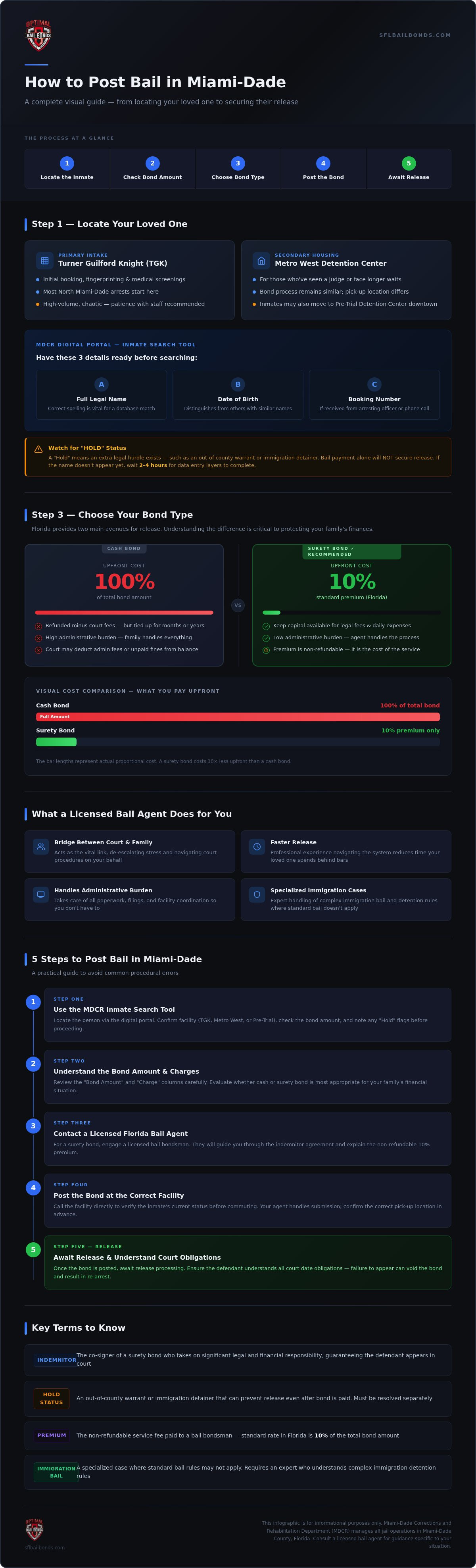
5 Steps to Post Bail in Miami-Dade: A Practical Guide
Learning how to post bail in Miami-Dade involves a specific sequence of actions that must be followed to ensure your loved one returns home as quickly as possible. The process is administrative and methodical. By breaking it down into manageable steps, you can maintain control over a chaotic situation. Following these steps for how to post bail in Miami-Dade will minimize delays and help you avoid common mistakes that often occur during a high-stress legal crisis.
- Step 1: Confirm the inmate’s location and bond amount. Use the MDCR search portal discussed earlier to verify they are at TGK or Metro West and check the specific bond set by the judge.
- Step 2: Gather necessary documentation. You'll need your ID and basic financial information before the paperwork can be finalized.
- Step 3: Contact a licensed Miami-Dade bail bondsman. A professional consultation will clarify your options and help you decide on the best path forward.
- Step 4: Complete the indemnity agreement. This is the legal contract where you agree to the terms of the bond and pay the required premium.
- Step 5: Wait for the jail to process the release. Once the bond is posted, the facility typically takes between 4 and 12 hours to complete the discharge.
Preparation: What You Need Before You Call
Being prepared saves precious time. Before you pick up the phone, ensure you have the following items ready for the bail agent:
- A valid government-issued photo ID (Driver’s license or passport).
- A reliable payment method, such as a credit card or bank transfer.
- The defendant’s full legal name, date of birth, and booking number.
- Proof of income or residency, which may be required for larger bond amounts.
The 10% premium is the state-mandated fee for surety bonds. This fee is the cost of the agent's service and the financial risk they assume on your behalf. It's a standard requirement across Florida, so you don't need to worry about varying rates between licensed agencies.
The Waiting Game: Post-Bond Logistics
Release times vary significantly at facilities like TGK and Metro West. While the administrative process is methodical, the sheer volume of daily bookings means that staff must balance new arrivals with outgoing releases. You shouldn't panic if the process takes longer than the typical window. The jail must clear internal records, return personal property, and update court databases before a person can walk out the door.
Once the defendant is released, your responsibility as an indemnitor continues. Ensure they are aware of their next court date and any specific check-in requirements. Staying in strict compliance with all bond conditions is the only way to avoid bond forfeiture. If the defendant misses a court date, the court can revoke the bond, leading to a new arrest warrant and the loss of any collateral you provided. Clear communication between the family, the defendant, and the bail agent is the best way to keep the process moving toward a successful legal resolution.
Why Optimal Bail Bonds is Your Partner in North Miami-Dade
Choosing the right agency is the final piece of the puzzle when learning how to post bail in Miami-Dade. You deserve a partner who combines professional authority with deep human empathy. At Optimal Bail Bonds, we don't just process paperwork; we provide a calming, supportive environment designed to de-escalate your stress. Our team understands the emotional weight of a legal crisis. We treat every client with the dignity and respect they deserve, regardless of the charges they face. This compassionate approach ensures you feel seen and supported rather than just processed through a system.
Our expertise extends beyond standard criminal cases. We are uniquely positioned to handle complex immigration bail bonds, which are a frequent necessity in South Florida. This dual specialization ensures that no matter the complexity of the detention, we have the specialized knowledge to facilitate a release. We act as your knowledgeable guide, turning a confusing administrative process into a clear path home. By choosing an expert who understands both county and federal systems, you ensure that your loved one's case is handled with the highest level of diligence.
A Supportive Ally in North Miami
We maintain a strong, active presence in North Miami-Dade communities, including Miami Gardens and Sunrise. Our focus is always on family reunification. We provide bail bonds Miami residents rely on for speed and integrity. Because legal emergencies don't follow a 9-to-5 schedule, we are available 24/7 to assist you. You won't have to wait until morning to start the process of bringing your loved one home. We are ready to act the moment you call, providing immediate reassurance when you are in distress.
Education-Backed Professionalism
What sets us apart is our role as a State-approved Education Center for bail professionals. We don't just follow the rules; we teach them. This background ensures that our team is always current on the latest Florida laws and regulatory nuances. When you work with us, you benefit from a level of professionalism and ethical standards that are unmatched in the region. We handle every detail with the precision of a mentor and the speed of a protective ally. This ensures that your journey through the how to post bail in Miami-Dade process is as smooth and secure as possible.
Take Control of the Release Process
A legal crisis is a heavy burden, but it is one you don't have to carry by yourself. You now understand the essential landscape of the Miami-Dade corrections system and the strategic benefits of choosing a surety bond over a cash payment. This guide has provided you with the foundational knowledge of how to post bail in Miami-Dade, allowing you to act with precision and speed. Whether you are dealing with a standard criminal charge or a complex immigration detainer, having a guide who operates as a state-approved education center ensures you receive the most ethical and accurate assistance available. Our team offers 24/7 local support to ensure you are never left without answers in the middle of the night.
We are ready to help you navigate these administrative hurdles with dignity and care. Trust in our expertise to help you bring your loved one home safely and restore order to your family's life.
Frequently Asked Questions
How long does it take to get someone out of jail in Miami-Dade after posting bail?
The release process typically takes between 4 and 12 hours once the bond is posted. This timeframe depends on the administrative workload at the specific facility, such as the Turner Guilford Knight Correctional Center. Jails must process paperwork, return personal property, and update court records before discharge. While we work quickly to submit the bond, the final release is controlled by the Miami-Dade Corrections and Rehabilitation Department.
Can I post bail myself at the TGK Correctional Center?
You can post a cash bond yourself directly at the TGK window or via the county's online portal. This requires you to pay 100% of the bail amount upfront. However, many families find this financially difficult and prefer using a licensed agent to handle the logistics. If you're choosing to post bail yourself, ensure you have the exact booking number and valid identification ready to avoid unnecessary delays.
What happens if I can't afford the full bail amount in Miami-Dade?
If the total bail amount is out of reach, a surety bond is the standard solution for how to post bail in Miami-Dade. Instead of paying the full amount, you pay a non-refundable 10% premium to a licensed bondsman. We then guarantee the full amount to the court on your behalf. This option keeps your cash available for other needs while securing a fast release for your loved one.
Do I get my money back after the court case is over?
Whether you get money back depends on the type of bond you used. If you paid a cash bond directly to the court, the money is typically refunded minus administrative fees once the case concludes. If you've used a bail bondsman, the 10% premium is a non-refundable fee for the service provided. This fee covers the agent's risk and the administrative work required to manage the bond throughout the legal process.
What is an immigration bond, and how is it different from a criminal bond?
An immigration bond is a federal guarantee used for individuals held by Immigration and Customs Enforcement (ICE), often at the Krome Detention Center. It differs from a criminal bond because it's governed by federal administrative law rather than Florida state law. These cases involve different paperwork and specific release protocols. We specialize in these complex cases, providing guidance to families in Miami Gardens and Sunrise who are facing immigration-related detentions.
What documents do I need to provide to a bail bondsman in Miami?
To begin the process, you must provide a valid government-issued photo ID and a reliable payment method. We also need the defendant’s full legal name, date of birth, and jail booking number. In some cases involving larger amounts, you might need to show proof of residency or income. Having these documents ready when you call for how to post bail in Miami-Dade ensures we can start the paperwork immediately.
Can a bail bond be revoked if the defendant misses a court date?
Yes, the court can revoke a bond if the defendant fails to appear for a scheduled hearing. When this happens, a bench warrant is issued for their arrest, and the bond is declared in forfeiture. As the indemnitor, you could become responsible for the full amount of the bail. It's vital to stay in close contact with your agent to ensure all court requirements are met and the bond remains in good standing.
Are bail bond fees negotiable in the state of Florida?
No, bail bond premiums are not negotiable in Florida. The standard 10% fee for state bonds is typically mandated by the Florida Department of Financial Services. Any agent offering a lower rate is likely operating outside of state regulations, which can put your collateral and the defendant’s release at risk. We maintain the highest ethical standards by following these state-mandated structures while providing compassionate, expert service to our clients.


