
Is your loved one in a Broward County jail, and what needs to happen before they can come home? A Broward County arrest search can help answer the first question, but unfamiliar government websites and bond terms can make an already stressful moment more confusing.
If you’re worried and unsure where to begin, that’s understandable. The Broward County Sheriff’s Office (BSO) inmate search is the primary place to check for available booking information, charges, and bond details. Online records can take time to update, so a missing result doesn’t always tell the whole story.
This step-by-step guide explains how to use BSO’s search tools, what information to have ready, and how to confirm an arrestee’s location and listed bond amount. You’ll also learn the difference between cash and surety bonds and what to consider before planning for release. If you’re searching from Miami, Florida, note that this guide covers Broward County records. A search for someone held in Miami-Dade requires that county’s own official resources.
Key Takeaways
- Use the Broward County arrest search to look for an arrestee, then review the record carefully. An arrest is not a conviction.
- Have identifying details ready before opening the official BSO search portal so you can compare possible matches.
- Read charge descriptions, bond information, and status fields separately. The listed amount may depend on the applicable bond schedule and court decisions.
- Before taking steps toward release, understand the difference between cash and surety bonds. Avoid discussing case details over jail phone calls.
- When contacting a bail agent, ask about the bond process, what information is needed, and whether any holds may affect release.
Understanding the Broward County Arrest Search System
Trying to confirm where someone was taken can feel urgent, especially when you’re unsure which agency made the arrest. Florida’s public-records framework makes many government records accessible to the public. The Broward County Sheriff’s Office (BSO) search is a practical starting point for finding available booking details.
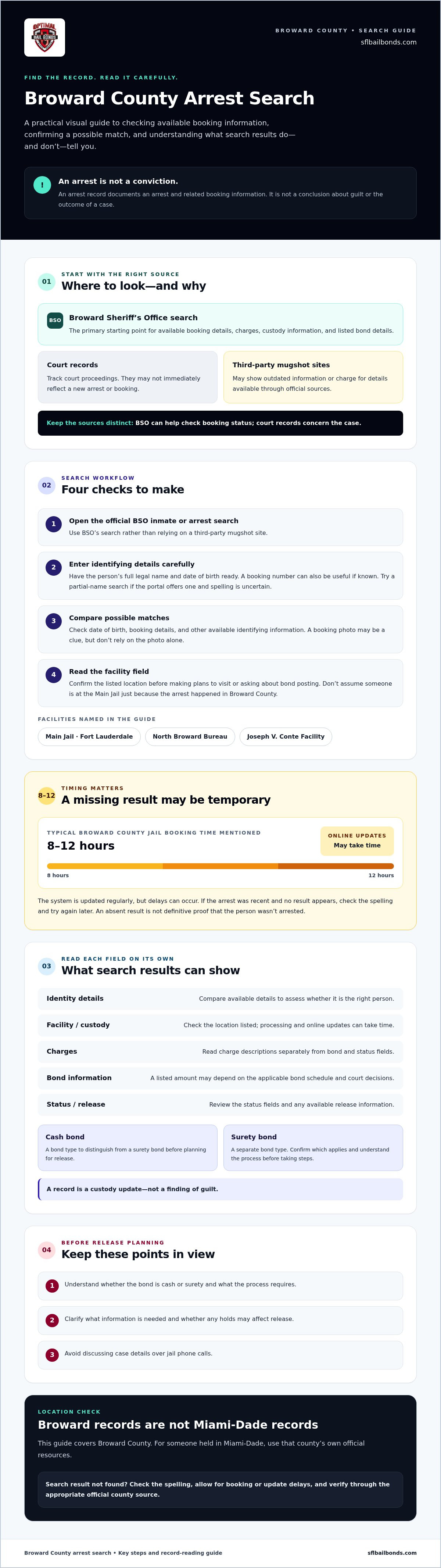
Public access doesn’t mean an arrest proves guilt. An arrest record documents an arrest and related booking information. A criminal conviction is a separate outcome. Treat search results as an update on custody status, not a conclusion about the case.
For a quick overview of the county and its government structure, see Broward County, Florida. To see how an inmate lookup is presented, watch this video:
The Role of the Broward Sheriff’s Office
BSO is a county law enforcement agency, while cities such as Fort Lauderdale may have their own municipal police departments. Which agency made an arrest depends on the location and circumstances, so not every arrest in Broward County should be expected to appear immediately in a BSO search. People arrested by different agencies are processed through the Central Intake Bureau at the Main Jail Bureau, but processing and online updates can take time.
Public Records and Privacy in Florida
BSO’s online portal can display booking photos, charges, and release information. Public access is not unlimited, and some information may be restricted. Search results also don’t establish guilt. The system is updated regularly, but delays can occur. There is no single period established here for how long every record stays visible, so check the official BSO search rather than relying on an old result or assuming a record will remain online indefinitely.
Use the official BSO portal first. Third-party mugshot sites may show outdated information or charge for details available through official sources. If a name doesn’t appear, check the spelling and try again later. An absent result isn’t definitive proof that the person wasn’t arrested.
Why Start with BSO Before Court Records?
The Broward County arrest search is designed to help you locate booking and custody details. Court records serve a different purpose: they track court proceedings and may not immediately reflect a new arrest or booking. Start with BSO to check for an available custody record, then consult court records for case information as it becomes available. Keep the sources distinct: one can help confirm booking status, while the other concerns the court case.
How to Perform a Broward County Inmate Search
Start with the official Broward Sheriff’s Office (BSO) website and open its inmate or arrest search tool. Before searching, gather the person’s full legal name and date of birth. The name is commonly used to find a record; the date of birth can help you assess whether a result is the right person when names are similar. If you know a booking number, keep it handy as another useful search detail.
Step-by-Step Search Instructions
- Open the BSO search portal. Use the inmate or arrest search on the official BSO website rather than relying on a third-party mugshot site.
- Enter the name carefully. Try the person’s full legal name first. If the portal offers a partial-name search, use it if you’re unsure of the spelling or think the name may have been entered differently.
- Review possible matches. Compare the date of birth, booking details, and other available identifying information. A booking photo can be a useful clue, but don’t rely on the photo alone to confirm identity.
- Check the facility listed. Note the location shown in the result before making plans to visit or asking about bond posting.
No result right away doesn’t necessarily settle the question. Booking at Broward County’s jail typically takes 8–12 hours, and the online system may not show information immediately. If the arrest was recent, try again later. BSO’s search is updated regularly, but delays can occur.
Identifying the Correct Facility
Results may identify a specific facility, so read the location field closely. Broward County’s facilities include the Main Jail in Fort Lauderdale, North Broward Bureau, and Joseph V. Conte Facility. Don’t assume a person is at the Main Jail simply because an arrest happened in Broward County. The facility location matters when checking visit instructions or confirming where to direct questions about bond posting.
Before traveling, verify the current facility and its instructions through official BSO information. If the search result is unclear or seems inconsistent, contact the relevant facility to confirm rather than relying on an old listing. This can help prevent an unnecessary trip during an already stressful time.
What to Check After the Search
Once you’ve identified a likely match, save the booking or arrest details shown in the official result. For information about court proceedings, use the Broward County Clerk of Courts search as a separate next step. Court records and jail listings serve different purposes and may not update at the same time. Keep the details you find available when you contact a facility or ask about next steps.
A careful Broward County arrest search starts with the official portal, then verifies identity and location before you act. Take it one step at a time, and confirm important details directly with BSO when the online listing doesn’t answer your question.
Interpreting Your Search Results: Bonds and Charges
A Broward County arrest search can show several fields at once, but each describes a different part of the booking record. Read the charge description, bond amount, and any status or hold information separately. A listed charge is an accusation, not proof of guilt. A bond amount alone doesn’t confirm that someone can be released immediately.
Charges and Bond Amounts
Charge Description names the alleged offense recorded at booking. The wording may be abbreviated or unfamiliar, so avoid drawing conclusions from a label alone. For case details, consult official court records or ask a qualified legal professional.
Bond Amount is the amount shown for release under the listed bond, if one has been set. Florida has a statewide bond schedule for eligible offenses before first appearance. In most cases, a judge reviews the charges and determines bond at a first appearance hearing, which generally occurs within 24 hours of arrest. The amount and release conditions depend on the case and the court’s decision.
Common Bond Statuses Explained
- Cash bond: The full listed amount is paid directly to the jail.
- Surety bond: A bail bondsman posts a bond for a percentage of the total amount. Confirm the terms directly with the bondsman before proceeding.
- Pending Magistrate: The record indicates that a magistrate’s review or decision is pending. Check the official listing again or contact the facility for current information.
- No Bond: The listing does not show a bond that can currently be posted. Don’t assume a payment alone will secure release. Ask the facility what the status means and whether it has changed.
A Nebbia requirement generally involves scrutiny of the source of funds used for bond. If this appears in a record, ask the court or a qualified professional what documentation or steps apply to that specific case. For additional general context, see this professional bail bond guidance in Miami.
Holds and Other Agencies
A hold can affect release even when a bond is listed for the Broward case. An ICE or other federal hold may indicate another agency has an interest in custody. An out-of-county warrant can signal a separate matter that must be addressed. The meaning and next steps depend on the hold, so confirm the information with the jail and the agency named in the record. A bond for one case doesn’t necessarily resolve another hold.
Status labels can be difficult to interpret during a stressful moment. Optimal Bail Bonds provides bail bond services in North Miami-Dade and specializes in immigration bail. Only the relevant authorities can confirm current hold status and release conditions.
Next Steps: What to Do After Finding an Inmate
Finding a record can bring relief, but it may also leave you with urgent questions. Save the booking details and bond status from your Broward County arrest search, then confirm unclear or changing information with the jail before making decisions.
The golden rule: Don’t discuss the facts of the case over jail phone calls. Keep conversations focused on practical matters, such as confirming who to contact or saying that you’re arranging help. For advice about the case or legal strategy, contact an attorney. A bail bondsman can explain bond-related steps but doesn’t provide legal representation.
Contacting the Right Professionals
If a bond is listed and you’re exploring release options, contact a bail bondsman and have the person’s name, booking details, facility, and bond information ready. These details can help the agent identify the relevant record and explain what information is still needed. If the result shows a hold, no bond, or another unclear status, first ask the jail or relevant agency to clarify it. Posting a bond on one case may not resolve a separate hold.
Ask how the bondsman handles the specific bond and any additional custody issues. You can read this overview of local bail bondsman Miami guidance for further context.
Preparing for the Bonding Process
Requirements can vary, so ask the bondsman directly what information and documents are needed before gathering paperwork. Be ready to provide accurate contact details and the booking information you found. If someone will co-sign, ask whether identification, proof of income, or proof of residency is requested. Don’t assume every document applies to every situation. Confirm the terms, responsibilities, and any costs directly with the bondsman before agreeing.
After a bond is posted, release timing can depend on jail processing and whether another hold or requirement remains. There isn’t a reliable release time to promise based only on the online record. Check with the facility for current status, and ask the bondsman what updates they can provide as the process moves forward.
Optimal Bail Bonds provides bail bond services in North Miami-Dade. If you’re in Miami and need help understanding bond-related steps, contact the company to ask whether it can assist with your situation. Share the booking details and ask what steps apply.
How Optimal Bail Bonds Assists with Broward Arrests
A Broward arrest can leave families sorting through unfamiliar terms, facility information, and questions about release. Optimal Bail Bonds provides bail bond services in North Miami-Dade and aims to guide clients through the process with compassionate, non-judgmental support. If you’re contacting the company from Miami about a Broward case, ask whether it can assist based on the case and location.
Information from a Broward County arrest search can help start a conversation. Have the person’s name, booking details, facility, and listed bond status ready. The team can explain bond-related steps and help you understand what information may still need confirmation. A listed bond does not necessarily mean immediate release, especially if another hold or requirement applies. Release timing can’t be guaranteed.
Support for Different Bond Situations
Criminal and immigration bonds can involve different processes. Optimal Bail Bonds specializes in immigration bail and provides bail bond services. If a search result mentions a hold or unclear status, ask what the record confirms and which agency or facility can clarify the remaining requirements. Bail bond guidance can help with the bond process, but it isn’t legal advice or legal representation. Questions about charges, defenses, or case strategy belong with an attorney.
Each family’s circumstances are different. A helpful conversation should be respectful and focused on the details you have, without judgment about the arrest. If you’re unsure what a status field means, share the wording shown in the official record and ask what questions to direct to the jail or relevant agency.
Education Behind the Guidance
Optimal Bail Bonds also operates a Bail Bond Education Center. Its educational offerings include a 120-hour bail bonds course and continuing education for licensed bail bondsmen. Learning about Florida’s bail bond processes can help aspiring and licensed professionals build relevant knowledge. Education doesn’t replace official information from BSO, a court, or an attorney, and it doesn’t mean an agent can control court decisions or release timing.
When you reach out, keep the booking information nearby and ask directly about the bond type, any known holds, what information is needed, and what to expect next. Clear answers can help bring order to a stressful situation.
Take the Next Step with Clear Information
A Broward County arrest search can help you confirm booking details, but online results are only a starting point. Check the official BSO record, verify the facility and bond status, and ask about any holds before making release plans. A bond listed for one case may not resolve a separate custody issue.
If you need help understanding bond-related next steps, Optimal Bail Bonds provides bail bond services in North Miami-Dade and specializes in immigration bail. The company also operates a Bail Bond Education Center offering pre-licensing and continuing-education classes. Bail bond guidance isn’t legal representation, and release timing can’t be guaranteed.
You don’t have to sort through every detail at once. Take the next step with care, and keep asking questions until you understand your options.
Frequently Asked Questions
How long does it take for an arrest to show up in the Broward search?
It can take several hours for booking information to appear. Broward County’s booking process typically takes 8–12 hours, and online updates may be delayed. If you don’t find the person right away, check again later using the correct name or booking details. A missing result isn’t confirmation that no arrest occurred. For urgent, current custody information, contact the jail directly rather than relying only on the online listing.
Can I see the mugshot of someone arrested in Broward County?
Often, yes. The official BSO inmate search may display a booking photo along with other available booking details. Use the photo only as one clue when checking a result. Compare the person’s name, date of birth, and other identifying information because a similar-looking photo or matching name alone may not confirm identity. Official listings can also change as records are updated, so verify important details through BSO.
What does “No Bond” mean on a Broward inmate search result?
“No Bond” means the listing doesn’t show a bond amount currently available for posting on that case. It doesn’t explain every reason for the status or establish what will happen next. Contact the jail or check for updated court information to clarify the current status. If the person has another hold, resolving a bond on one case may not result in release from custody.
How do I find out if someone has an ICE hold in Broward County?
Check the official inmate record for a listed hold, but don’t assume the search will explain its status or next steps. Contact the facility and ask which agency is associated with the hold and how to verify current information. A bond on a Broward case may not resolve a separate immigration matter. Families in Miami-Dade dealing with an immigration bond can also ask a bond provider what information they need to discuss the process.
Can I pay a bond directly at the Broward County Main Jail?
You can pay the full bond amount directly to the jail when the release option is a cash bond and the facility confirms its current procedures. A surety bond is different: a bail bondsman posts the bond, rather than the family paying the full amount as a cash bond. Check the BSO record and contact the jail to confirm the bond type, amount, and accepted payment process before going there.
Is the Broward arrest search free to use for the public?
Yes. Viewing arrest records through the official BSO online portal is free. Be cautious of third-party sites that charge for information or may not reflect the latest updates. Fees may apply if you request paper records or court documents, which are different from simply viewing an online inmate listing. Start with the official Broward County Sheriff’s Office search to check available booking information at no charge.
What is the difference between a jail search and a court case search?
A jail search helps you check custody and booking details, such as whether a person appears in the inmate system and what bond information is listed. A court case search focuses on proceedings and case records. The two systems serve different purposes and may not update at the same time. For court information, search through the Broward County Clerk of Courts; use BSO for available jail and booking details.
How do I find an inmate’s court date using the search tool?
The BSO inmate search may not provide a complete or current court schedule. Use the person’s name or case details to look for court information through the Broward County Clerk of Courts search, then confirm the date with the court if anything is unclear. Don’t rely on an old jail listing as confirmation of a hearing time. Court dates can change, so verify the latest information before making plans.


