
In a bail crisis, clear communication matters as much as speed. Managing stress and high-stakes client communications as a bail agent in Florida means listening first, explaining each step plainly, and separating confirmed information from what remains unresolved.
Families may feel frightened, frustrated, or unsure what a breach or forfeiture means. A steady, professional response can help them understand the situation without creating false expectations or crossing into legal advice. Learn to answer questions, explain bond-related terms, keep families appropriately informed, and maintain professional boundaries when emotions run high.
Practical communication habits can make stressful conversations more manageable while keeping your role and responsibilities clear. Pause before responding, organize the key facts, and deliver updates with empathy and clarity.
Key Takeaways
- Set clear expectations about when and how clients can reach you, then communicate any delays plainly.
- Pair efficient updates with calm, empathetic language that acknowledges families’ concerns without promising outcomes.
- Explain a potential or incurred breach or forfeiture using clear, factual terms, and separate known information from next steps.
- Keep families informed about release progress with timely updates and a clear distinction between progress and confirmation.
- Maintain professional boundaries by answering bond-process questions within your role and directing legal questions to appropriate legal counsel.
Availability for client questions
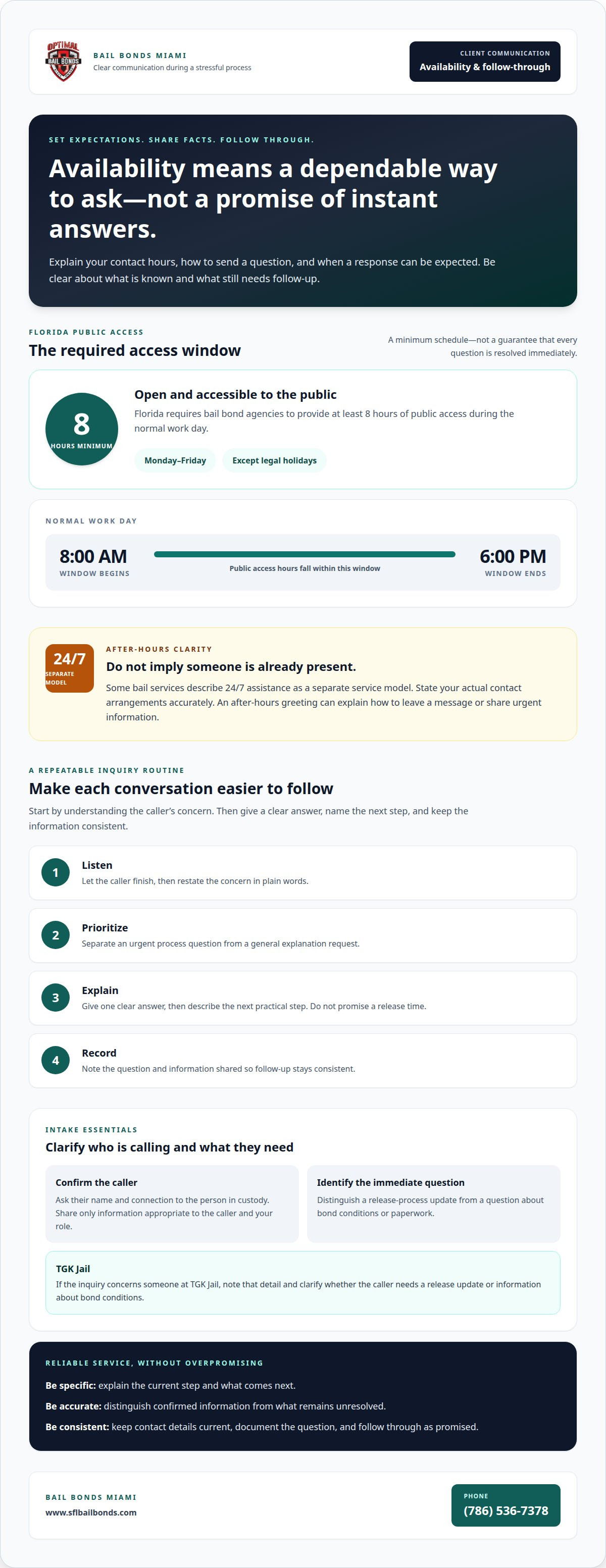
Availability means giving clients a clear, dependable way to ask about a bond. Explain your contact hours, how to send a question, and when to expect a response. First clarify what the caller needs, such as a release-process update or help understanding paperwork, then address that specific concern.
Florida sets a minimum public-access schedule for bail bond agencies. An agency must be open and accessible to the public for at least 8 hours during the normal work day, defined as 8:00 am to 6:00 pm, Monday through Friday, except legal holidays. This is a required access window, not a promise that each question will be resolved immediately.
Around-the-clock availability is a separate service model. Some bail services describe 24/7 assistance for families outside traditional business hours, but agents should communicate their actual contact arrangements accurately. If a caller reaches an office after hours, a clear greeting can explain how to leave a message or share urgent information without implying that an agent is already present.
Use a consistent intake routine for each inquiry. Confirm the caller’s name and connection to the person in custody, then identify the immediate question. If someone asks about a loved one at TGK Jail, note that detail and distinguish release updates from questions about bond conditions. Share only information appropriate to the caller and your role.
Explain bond costs, fees, collateral, and payment terms separately and in plain language. Clarify what is due, what collateral means, how payment arrangements work, and which terms appear in the agreement. Give clients time to ask about unfamiliar wording.
To manage stress, burnout, and secondary trauma, take short breaks between difficult calls, keep consistent case notes, and set clear limits on work communications. After a distressing conversation, record the next action, step away briefly, and seek qualified personal support if stress persists.
Florida prelicensing education can support agents developing their professional skills. Peer support and appropriate mental-health resources may help too. Choose confidential support that respects the demands of work with families in crisis.
Reliable availability comes from a repeatable process, not promises of instant answers. Keep your contact schedule current, note each caller’s question, explain the next step, and follow through as promised. Consistent handoffs within an agency help prevent families from having to repeat the same concern.
Balancing efficient service with compassionate communication
Bail bonds are financial arrangements connected to a person’s release from custody. Explain the immediate steps, identify any information still needed, and avoid promising a release time. If a family asks what happens next, summarize the paperwork stage and clearly state the next action.
A licensed agent is authorized to perform regulated bail-bond functions. In Florida, a person or entity must be qualified, licensed, and appointed to act as a bail bond agent or agency, or perform its regulated functions. Even in a calm conversation, maintain a clear professional boundary: explain the bond process without presenting assumptions as confirmed facts.
A Florida bail bond is a bond handled under the state’s rules. Florida bail bond rates are subject to Part I of Chapter 627 of the Insurance Code. Explain the relevant terms in the agreement rather than relying on shorthand. If a caller asks whether a payment is refundable, clarify which payment they mean and describe its treatment using the written agreement.
Credit is an arrangement for borrowing money that may involve repayment terms. Don’t imply that credit or a particular payment method is available unless it applies to the transaction. Explain the payment terms that govern the bond, give the caller time to review them, and invite specific questions. This keeps a stressful discussion factual and respectful.
A bail bond agency handles bail-bond transactions through qualified personnel. Florida prohibits bail bond agencies from using misleading or false advertising or deceptive trade practices. Apply the same standard of clarity in client conversations: don’t make a premium sound reduced or suggest that a bond guarantees a court outcome.
Use a short communication sequence when several questions arrive at once:
- Listen: Let the caller finish, then restate the concern in plain words.
- Prioritize: Separate an urgent process question from a general explanation request.
- Explain: Give one clear answer, then describe the next practical step.
- Record: Note the question and the information shared for consistent follow-up.
A course provides structured instruction to help learners build knowledge and skills. A pre-licensing bail bonds course can support aspiring agents as they learn about the profession’s procedures. For day-to-day conversations, practice concise explanations. Instead of saying, “It’s being processed,” describe the current step and what comes next.
Compassion doesn’t require lengthy explanations. Acknowledge the pressure, give the clearest answer available, and pause before responding to anger. This balance helps agents serve clients efficiently while keeping each conversation accurate, humane, and professional.
Communicating pending or incurred breaches and forfeitures
A breach is a reported failure to meet a bond condition. A forfeiture is a bond-related consequence recorded when an obligation tied to the bond is not met. Distinguish a concern under review from a formal action already taken, and explain what is known without assigning blame.
Start with the specific event and its status. For example, say, “We’ve received information about a missed court appearance, and I’m checking the bond record.” If a forfeiture has been entered, state that clearly and identify the document or notice supporting the update. Don’t describe a possible breach as a final forfeiture. Families need an accurate status, not a prediction presented as fact.
A bail bond agent is a licensed professional who handles bail-bond matters within the agent’s role. In Florida, appointments effective January 1, 2025 require certification that the appointee swore they owe no premium and will discharge outstanding bond forfeitures and judgments. This makes careful records and precise language important. Keep dates, notices, communication attempts, and actions taken together in the relevant file.
Use a structured explanation when a client receives difficult news:
- Name the status: Say whether the issue is reported, pending review, or documented as a forfeiture.
- Identify the source: Describe the notice, record, or communication informing the update.
- Explain the next step: State what information or action is needed, without guessing at the outcome.
- Confirm understanding: Ask the caller to repeat the key point or identify what remains unclear.
Tie the amount and any associated responsibility to the paperwork. If a family asks, “How much do we owe now?” don’t improvise a figure or treat every bond issue alike. Explain which amount appears in the relevant document, distinguish it from separate payment or collateral discussions, and record what you communicated.
A charge is an allegation that a person committed an offense; it isn’t another term for a bond breach. A felony is a category of criminal offense, not a label for a missed condition or forfeiture. If a caller asks whether the situation means a new charge or felony, clarify the terms without drawing legal conclusions. Return to the documented bond status and the next practical step.
Be accessible without becoming careless. Use neutral language, avoid debating who caused the problem, and give the family time to absorb the information. A responsible update is specific, documented, and limited to your role. This approach reduces confusion and preserves a clear record of what was reported and explained.
Keeping families informed about release progress
An arrest is the taking of a person into custody. After an arrest, families often need a sequence of updates, not a promised release time. Explain the current step, what remains, and when you’ll provide the next update. For example: “The paperwork is underway; I’ll update you when I have the next confirmed status.” This distinguishes progress from a completed release.
Collateral is property or another form of security connected to a bond agreement. Explain what the family is being asked to provide, how it is recorded, and which written terms apply. Don’t treat collateral as the premium or promise that it will be returned at a particular time. If a relative asks about a specific item, refer to the applicable agreement and explain its wording plainly.
An agreement is the written record of terms accepted by the relevant parties. Before describing the next step, confirm that the family understands what has been signed or remains to be completed. A practical update might be, “The agreement is complete, and the release process is still underway.” Don’t say “released” until release is confirmed. This can prevent relatives from traveling to a facility based on an assumed outcome.
An application is a request submitted for consideration or processing. In a bail bond matter, explain whether information or paperwork is still being gathered, submitted, or reviewed. Florida jail booking typically takes one to three hours, but can take as long as 12 hours. The process from initial contact with the bondsman to release generally takes about five hours, and paperwork usually takes about 45 minutes. These are process descriptions, not individual release guarantees.
A department is a government office responsible for a defined administrative function. If a family asks about a department-related update, state what information has arrived and what step remains. Don’t interpret silence as approval or a completed action. Record the time and source of the update, then tell the family what will prompt your next message.
Use a brief status sequence to keep updates consistent:
- Identify the stage: Explain whether paperwork, submission, or release processing is underway.
- Separate fact from expectation: Share confirmed progress without predicting the finish time.
- Give the next checkpoint: Name the event or information that will support another update.
- Confirm the contact: Ask which family member should receive the next message.
If someone is being held at TGK Jail, use the facility name to clarify where the process is taking place. A calm, specific update helps families understand what has moved forward and what remains, without confusing completed paperwork with release from custody.
Professional boundaries and legal questions
Professional boundaries keep your role clear during stressful conversations. Use factual language, protect sensitive case details, and refer questions outside your role to appropriate support.
A licensed bail bond is a bond handled by an agent authorized to perform regulated bail-bond functions. A principal is the person whose appearance is secured by the bond, while a surety is the party backing the bond. Florida Legislature states that bail agents may accept only the authorized premium and transfer fee for a bond, while collateral or other indemnity may be accepted under section 648.442.
When discussing a case, share only relevant information with people whose connection to the matter is clear. Confirm who you’re speaking with before disclosing details, keep records factual, and don’t discuss a principal’s situation in public or on social media. These are prudent privacy practices, not a substitute for legal advice about a specific disclosure.
An agency conducts bail-bond business through its authorized personnel. If a client asks whether a court action is lawful, what plea to enter, or how a charge affects their rights, explain that these are legal questions and refer them to an attorney. Keep your response focused on bond terms and documented process steps.
Referrals to Professional Support
A referral connects a client with a professional whose role fits the concern. Recommend an attorney for questions about charges, court strategy, rights, or legal consequences. If someone describes severe distress or asks for mental-health care, suggest contacting a qualified mental-health professional. If someone appears to face immediate danger, direct them to emergency services. Stay calm, explain why you’re referring them, and avoid diagnosing or interpreting the law.
Risks of Digital and Recorded Communication
Digital communication includes texts, social-media messages, and recordings shared electronically. A text can be forwarded or read by someone other than its intended recipient, and a public post can expose private case details. Before sending a message, verify the recipient and limit the content to necessary logistics. Don’t record or share a conversation casually; explain the communication method and maintain a professional tone.
A return is the documented handover or recovery of collateral under the applicable agreement. Explain the written terms and keep records of what was received, communicated, or returned. If a family asks when property will be returned, refer to the agreement’s relevant terms rather than offering an unsupported date. Clear records help prevent later disagreements about what was said.
Before answering, ask yourself: Is this about the bond? Does the person need a licensed professional? Can I share this detail with this recipient? That pause supports managing stress and high-stakes client communications as a bail agent in Florida while treating the principal’s information with care.
Optimal Bail Bonds: Pre-Licensing Bail Bonds Class
Optimal Bail Bonds offers a Pre-Licensing Bail Bonds Class for people preparing to enter Florida’s bail-bond profession. Clear client communication is part of the work: agents must explain processes carefully, keep professional boundaries, and stay composed during difficult conversations. Structured pre-licensing education can help aspiring agents build their foundation before taking on those responsibilities. The 120 Hours Bail Bonds Course and How to be a Bail Bondsman are related learning options for people exploring this career path. For individuals and families seeking help with a bond in Miami, Bail Bonds Miami is the relevant service. Choose the path that fits your immediate need, whether that’s learning about the profession or seeking bond assistance. Contact Optimal Bail Bonds or visit sflbailbonds.com to take the next step.
Make your next conversation more confident
Professional communication improves with deliberate practice. Before a difficult call, identify what the person needs, which facts you can share, and what falls outside your role. Afterward, note what worked and where a clearer explanation could help next time. These habits can make managing stress and high-stakes client communications as a bail agent in Florida more sustainable while helping clients feel heard and informed.
If you’re building your path in the bail-bond profession, choose a learning step that supports your goals and strengthens your foundation. If you need bond assistance, focus on sharing the relevant details so the conversation can address your situation.
Keep leading with clarity and care. Each thoughtful conversation is an opportunity to build trust and serve people professionally.
Frequently Asked Questions
What Florida laws and licensing rules govern bail agents' communications with clients?
Florida’s bail-agent rules are found primarily in Chapters 648 and 903, and section 648.30 addresses licensing. A person or entity must be qualified, licensed, and appointed to act as a bail bond agent or agency or perform regulated functions. In Miami, agents should keep client explanations within their authorized role, use accurate records, and avoid presenting legal opinions as bond-process information.
How can bail agents communicate calmly with clients during arrests, court deadlines, or crises?
Use a brief, structured exchange: identify the immediate concern, clarify the relevant deadline or event, and agree on the next communication step. Ask whether the caller needs help understanding a court date or an update about a bond matter. Repeat the key date or action plainly, then invite the caller to correct any misunderstanding. Avoid predicting court or release outcomes.
What de-escalation techniques help manage angry, frightened, or distressed clients?
Slow your speaking pace, let the person finish, and acknowledge their concern without agreeing to unverified claims. Saying, “You’re worried about what happens next,” can show you’ve listened. Offer a focused choice, such as discussing the immediate paperwork question first or taking a moment before continuing. If someone describes immediate danger, prioritize contacting emergency services rather than continuing a routine bond discussion.
What communication steps should a Florida bail agent take when a client misses court or violates bond conditions?
Separate what the caller reports from information documented in an official notice or record. Note the date, source, and specific concern, then explain only bond-related information you can support. Don’t advise on court strategy or describe a reported violation as a legal finding. For questions about consequences or what to do in court, direct the client to an attorney and keep your case notes factual.


