
How do you help a loved one get released from jail when you’re unsure where they’re being held, what the bond will cost, or what happens next? A sudden arrest can leave families overwhelmed, especially when trying to navigate TGK Jail and the Miami-Dade court process. Clear answers and respectful support can help you focus on the next step.
With bail bonds Miami families can get guidance on the steps involved in seeking release. This article explains what information to gather, how to check custody and bond status, and what to ask about costs and responsibilities before signing a bond agreement. The amount due and the release process depend on the bond and the case.
We’ll cover how to look for someone in custody, what to confirm before arranging a bond, and what to keep in mind about court dates and ongoing responsibilities. If English isn’t your preferred language, ask early about communication options to help reduce confusion. The goal is to make a stressful situation more manageable with practical information and compassionate guidance.
Key Takeaways
- Learn how a bail bond may help someone seek release while they await court proceedings in Miami-Dade.
- Understand Florida’s standard 10% premium for state bonds and what “non-refundable” means before making a decision.
- See why immigration and federal detention can involve different steps from a standard Miami-Dade jail release.
- Find out how to use the Miami-Dade inmate search and confirm whether someone is at TGK Jail.
- Explore how bail bonds Miami support and bail bond education can help families approach the process with clearer information.
Understanding the Bail Bond Process in Miami-Dade
An arrest can leave a family making decisions before they know where their loved one is being held or what happens next. A bail bond is a legal guarantee that the defendant will appear for required court proceedings. With a surety bond, a bail bondsman arranges the bond with the court or jail, providing a way to seek release while the case proceeds. The release decision and timing depend on the case and the required process.
For families seeking bail bonds Miami, confirming the paperwork and bond terms can make a confusing situation more manageable. Before making a payment, verify the person’s identity, charges, bond status, and any documents required. Accurate booking and case details help ensure that the bond is arranged for the right person. The Bail in the United States overview offers background on surety bonds and the role of bail bondsmen.
For a visual introduction to the topic, watch this video:
The Immediate Steps After a Miami Arrest
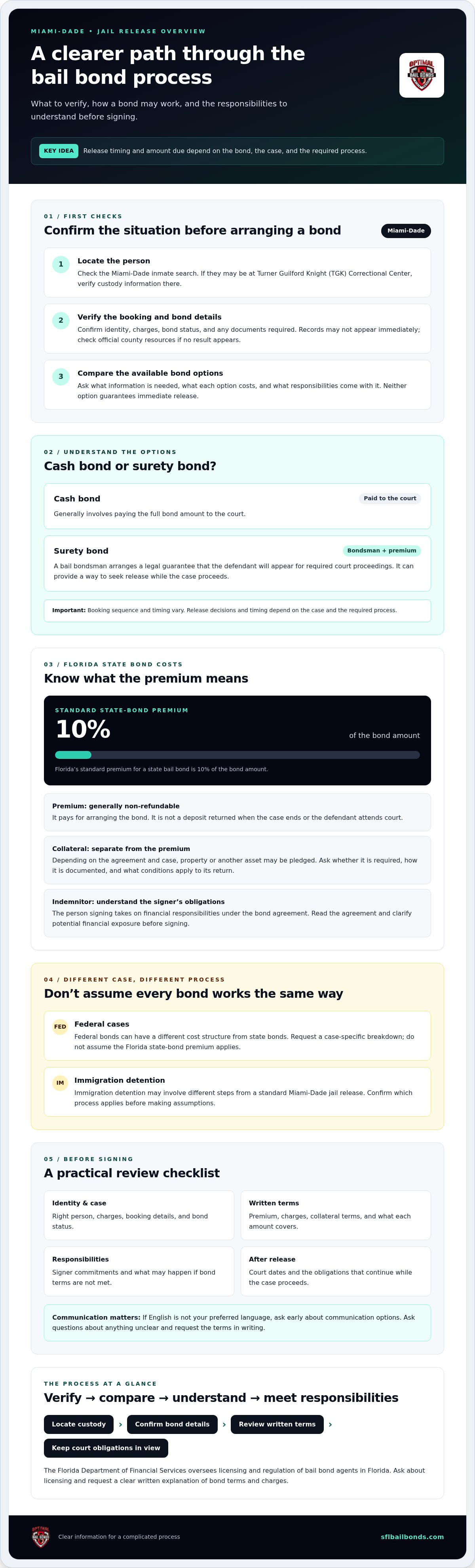
Booking records an arrest and processes a person into custody; the sequence and timing can vary. First, check the person’s location, then verify the charges and whether bail has been set. If the person may be at Turner Guilford Knight (TGK) Correctional Center, use the Miami-Dade inmate search to check custody information. Records may not appear immediately, so confirm through official county resources if the search returns no result.
Before choosing a bond option, ask the bondsman to explain the available choices, terms, and information needed. A cash bond generally involves paying the full bond amount to the court, while a surety bond involves a bondsman and a premium. Compare what you would pay and what responsibilities you would accept under each option. Neither option guarantees immediate release.
The Role of the Florida Department of Financial Services
The Florida Department of Financial Services (DFS) oversees the licensing and regulation of bail bond agents in Florida. Before working with an agent, ask about licensing and request a clear, written explanation of the bond terms and charges. Education is also part of the industry: Optimal operates a state-approved Bail Bond Education Center, including a 120-hour bail bonds pre-licensing course.
Take time to confirm the details, ask about anything you don’t understand, and make sure you know what is expected after release, including attending court dates. A calm, informed conversation can help bring order to a stressful moment.
Florida Bail Bond Costs and Legal Requirements
Before agreeing to a bond, distinguish the premium from collateral and make sure you understand the signer’s responsibilities. Florida’s standard premium for a state bail bond is 10% of the bond amount. The premium is generally non-refundable. It pays for arranging the bond, rather than serving as a deposit returned when the case ends or the defendant attends court. Ask for the terms in writing and clarify what the stated amount covers.
Collateral is separate from the premium. Depending on the agreement and case, it may involve property or another asset pledged to help secure the bond. Ask whether collateral is required, how it will be documented, and what conditions must be met before it can be returned. The return process depends on the bond’s status and written agreement, so get the terms in writing rather than relying on verbal assumptions.
The person who signs the bond as indemnitor takes on financial responsibilities under the bond agreement. These may include helping ensure the defendant appears in court and addressing obligations if the bond terms aren’t met. Before signing, read the agreement, ask about potential financial exposure, and make sure every signer understands their commitments. For an overview of state oversight and consumer information, review Florida bail bond regulations.
State vs. Federal Bond Premiums
Federal bonds can follow a different cost structure from state bonds, so don’t assume the Florida state-bond premium applies. Request a clear, case-specific breakdown before agreeing to terms. Federal cases may also require closer review of the people involved and the funds or collateral offered. Provide accurate information and ask what documentation is needed. With bail bonds Miami, confirming the bond type and written terms helps families make informed decisions.
Understanding Nebbia Hearings in Miami-Dade
In some federal cases, a judge may require a Nebbia hearing to examine whether bond funds and collateral come from legitimate sources. A “Nebbia proffer” refers to information submitted about those sources. A bondsman can explain what financial information may be requested and clarify the bonding process, but can’t replace legal counsel.
Incomplete records, inconsistent details, or unclear explanations about where funds came from can complicate review and contribute to delays. Gather accurate records, provide consistent information, and confirm which documents are requested before submitting them. For a closer look at bail bond education, explore the 120-hour bail bonds course.
Specialized Bonds: Immigration and Federal Detention
An arrest in Miami-Dade and immigration detention may involve different agencies, procedures, and release decisions. Someone held by U.S. Immigration and Customs Enforcement (ICE) isn’t simply processed through the county jail bond system. Families facing uncertainty about detention or possible deportation need clear information about which process applies. A bondsman who handles immigration bonds can help clarify the bond process and the details to confirm, without promising a particular outcome.
Before taking action, confirm who has custody and whether a bond has been set or release is otherwise available. Florida state bail law doesn’t determine ICE procedures. The Florida Statutes on Bail provide context for state bail, but immigration matters require information specific to the person’s detention and case.
Navigating the ICE Release Process in Florida
Immigration detainees may be held in facilities separate from Miami-Dade corrections, and the location can change. Don’t assume someone is at TGK. Confirm custody and the current facility through the appropriate official channel before arranging payment or travel.
The broad sequence is to verify detention and bond status, confirm the payment and documentation process, arrange payment if a bond is authorized, and then wait for release processing by the responsible authorities. Requirements can vary, so ask which documents and instructions apply to the case. Keep names and case details consistent across paperwork, and confirm where and how payment must be made before sending funds.
Immigration bonds can be stressful for the whole family. A knowledgeable, non-judgmental bondsman can explain the bond process and help families understand what questions to ask. Optimal Bail Bonds specializes in immigration bonds and serves North Miami-Dade.
Federal Bail Bonds for Serious Charges
A case may move from a state court process to federal court when federal authorities bring charges under federal law. Federal bonds follow a different process from standard county bonds; the court sets the conditions, and additional review may apply. Ask which court has authority, what type of bond is being considered, and what documents or financial information the court requires. Don’t assume a state-court bond arrangement transfers to a federal case.
Education-focused experience can help an agent explain unfamiliar paperwork and organize questions about the bond process. Optimal operates a state-approved Bail Bond Education Center, offering pre-licensing and continuing education. That education can provide context about industry terms, but it doesn’t replace legal advice. To learn about the training offered, see the 120-hour bail bonds course. For bail bonds Miami involving immigration or federal custody, verify the detention location, bond status, required documents, and court instructions before making arrangements.
Step-by-Step Guide to Jail Release in Miami and TGK
Finding someone in custody is the first step, but an online search may not show an arrest immediately. Turner Guilford Knight (TGK) Correctional Center is Miami-Dade County’s central booking jail, but confirm the person’s current location and status rather than assuming they’re there. Release timing can vary, so don’t treat a general estimate as a promise.
Locating a Loved One in Miami-Dade
Use the Miami-Dade Corrections and Rehabilitation inmate search and enter identifying details carefully. A full legal name and date of birth can help distinguish people with similar names; keep a booking number handy if you have one. Check the official search page for its current instructions and verify that any result matches the person you’re looking for.
If no result appears, don’t assume the person isn’t in custody. Booking and online record updates may not happen at the same time. Recheck later and confirm details with the relevant county resource. When a record appears, note the listed facility, charges, booking information, and bond status. These details help you ask informed questions before making arrangements.
The Release Process at TGK Jail
After a bond is posted, the jail still has to process the release. Processing depends on current conditions and the individual case, so confirm current expectations with the appropriate jail resource and plan for a wait. Don’t make plans based on an assumed release time.
Before meeting a bondsman or going to a facility, confirm the meeting location and what identification or case details to bring. Follow facility instructions, keep your phone available, and make sure the bondsman has accurate booking information. If the person isn’t released when expected, ask for a status update rather than relying on guesses.
Families seeking bail bonds Miami can follow a clear sequence: verify custody, confirm bond status and terms, provide accurate information, then monitor updates while the facility processes release. For more guidance on the process, read Bail Bonds Miami: 2026 Guide.
Why Choose Optimal Bail Bonds for Your Miami Release
A jail release can involve unfamiliar forms, urgent decisions, and questions that continue after a bond is arranged. Families need clear explanations and respectful support. Optimal Bail Bonds serves North Miami-Dade, with a compassionate, non-judgmental team focused on helping families understand the bond process and their responsibilities.
Education is another part of the business. Optimal operates a state-approved Bail Bond Education Center, offering pre-licensing and continuing education. Its education programs can help families understand industry terms and ask informed questions. They don’t guarantee a particular filing or release outcome, which depends on the case and the relevant authorities.
The Authority of a Bail Bond Education Center
Optimal’s education center offers a 120-hour bail bonds course alongside its bail bond services. This training background gives the business context for explaining industry terminology and bond paperwork in accessible language. Ask what information is needed, how the bond terms work, and what responsibilities continue after release. Clear answers can help you make decisions without feeling rushed or judged.
Legal requirements can change, so be cautious of claims that an agent can predict every rule or outcome. The education center’s state-approved pre-licensing and continuing education offerings reflect a focus on professional learning, but they aren’t a substitute for legal advice. A bondsman can explain the bond process; questions about a case’s legal strategy belong with an attorney.
Getting Started with Optimal Bail Bonds
To begin, gather the booking or case details you have and ask the team to explain the bond type, required information, terms, and next steps. Before signing, make sure you understand the agreement and the responsibilities of anyone supporting the bond. Keep court dates and instructions organized after release. For guidance beyond the bond itself, contact the appropriate court or an attorney.
For a TGK Jail release, contact Optimal Bail Bonds to confirm current availability and discuss the case. Release timing is controlled by the jail and can vary. The team handles bail bond services, including immigration bonds, and its local focus is North Miami-Dade.
If you’re looking for bail bonds Miami support, contact Optimal Bail Bonds to discuss the bond process and get clear answers about the next steps.
Take the Next Step With Clear, Compassionate Guidance
Understanding the bond type, costs, required information, and court responsibilities can help you make informed decisions during a stressful arrest. For immigration or federal detention, confirming who has custody and which release process applies is especially important. Release timing depends on the case and facility, so ask for clear expectations rather than relying on a promise.
Optimal Bail Bonds serves North Miami-Dade with a compassionate, non-judgmental team and experience helping families navigate bail bond services, including immigration bonds. Its state-approved Bail Bond Education Center offers an education-focused perspective on the process. For a TGK Jail release, confirm current availability directly with the team.
If you’re looking for bail bonds Miami support, contact Optimal Bail Bonds to discuss the situation, understand the next steps, and ask questions before making decisions.
Secure a Fast Release with Optimal Bail Bonds Gather the details you have and ask questions before moving forward. Clear information and respectful support can make a difficult moment feel more manageable.
Frequently Asked Questions
How much do bail bonds cost in Miami?
For a Florida state bond, the standard premium is 10% of the bail amount. The actual cost depends on the bond set in the specific case, and other terms, such as collateral, may also apply. Ask for a clear explanation of the premium, any additional obligations, and the written agreement before signing. This standard state-bond premium isn’t a quote for a specific case.
Can I pay for a bail bond online in Florida?
Online payment options depend on the bond provider and the specific case. Before submitting payment, confirm directly with the bondsman whether online payment is available, what amount is due, and which payment method is accepted. Make sure you understand the bond agreement and keep a copy of any payment confirmation. If instructions or fees are unclear, ask for clarification before proceeding.
What is the difference between a state and a federal bail bond?
A state bond is part of a state court case, while a federal bond applies to a case handled in federal court. The court overseeing the case sets the applicable release conditions, and federal cases may involve additional financial review, such as a Nebbia hearing to examine the source of funds or collateral. Confirm which court has jurisdiction and what documents it requires before arranging a bond.
What happens if the defendant misses their court date in Miami?
Missing a court date can create serious problems for the defendant and may affect the bond and the person who signed it. The indemnitor should review the bond agreement and contact the bondsman promptly for information about next steps. The defendant or family should also contact an attorney or the court for case-specific guidance. Don’t ignore notices or assume the matter will resolve on its own.
Do I get my bail bond premium back after the case is over?
No. A bail bond premium is generally non-refundable, even when the defendant attends court and the case ends. It pays for arranging the bond, rather than serving as a deposit returned when the case concludes. Collateral is separate from the premium; its return depends on the bond agreement and applicable requirements. Review those terms carefully with the bondsman before signing or providing collateral.
How do I find someone in the Miami-Dade jail system?
Use the Miami-Dade Corrections and Rehabilitation inmate search and enter the person’s full name carefully. Their date of birth or booking number can help you identify the right record. If no result appears, the online system may not yet show the booking, so recheck and confirm through official county channels. Verify the listed facility and bond status before making release arrangements.
How long does it take to get someone out of TGK jail?
There isn’t a reliable fixed release time to promise for TGK Jail. Even after a bond is posted, the facility must process the release, and timing can vary with the case and jail operations. Check the person’s status through Miami-Dade’s official resources and ask the bondsman for updates. Confirm current expectations directly rather than relying on a general estimate or assumed timeline.
Can I get a bail bond for an immigration detention case?
Possibly, if an immigration bond is available and authorized for the person’s case. ICE detention follows a different process from a Miami-Dade county jail booking, so first confirm who has custody, the detention location, and the bond status. Optimal Bail Bonds specializes in immigration bonds and serves North Miami-Dade. A bondsman can explain bond steps, but can’t provide legal representation.


