
After an arrest, it’s easy to blur the roles of the court, an attorney, and a bail bondsman, especially when every decision feels urgent. A bondsman can help a family understand and arrange a bail bond, but doesn’t set bail or replace legal counsel. Knowing what the bondsman can do helps you focus on the right next step.
Bail is the amount or condition set by the court; a bail bond is an arrangement that may help someone secure release without paying the full bail amount directly. Before moving forward, confirm what is known about the bail decision, understand that a bond premium is non-refundable, and read the agreement carefully. This guide explains what a bail bondsman can and can’t do, what information to gather, and what questions to ask in Florida, including for families in Miami and other Florida communities.
Key Takeaways
- Understand what a bail bondsman can help arrange, and where the court’s authority and legal representation begin.
- Keep detention-facility updates separate from questions about a bond arrangement.
- A bail bond premium is non-refundable. Understand the cost and agreement before signing.
- Gather the case details you have and write down your questions. Missing information doesn’t have to prevent an initial conversation.
- For supportive bail bond guidance in Florida, contact Optimal Bail Bonds.
What a Bail Bondsman Does in Florida, and What the Role Does Not Include
An arrest can leave families trying to make sense of unfamiliar terms while managing worry and urgent decisions. A clear starting point helps: a bail bondsman helps arrange a bail bond, but doesn’t control the court’s decisions or provide legal representation. Understanding those boundaries makes it easier to direct each question to the right person.
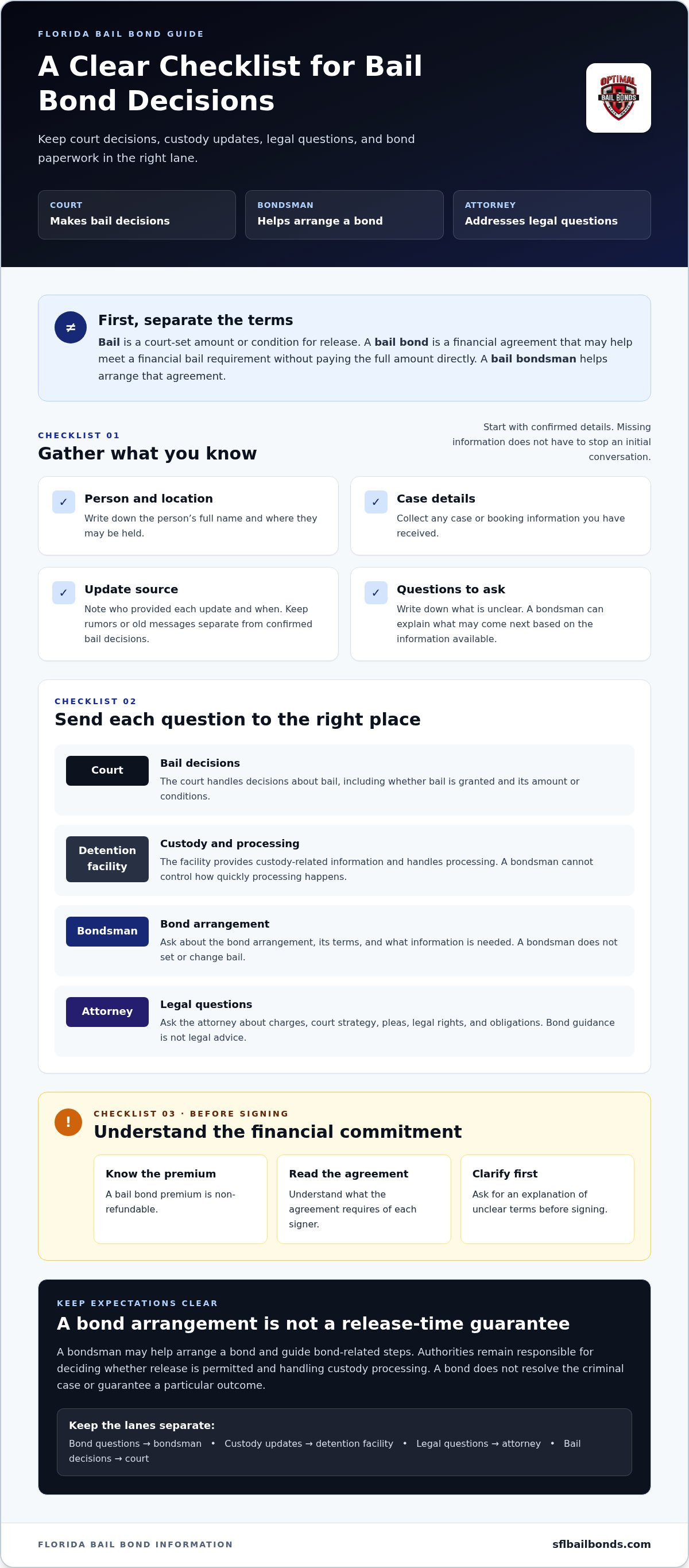
In brief: Bail is a court-set condition or amount for release; a bail bond is a financial agreement that may help meet a financial bail requirement; a bail bondsman helps arrange that agreement. The available process depends on the case and the court’s decisions.
Bail, a bail bond, and a bail bondsman: the difference
Bail is part of the court process. It concerns whether someone may be released while a case continues and, if so, under what conditions. A bail bond is one possible way to address a financial bail requirement. It involves an agreement with a bond provider rather than paying the full amount directly.
For example, if a court sets bail after an arrest, the person’s family may consider whether a bond arrangement is appropriate instead of paying the full amount themselves. The bail bondsman can explain the arrangement and guide the family through bond-related steps. The bondsman does not set or change the bail amount. Because cases differ, don’t assume a bond is available or that another person’s experience will match your situation.
The terms can sound interchangeable, but they describe different parts of the process. A What is a Bail Bondsman? overview offers additional background on the profession. The practical distinction is that the court handles bail decisions, while a bondsman helps arrange a bond when that option applies.
What a bail bondsman cannot do
A bondsman can’t decide whether bail is granted, set or change its amount, determine guilt, or represent someone in court. Those responsibilities belong to the court and the legal process, not the bond arrangement. A bond also doesn’t resolve the criminal case or guarantee a particular outcome.
Ask the bondsman about the bond arrangement, its terms, and what information is needed to discuss it. For questions about charges, court strategy, pleas, or legal rights, speak with the person’s attorney. A bondsman can guide you through bond-related steps, but that guidance isn’t legal advice.
Keeping these roles separate helps families focus on the right next step: the court makes decisions about bail, a bondsman may help arrange a financial agreement, and an attorney addresses legal questions. A bondsman can’t promise release or control how quickly the court or detention facility processes a case. Clear expectations can prevent confusion while you gather information.
How a Bail Bondsman Fits Into the Florida Release Process
After an arrest, families may need to sort through incomplete information before deciding what to do. The steps can differ from case to case, so start by identifying what is confirmed and who can answer each kind of question. The court handles bail decisions, and the detention facility handles custody information and processing. A bondsman can explain and discuss a bond arrangement when that option applies.
What happens before a bond arrangement is discussed?
Start with accurate details, not assumptions. Write down the person’s full name, where they may be held, and any case or booking information you’ve received. These details can help identify the case, but missing information doesn’t have to stop an initial conversation. A bail bondsman can explain what may come next based on what you know and help clarify what remains uncertain.
The court handles decisions about bail, while the detention facility provides custody-related information and handles processing. Gather updates from the appropriate source, then discuss bond arrangements with a bondsman once you have enough information to describe the situation. If bail status is unknown, don’t treat a rumor or an old message as a confirmed decision. Note who provided each update and when, so you can share a clear account.
For readers seeking Miami-focused context, the guide “24/7 Bail Bonds Miami: Fast Release Services & Support” can help frame local questions. The title is not a promise about release timing. Whether you’re in Miami, Fort Lauderdale, Palm Beach, Tampa, Jacksonville, St. Petersburg, or Orlando, court decisions and detention-facility processing affect the steps and timing in an individual case.
What happens after the bond arrangement?
If a bond arrangement is pursued, the bondsman helps with the agreement and guides the family through bond-related steps. The authorities remain responsible for deciding whether release is permitted and handling custody processing. Even after a bond is arranged, the bondsman can’t guarantee when a release will happen.
To keep the process clear, families can:
- Write down instructions received from the court or detention facility.
- Keep questions about the bond agreement separate from questions about the case itself.
- Ask the person’s attorney about court obligations, legal rights, and what to expect in the case.
Follow directions from the court and consult an attorney about legal obligations, including any requirements the person must meet after release. The bondsman supports the bond process, not the interpretation of court orders or legal representation. Optimal Bail Bonds provides bail bond support to individuals and families in North Miami-Dade and can guide you through bond-related questions.
What to Understand Before Working With a Bail Bondsman
Before agreeing to a bond arrangement, understand the financial commitment and what the agreement requires of each signer. An arrest can create pressure to act quickly, but it’s reasonable to pause, ask for an explanation, and read the paperwork carefully. Raise questions about unclear terms before signing.
The bond premium is a fee for the bond service, and it is non-refundable. It doesn’t set or change the court’s bail decision. Don’t treat the premium as money held temporarily until the case ends. Knowing this before you agree helps you assess the financial commitment with clear expectations.
Questions families can raise before agreeing
Ask for a plain-language explanation of the premium, how payment is arranged, and what responsibilities the agreement creates for each signer. The written agreement is the place to confirm the terms that apply to your arrangement.
- What does the premium cover, and is it non-refundable?
- How is payment arranged under this agreement?
- What responsibilities does each signer take on?
- Can you explain any unfamiliar wording before I sign?
Read the entire agreement, including sections that describe signer responsibilities. Don’t rely only on a quick verbal summary if the written terms remain unclear. Mark the specific wording you want explained and ask for an explanation in language you understand. Terms can differ between agreements, so another family’s experience is not a substitute for reviewing your own paperwork.
The bondsman's role compared with an attorney's
A bondsman can explain the bond arrangement and guide you through bond-related steps. An attorney provides legal advice, discusses defense strategy, and represents a person in court. Families may need both kinds of support, but the roles are not interchangeable.
A bond agreement doesn’t give the bondsman authority over the charges, hearings, or judge. For advice about legal rights, possible outcomes, court obligations, or how a decision could affect the case, speak with the person’s attorney. Keep legal questions separate from questions about the agreement so each concern reaches the right professional.
If you’re unsure whether a question is financial or legal, write it down and identify what needs clarification. Ask the bondsman to explain the bond paperwork, and ask an attorney about legal implications or the case itself. Reviewing the agreement carefully helps you make an informed decision without mistaking bond support for legal representation.
How to Prepare for a Conversation With a Florida Bail Bondsman
A first conversation can feel like one more difficult task in an already stressful situation. You don’t need every answer before reaching out. A few accurate details and a short list of questions can keep the discussion focused and help distinguish what you know from what still needs to be verified.
Information to have nearby, if available
Gather what you can. Helpful starting details include the person’s full name, their known location, and any case or booking information you’ve received. If you don’t have everything, say so. Missing details don’t automatically prevent an initial conversation or make it unhelpful to ask what comes next.
Separate confirmed information from what you’ve heard but haven’t verified. For instance, note whether a case detail came from an official update or from someone passing along a message. This distinction can prevent confusion and help the bondsman explain next steps based on the information available.
- Confirmed: Details you have received from a reliable source.
- Unconfirmed: Information you’re still trying to verify.
- Unknown: Questions you want to follow up on.
How to keep communication clear
Before the conversation, write down your main questions. During it, take notes on the premium, any agreement terms you want clarified, and the next steps discussed. Ask for unfamiliar language to be explained in plain English. If you’re overwhelmed, pause and make sure you understand before moving forward.
Keep bond-related questions separate from court instructions and legal advice. Record directions from the court or detention facility in their own notes, and ask the person’s attorney about legal obligations, rights, or case strategy. A bondsman can guide you through bond-related questions, but an attorney is the right person for advice about the case.
For Miami-area context, the guide “24/7 Bail Bonds Near Me: Trusted Miami & Florida Services” may help explain the local service topic. Its title doesn’t guarantee a particular response or release time. Procedures and timing can vary, so use the conversation to clarify what is known about your situation rather than assume every case follows the same sequence.
When you’re ready to discuss bond assistance, Optimal Bail Bonds provides supportive guidance to individuals and families in North Miami-Dade. Bring the details you have, ask the questions that matter to you, and note anything you’d like explained again. Clear communication can make the next step more manageable.
Getting Bail Bond Support in Florida: Practical Next Steps
Once you have a clearer picture of the situation, focus on the kind of help you need. The court handles bail decisions, a bondsman can guide families through a bond arrangement, and an attorney provides legal advice and representation. Keeping those roles distinct helps you direct each question to the right person without expecting one professional to control the entire case.
If you’re unsure where to begin, gather the information you have, note what’s still unclear, and explain the situation calmly. You don’t need every detail resolved before asking about bond assistance. For case-specific updates, rely on information from the court or detention facility, since custody processing and court decisions can vary.
If someone needs help with a bond
An arrest can put a family under real pressure. You deserve to be treated with patience and respect, not judgment. Optimal Bail Bonds provides bail bond support to individuals and families in North Miami-Dade. A bail bondsman can help you understand the bond-arrangement process and what information may help move the conversation forward, without promising release or a particular result.
Keep any court instructions nearby and direct legal questions to the person’s attorney. Make a note of the questions you still have about the bond discussion, then raise them with Optimal Bail Bonds. Supportive, clear guidance can help you understand the process and decide how to proceed.
For bond assistance, contact Optimal Bail Bonds for guidance.
If you are exploring a bail-bond career
Career education is separate from arranging a bond for someone in custody. If you’re considering becoming a Florida bail bondsman, learn about the profession and the education available for aspiring agents. Optimal Bail Bonds’ Bail Bond Education Center offers pre-licensing classes. Explore the Florida bail bonds pre-licensing course page for information about the 120 Hours Bail Bonds Course.
This education option is for people exploring the profession, not a substitute for support with a current case. If someone you care about has been arrested, keep your immediate needs in focus. If your interest is professional, explore the learning pathway and consider whether it fits your goals.
Take the Next Step With Greater Confidence
You don’t have to solve every part of a stressful situation at once. Focus on the next decision in front of you, and ask for clear explanations before moving forward. Understanding a bail bondsman’s role can help you approach the conversation with more confidence and recognize which questions belong with an attorney.
If you’re ready to discuss bond assistance, Optimal Bail Bonds can guide you through bond-related questions. Explain what you know, raise the questions that matter to you, and take the process one step at a time.
A difficult moment can feel more manageable when you have clear information and a steady next step. You’re allowed to take that step at your own pace.
Frequently Asked Questions
What does a bail bondsman do?
A bail bondsman helps arrange a bond when it’s an option for a case. If a family is considering a bond instead of paying the full bail amount directly, the bondsman can explain the arrangement and guide them through bond-related steps. The court and detention facility still handle their own decisions and processes. Ask the bondsman to explain any part of the arrangement that’s unclear.
Is a bail bondsman's fee refundable?
No. The premium paid for a bail bond is non-refundable, so don’t treat it like a deposit that will be returned when the case ends. Before agreeing, make sure you understand the amount being charged, the payment arrangement, and the responsibilities described in the agreement. Keep a copy of the paperwork and payment records, and ask an attorney about legal questions related to the agreement.
Can a bail bondsman get someone out of jail immediately?
No bondsman can promise immediate release. Even after a bond arrangement is handled, release depends on decisions and processing by the court and detention facility, which are outside the bondsman’s control. If you’re waiting for an update, keep track of what you’ve been told and contact the appropriate source for current custody information. Ask the bondsman to clarify bond-related steps, not to guarantee a release time.
Does a bail bondsman provide legal representation?
No. A bondsman doesn’t act as the person’s attorney, represent them in court, or develop a defense strategy. The bondsman can address questions about the bond arrangement, while an attorney can advise on charges, legal rights, hearings, and case decisions. Direct questions that could affect the person’s case or obligations to their attorney.
What information should I have before calling a bail bondsman?
Have whatever case details you can access, and be clear about what’s confirmed versus what you’re still checking. A short note with the person’s name, known location, updates received, and your main questions can help organize the conversation. It isn’t a formal eligibility checklist. Whether the situation is in Miami, Fort Lauderdale, Palm Beach, Tampa, Jacksonville, St. Petersburg, or Orlando, sharing the location can help focus the discussion.
How do I become a bail bondsman in Florida?
Start by learning about the profession and the current requirements that apply in Florida. Optimal Bail Bonds offers a Bail Bond Education Center with pre-licensing education, including its 120 Hours Bail Bonds Course. Course participation alone shouldn’t be assumed to establish eligibility or complete every step toward a career. Check current licensing information with the appropriate Florida state authority, and use the course as an educational pathway.
Can a bail bondsman help with immigration bond?
Some bondsmen handle immigration bond matters, but the available options depend on the individual situation. Optimal Bail Bonds assists with immigration bail, including support related to immigration detention. A bond agent can help with bond-related questions, but can’t provide immigration legal representation or advise on how a bond may affect someone’s case. For legal rights, immigration proceedings, or case strategy, speak with an attorney familiar with the matter.


