

A federal release decision in Fort Lauderdale is not a routine bail-bond transaction. If someone you love has been arrested, the federal court bail process Ft Lauderdale can feel confusing, especially while you wait to learn what happens at the first appearance and whether release will involve money or other conditions.
In federal court, a judge makes an individual decision about release or detention. A commercial bail bond does not replace that decision. This guide covers the usual stages, including the initial appearance, a possible detention hearing, and conditions that may apply if the person is released. It also explains what families can organize while a decision is pending and which questions to direct to defense counsel. Procedures and timing can vary, so these steps are a guide, not a promise of a particular outcome or schedule.
Key Takeaways
- The federal court bail process Ft Lauderdale differs from Florida state bail. First identify which court is handling the case.
- An initial appearance is an early step, not a guarantee of immediate release. Schedules and decisions can vary.
- Release with conditions and continued detention are different possible outcomes. Understand the court’s decision before assuming that cash bail or a bondsman will determine the result.
- While a decision is pending, find out who represents the person and ask counsel what information or practical support the family can provide.
- After the court rules, keep the written instructions accessible and help the person follow each release condition exactly.
Federal court bail in Fort Lauderdale: how it differs from Florida state bail
After an arrest, families may hear the word “bail” and picture paying a bondsman to bring someone home. In a federal case, that may not be how release works. The federal court bail process Ft Lauderdale takes place within the federal court system. A judge decides whether a person may be released while the case proceeds and, if so, what conditions apply.
In short, federal pretrial release is a court decision; a state commercial bail bond is a separate financial arrangement. Knowing the difference helps families focus on the case information and instructions that apply to their situation.
For a general overview of how the term is used across the country, see Bail in the United States. The details of an individual case depend on the court handling it.
This video also discusses how federal bail differs from other processes:
Which federal court handles a Fort Lauderdale case?
Federal cases in the area are handled within the U.S. District Court for the Southern District of Florida, which has a Fort Lauderdale Division. The Fort Lauderdale federal courthouse is at 299 East Broward Boulevard, Fort Lauderdale, Florida 33301. Not every hearing or case event necessarily takes place at that location. Check the case paperwork for the assigned division and hearing location, and direct logistical questions to defense counsel or the court.
Why federal release is not the same as posting a state bond
Florida state and federal cases follow different systems. A state-court bond process may involve a commercial bail bond, but that arrangement does not control a federal case. In federal court, the judge makes an individual decision about release or detention. The order may allow release with conditions intended to address court appearance and community safety, or the person may remain detained while the case proceeds.
Money may be part of a federal release condition, but it is not automatically required in every case. Do not assume that paying a bondsman will secure release or replace a court order. The judge’s decision and the conditions in the order determine what happens next. If the paperwork is unclear, ask defense counsel to explain the federal decision and any requirements. A commercial bond agent cannot make that decision for the court.
What happens after a federal arrest in Fort Lauderdale?
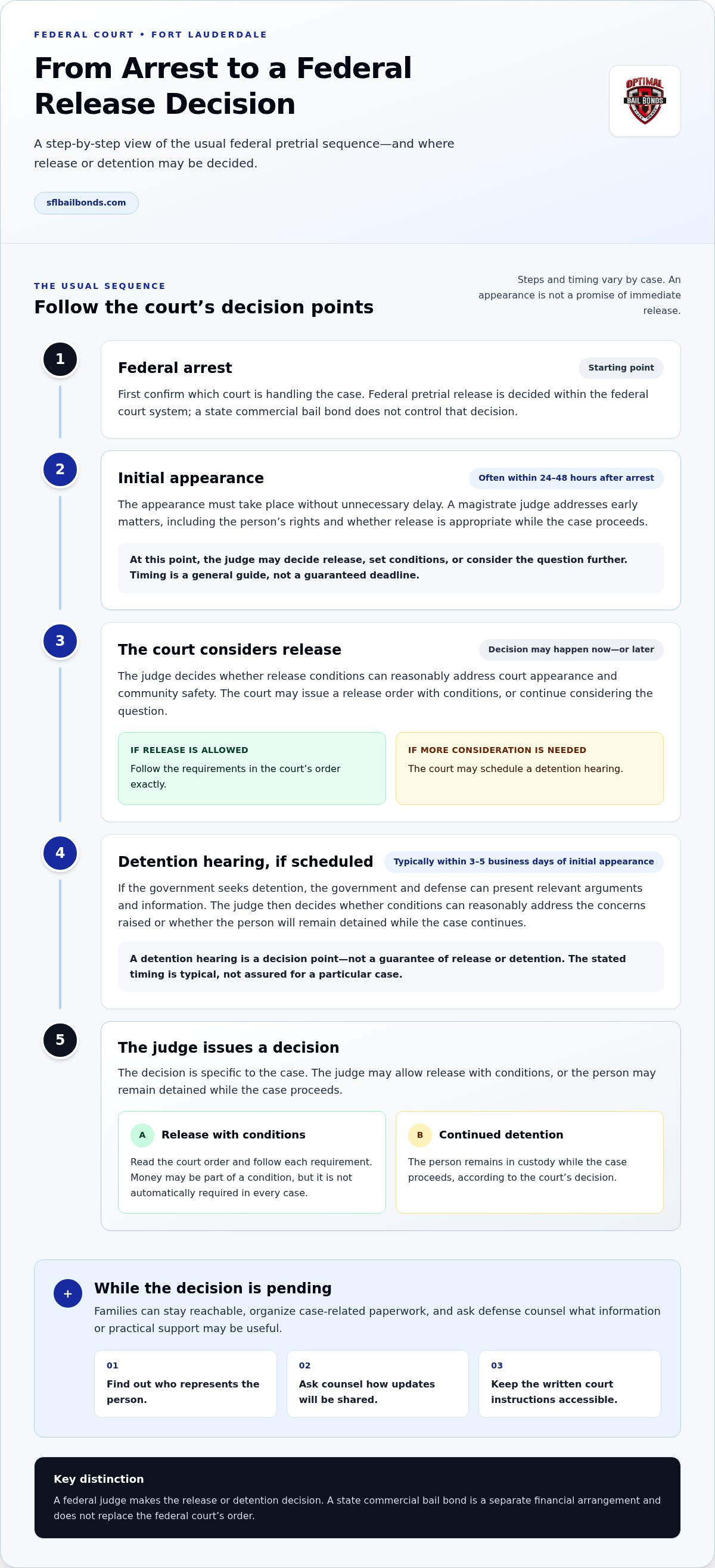
Families naturally want to know what happens next and when the person might come home. Federal cases follow a sequence, but the steps and timing depend on the circumstances. The federal court bail process Ft Lauderdale generally moves from arrest to an initial appearance, then to a release decision or, if more consideration is needed, a detention hearing. An appearance in court is an early step, not a promise of immediate release.
As a general guide, an initial appearance must take place without unnecessary delay and often occurs within 24 to 48 hours after arrest. If the government seeks detention, a later hearing is typically held within three to five business days of the initial appearance. These are not guaranteed deadlines for a particular case. The court schedule and release decision affect when, or whether, someone leaves custody.
The initial appearance and first release decision
At the initial appearance, a magistrate judge addresses early matters, including the person’s rights and whether release is appropriate while the case proceeds. The judge may decide the release question at that time, set conditions, or consider the question further. Defense counsel can explain what the hearing covers, help the person understand the process, and answer case-specific questions.
For relatives, it can be difficult to follow a hearing from a distance. Find out who represents the person and how counsel will share updates. Do not treat the hearing date as a release date. The court may make a decision, but release can depend on the order and any steps required to meet its conditions.
When the court schedules a detention hearing
If the release question needs further consideration, the court may schedule a detention hearing. The government and defense can present relevant arguments and information for the judge to consider. The judge then decides whether release conditions can reasonably address the concerns raised or whether the person will remain detained while the case continues. A hearing is a decision point, not a guarantee of either outcome.
Between the initial appearance and a later hearing, families can stay reachable, organize case-related paperwork, and ask defense counsel what information may be useful. The attorney can explain what may matter in the specific case. A commercial bond transaction does not resolve a federal release decision.
If your family is also dealing with a separate Florida state-court matter, you can learn about Florida bail-bond assistance. Keep that process separate from the federal case, and rely on defense counsel and the court for guidance about federal proceedings.
Federal release or detention: conditions, decisions, and the bondsman misconception
After a release or detention hearing, the judge makes a decision for that case. Release may come with requirements the person must follow. Detention means the person remains in custody while the case proceeds. Neither outcome is automatic, and a relative cannot determine the result by arranging a commercial bond. In the federal court bail process Ft Lauderdale, the judge decides whether conditions can reasonably address concerns about court appearance and community safety.
The distinction is straightforward: a federal release order sets court requirements, while a state commercial bond is a separate financial arrangement. They are not interchangeable.
What can a federal release order require?
Conditions depend on the court’s order. Examples used in federal pretrial release can include reporting to a pretrial services or probation officer, travel restrictions, and avoiding criminal activity. More restrictive conditions may include electronic monitoring, a curfew, or substance abuse treatment. These are examples, not a checklist that applies to every person. Read the actual order carefully and ask defense counsel to explain any unclear terms.
If the person is released, following every condition matters. A family member may be able to help by keeping a copy of the order accessible, tracking appointments or travel restrictions, and encouraging the person to clarify anything they do not understand with counsel. Do not assume a condition is optional because it seems minor or difficult to follow.
Can a bail bondsman post federal bail?
There is no universal state-style bonding route for federal release. A judge sets the terms, which may or may not include a financial condition. A commercial bondsman cannot replace the judge’s order or guarantee that someone will be released. For questions about release, speak with the attorney handling the case.
The difference is easier to see side by side:
| Federal court-ordered release | Familiar state commercial bond |
|---|---|
| A judge decides whether release is allowed and sets any conditions. | A commercial bond is a financial arrangement associated with a state bail process. |
| Requirements may include supervision or restrictions, as specified in the order. | Paying or arranging a bond does not itself determine a federal judge’s decision. |
| The person must follow the court’s terms to remain compliant with the release order. | State bond procedures do not control federal release terms. |
If the paperwork mentions money, a bond, or a release condition, do not guess what it means. Ask defense counsel to explain the exact terms and whether any action is required. The court’s order controls. Do not assume that a commercial bond transaction will secure release in a federal case.
What families can do while a federal bail decision is pending
Waiting for a federal bail decision can leave relatives unsure where to focus. You cannot make the court’s decision, but you can help the family stay organized and communicate clearly. In the federal court bail process Ft Lauderdale, start by identifying the attorney handling the case. Ask what information, if any, the attorney needs before the next court event.
Keep case details private. Share accurate information directly with counsel rather than posting allegations, documents, or updates online. Do not treat a reported schedule or expected hearing time as confirmed. Use official case or court information, and ask the attorney what is scheduled in this specific case.
Information to organize for the defense attorney
Gather facts carefully, then let the attorney decide what may be relevant. Start with current contact details for close relatives and any documents counsel has specifically requested. Keep copies together and note where the information came from so you can answer follow-up questions accurately. Do not assume that a personal reference, document, or detail will change the result or guarantee release.
Share sensitive information privately with the attorney. If you are unsure whether something is appropriate to send, ask counsel how they prefer to receive it. Avoid contacting witnesses, discussing case details on social media, or trying to shape evidence. Leave case-related decisions to the legal team.
Questions to ask counsel about the next court event
A short, clear conversation can help reduce confusion. Consider asking:
- What hearing or decision is expected next in this case, and is the schedule confirmed?
- Has the court issued a release order or conditions the family should understand?
- If the person is released, what practical support could help them follow the court’s instructions?
- What information would be useful for counsel, and how should the family provide it?
Questions about legal strategy, eligibility for release, or timing belong with the defendant’s attorney. If you cannot reach counsel immediately, write down your questions and rely on official case or court information rather than assumptions. Each case can move differently, so an expected next step is not a promise of a particular outcome or release date.
Family action summary: Organize accurate information, communicate privately with defense counsel, and use official sources for case updates. Counsel handles legal decisions. Relatives can offer practical support without predicting the result.
If your family also needs help with a separate Florida state-court bail matter, explore Florida bail-bond support.
Next steps after a federal court decision in Fort Lauderdale
A court decision clarifies the next step, but it may not answer every practical question at once. If the person is released, the written order controls what they must do. If the person remains detained, questions about the decision or what may happen next are specific to the case and belong with defense counsel. In the federal court bail process Ft Lauderdale, the court issues instructions, counsel explains their legal meaning, and relatives can offer support without taking on either role.
If the court orders release with conditions
Get the exact release instructions from defense counsel or an official court source. Do not rely on a family member’s summary or an informal description when the written order is available. Read the requirements carefully, keep the document accessible, and ask counsel to explain any unclear term before acting on it.
Depending on the order, conditions may address reporting, travel, or other restrictions. Help the person organize reminders or practical arrangements in ways that follow the court’s instructions. A missed requirement can have serious consequences, but the result depends on the circumstances. Do not guess about what counts as compliance or how to handle a conflict. Ask defense counsel to explain the order and advise on next steps.
Make sure the person knows how to reach counsel and can access the written instructions. If a requirement seems difficult to meet, raise the concern promptly with the attorney rather than changing plans or treating the condition as optional. Clear communication can help prevent confusion, but it does not replace legal advice or change the court’s order.
Where a bail-bond agency may fit, and where it does not
Legal representation and commercial bail-bond assistance are different roles. Defense counsel advises the person about the federal case and can address questions about the court’s decision. The court sets release terms and gives official instructions. A commercial bail-bond agency cannot act as defense counsel, change a federal judge’s order, or guarantee release in a federal case.
That boundary matters even if the family is familiar with Florida’s state-court bond process. A bond transaction in a separate state matter does not decide the federal case. For federal release questions, follow the case attorney’s guidance and the court’s instructions. For a separate Florida bail-bond matter, use support specific to that process without confusing it with federal proceedings.
Keep the paperwork, counsel’s contact information, and court instructions together. This makes it easier for relatives to share accurate updates and support compliance without guessing what the decision means. If detention continues, counsel can explain case-specific questions. If release is ordered, follow the written terms closely and ask before acting if anything is unclear.
For a separate Florida bail-bond matter, Optimal Bail Bonds provides compassionate, non-judgmental support to help families understand their next steps.
Take the next step with a clear plan
In a stressful moment, separate what is known from what is still undecided. Use the federal court bail process Ft Lauderdale as a starting point for understanding the path ahead, then let the case attorney guide questions that depend on the person’s circumstances. A confirmed update may change what the family needs to do next, so avoid building plans around assumptions.
Choose one trusted family contact to track updates and share them accurately with relatives. This can reduce conflicting messages and make it easier to coordinate support. If a separate Florida bail-bond matter also needs attention, keep that process distinct from the federal case.
You do not have to solve every uncertainty at once. Take the next confirmed step, ask the right questions, and support your loved one with patience and care.
Frequently Asked Questions
How does the federal court bail process work in Fort Lauderdale?
The federal court bail process in Fort Lauderdale begins with the person appearing before a magistrate judge, who addresses early court matters and considers release or detention. Pretrial Services may interview the person and provide the court with information and recommendations. Depending on the case, the judge may decide release at the initial appearance or consider the question at a later hearing. For case updates, use the information and instructions provided by counsel or official court sources.
Is federal bail the same as Florida state-court bail?
No. A Florida state-court case and a federal case proceed in separate court systems, and state bond practices do not determine a federal judge’s decision. For a Fort Lauderdale case, check the court paperwork or ask the attorney handling the case to identify whether it is federal or state. This distinction helps prevent confusion if a family member is familiar with a different type of case or release arrangement.
Can a bail bondsman post bond in federal court?
A commercial bondsman is not a universal route to release in a federal case. Release depends on the judge’s order, and any financial condition must be understood in the context of that order. Before arranging a payment or bond, ask the defendant’s attorney what the written terms require and whether any action is needed. A commercial bond agent cannot replace defense counsel or change a federal court decision.
What happens at a federal initial appearance?
At an initial appearance, the person comes before a magistrate judge for early proceedings in the case. The court addresses matters such as the person’s rights and release status. The hearing does not necessarily resolve every issue or mean the person will leave custody that day. Counsel can explain what was decided and what to expect next. Families can write down questions and share them with the attorney rather than guessing at legal terms.
How soon is a federal detention hearing in Fort Lauderdale?
There is no guaranteed hearing date for every case. An initial appearance generally must occur without unnecessary delay and often takes place within 24 to 48 hours after arrest. If the government seeks detention, a detention hearing is typically held within three to five business days after the initial appearance. These are general timeframes, not a promise for a specific person. Confirm the actual schedule with defense counsel or official court information.
What factors can a federal judge consider when deciding release?
A judge makes an individual decision, including considering whether the person presents a risk of failing to appear in court or a danger to the community. The court may also receive information from Pretrial Services to help assess release and possible conditions. The weight given to information depends on the case. Relatives should not assume that one personal detail or document will decide the issue. Counsel can explain what may be relevant in the specific proceeding.
What can family members do while waiting for a federal bail decision?
Identify the attorney handling the case and ask what information, if any, the attorney needs. Keep contact details accurate, organize requested documents, and share sensitive material privately with counsel. Do not post case details online or rely on informal reports about hearing schedules. Whether you are in Fort Lauderdale, Miami, Palm Beach, Tampa, Jacksonville, St. Petersburg, or Orlando, choose one family contact to share confirmed updates and reduce confusion while the case proceeds. For a separate Florida bail-bond matter, Optimal Bail Bonds provides support to individuals and families in North Miami-Dade and communities across Florida.


